
The Expanding Impact of BLI on Antibody Development

Written By: Damon Anderson, PhD
Dec 02, 2025
Therapeutic antibodies continue to reshape modern medicine, offering targeted, high-specificity interventions for cancer, autoimmune disorders, infectious diseases, and emerging biologics. Their ability to selectively bind disease-related antigens has accelerated the shift toward precision therapies with improved efficacy and reduced systemic toxicity. As pipelines grow and modalities diversify—from monoclonals to bispecifics, antibody–drug conjugates (ADCs), and Fc-engineered variants—robust development workflows and reliable characterization tools have never been more essential.
Core Steps in Antibody Development and Validation
Developing a new therapeutic antibody involves a tightly controlled, multi-stage process, which includes:
- Target Identification and Validation: Researchers identify a disease-relevant antigen, confirm its biological function, and assess whether modulating it will yield therapeutic benefit.
- Antibody Generation: Candidates are produced using hybridoma techniques, phage display, transgenic animals, or newer synthetic libraries. Refinement steps—such as affinity maturation or humanization—ensure suitable binding strength and reduced immunogenicity.
- Screening and Early Characterization: High-throughput binding screens evaluate specificity, affinity, cross-reactivity, and functional mechanisms (e.g., agonism, antagonism, effector recruitment).
- Lead Optimization: Top candidates undergo engineering to improve stability, solubility, developability, and manufacturability, followed by structural and biophysical assessment.
- Preclinical Validation: In vitro and in vivo studies measure efficacy, pharmacokinetics, toxicity, and mechanism of action, ensuring the antibody meets regulatory expectations before entering clinical trials.
The Essential Role of Biolayer Interferometry in Antibody Characterization
Biolayer interferometry (BLI) has become a foundational tool in antibody development by enabling rapid, label-free analysis of biomolecular interactions. Its key contributions include:
- Real-time kinetic characterization: BLI generates on- and off-rate constants (ka, kd) and equilibrium affinity (KD) without complex assay setup, offering quick selection of high-value leads.
- High throughput screening: Parallel sensors allow fast evaluation of large candidate libraries, reducing timelines during early discovery.
- Epitope binning and mapping: BLI efficiently identifies unique binding epitopes, helping teams build therapeutic portfolios, design bispecifics, and avoid redundancy.
- Quantitation and specificity assessment: Researchers can quantify antibody concentration and verify target engagement with minimal sample preparation.
- Robustness across sample types: Crude mixtures, culture supernatants, and partially purified samples can be tested directly, accelerating early-stage workflows.
Because BLI delivers kinetic, affinity, specificity, and competitive binding insights in a single streamlined platform, it now sits at the center of modern antibody R&D. Its speed and versatility reduce bottlenecks and strengthen the analytical foundation required for advancing antibodies into preclinical and clinical pipelines.
Learn more about the latest BLI instrument innovations and their impact on the next wave of antibody discovery and characterization.

Dec 02, 2025
Featured, Popular Products
The Expanding Impact of BLI on Antibody Development
Biolayer Interferometry (BLI) now sits at the center of modern antibody R&D - delivering kinetic, affinity, specificity, and competitive binding insights in a single streamlined platform.
Nov 24, 2025
Buying Guides, Featured
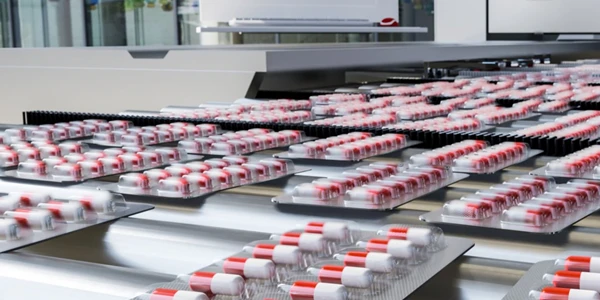
Advanced Raman Spectroscopy and the Need for Rapid and Reliable Data in Pharma Testing
As the pharma industry continues to shift toward agile manufacturing, continuous processing, and real-time release testing, advanced Raman spectroscopy technologies are set to lead the way.
Nov 21, 2025
Featured, Popular Products
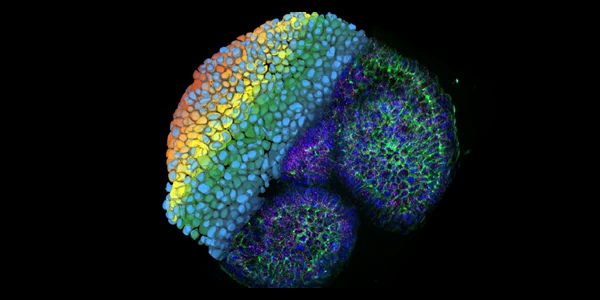
3D Cell Imaging and Analysis: How the Landscape Is Changing
Reshaping expectations for 3D cell imaging and analysis and driving the development of more integrated, automated solutions

Oct 29, 2025
Technical Insight
Advances in Scintillation Counter Design for Reduced Background Noise
New methodologies in ultra-sensitive radiation detection rely heavily on sophisticated physical and electronic design to achieve the lowest possible limits of detection in complex matrices.
Oct 29, 2025
Technical Insight
Selecting Scintillation Vials and Cocktails for Optimal Counting Efficiency
Expert guidance for laboratory professionals on achieving superior counting statistics and reproducible results by matching sample type with optimal vials and cocktails properties.

Oct 29, 2025
Technical Insight
Applications of Scintillation Counting in Environmental Monitoring
This comprehensive guide details how scintillation counting methods are essential for precise, low-level radionuclide detection across complex environmental monitoring matrices, ensuring regulatory compliance and scientific integrity.
Oct 29, 2025
Technical Insight
Maintaining Scintillation Counters: Quench Correction and Efficiency
Comprehensive guide for laboratory professionals on the essential practices for maintaining scintillation counters, ensuring highly accurate and reproducible measurements.

Oct 29, 2025
Technical Insight
Liquid vs. Solid Scintillation Counting: Which Method to Choose?
A detailed analysis for laboratory professionals comparing the principles, sample preparation requirements, and operational considerations of liquid scintillation and solid scintillation counting.
Oct 28, 2025
Technical Insight
Scintillation Counter Technology: Detecting and Measuring Radioactivity in Biological and Environmental Samples
This comprehensive guide provides laboratory professionals with the foundational and advanced knowledge necessary to ensure high-accuracy detection and measurement of radionuclides using scintillation counter technology.
Oct 28, 2025
Technical Insight
Innovations in Gamma Counting for High-Throughput Screening
Advances in scintillation materials, detector design, and automation software are revolutionizing radionuclide detection workflows for pharmaceutical research and clinical diagnostics.