
The Ultimate Guide to Microplate Reader Solutions

Find the right system. Optimize your assays. Scale your workflow
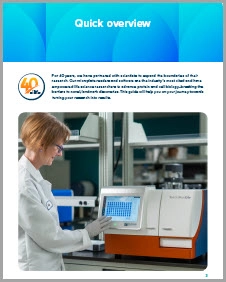
Microplate readers are at the center of modern lab workflows—from ELISA and cell-based assays to nucleic acid quantitation and high-throughput screening. But choosing the right system (and getting the most out of it) isn’t always straightforward.
This guide delivers a practical, application-first approach to selecting and using microplate readers—whether you’re upgrading an existing system or building out a new workflow.
What You’ll Learn
Microplate Reader Fundamentals
- Single-mode vs. multi-mode systems—and when each makes sense
- Core detection modes: absorbance, fluorescence, and luminescence
- How microplate readers compare to traditional spectrophotometers
Detection Technologies That Drive Results
- Fluorescence, TRF/TR-FRET, and fluorescence polarization
- Luminescence kinetics (flash vs. glow) and injector requirements
- Western blot detection and imaging cytometry capabilities
Match Your Reader to Your Applications
- Cell viability, signaling, and migration assays
- ELISA workflows and antigen detection strategies
- DNA/RNA and protein quantitation methods
- Microbiology and contaminant monitoring
Enhance Your Workflows
The right microplate reader isn’t just a purchase—it’s a workflow decision.
- Throughput gains: Move from single-sample to 96- or 384-well formats
- Flexibility: Multi-mode systems support evolving research needs
- Data quality: Advanced detection modes reduce background and improve sensitivity
- Automation readiness: Integrate with liquid handlers, washers, and robotic systems
- Compliance: FDA 21 CFR Part 11, software validation and audit-ready workflows, IQ/OQ/PM services and instrument validation strategies

DOWNLOAD THIS FREE GUIDE TO LEARN MORE
Become a member and enjoy exclusive benefits
Create an account now for exclusive benefits, personalized recommendations, and seamless order tracking. Elevate your lab experience today!