
First AI-Designed BLI Probes Revolutionize HIS-Tag analysis
Unlocking new possibilities for antibody discovery and characterization
For decades, scientists have relied upon conventional tools
such as biolayer interferometry (BLI) mouse antibody HIS-tag capture probes to
assist antibody discovery. Fundamental challenges of this approach, however,
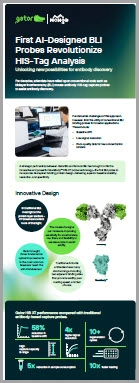
limit the utility of conventional BLI binding probes for broader applications. This infographic describes the first biolayer
interferometry BLI probe to utilize AI-inspired binding protein design to revolutionize
HIS-tag analysis for antibody discovery. Key takeaways: Overcoming Limitations of Conventional BLI Probes: Traditional
anti-His antibody-based capture probes suffer from key limitations, including
baseline drift, low signal resolution, poor-quality data for low-concentration
binders, two adjacent binding sites that promote avidity, poor loading speed,
and a fast off-rate. The AI-designed NovoBody structure addresses these gaps. Innovative Optical and Structural Design: While
traditional BLI allows most light at the protein layer to scatter, NovoBody Gator
HIS XT biosensors collect more of that light. The design creates 3x signal
per molecule, improving sensitivity for small binders and low titers,
offering the flexibility to use less sample to avoid avidity. Quantifiable Performance Advantages: The Gator HIS XT
probe demonstrates significant performance improvements over traditional
antibody-based capture probes and is designed for both small- and large-scale
screening and discovery campaigns, supporting:
Download the infographic to learn more about the groundbreaking Gator HIS XT probe and how it is redefining essential BLI workflows in antibody discovery and validation.

DOWNLOAD THIS INFOGRAPHIC
Become a member and enjoy exclusive benefits
Create an account now for exclusive benefits, personalized recommendations, and seamless order tracking. Elevate your lab experience today!