
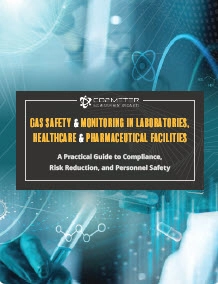
Gas Safety & Monitoring in Laboratories

A practical guide to compliance, risk reduction, and personnel safety
In today’s laboratory environments, the use of gases such as carbon dioxide (CO2), oxygen (O2), nitrogen (N2), helium (He) and hydrogen (H2) is essential from research and drug development to patient care and cryogenic storage. However, these gases can introduce invisible and potentially life-threatening risks if not properly monitored.
This eBook provides a comprehensive framework for understanding and managing gas-related risks across laboratories, hospitals, and pharmaceutical facilities.
What you’ll learn inside:
1. Gas Hazards are Diverse and Highly Room-Specific
Laboratories manage a complex variety of gases, each requiring targeted safety and placement strategies because they behave differently in ambient air.
2. Real-World Incidents Demonstrate that Procedures Alone are Insufficient
Gas leaks are recurring, preventable events that expose gaps in relying solely on staff awareness or manual procedures.
3. Compliance and Safety Standards Formally Mandate Continuous Monitoring
Relying on simple ventilation or intermittent checks is no longer acceptable under modern safety codes. Regulatory bodies such as OSHA, NFPA, IFC, and CGA have established structured frameworks that mandate or strongly recommend continuous 24/7 monitoring.
4. Life Safety (Gas Detection) vs. Process Control (Gas Analysis) Serve Different Roles
An effective facility safety strategy requires understanding the distinct roles of fixed safety monitors versus portable analyzers
5. Gas Safety is an Ongoing Lifecycle, Not a One-Time Installation
A gas safety system is only as reliable as its design, installation, and ongoing service.
Download the eBook and learn how to mitigate gas safety risks and supply your lab with the proper tools to avoid disruptions, setbacks, and non-compliance.

DOWNLOAD THIS EBOOK TO LEARN MORE
Become a member and enjoy exclusive benefits
Create an account now for exclusive benefits, personalized recommendations, and seamless order tracking. Elevate your lab experience today!