
Essentials of ICP-MS Analysis in Semiconductor Manufacturing
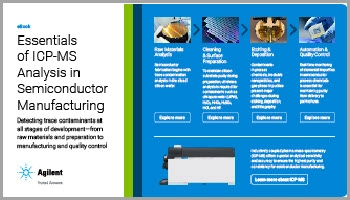
Detecting trace contaminants at all stages of development – from raw materials processing and preparation to manufacturing and quality control
As semiconductor microchip features shrink below 10
nanometers, managing ultratrace contamination in raw silicon, cleaning acids,
organic solvents, process gases, and nanoparticles is vital to preventing
device defects and yield loss. The eBook details how the latest ICP-MS triple-quadrupole instruments
leverage specialized hardware, online automated sampling, pure reaction gases,
and single-particle software to achieve sub-ppt detection limits while
streamlining laboratory workflows and safety compliance. Learning objectives: Download this essential resource to learn about
state-of-the-art solutions for semiconductor purity analysis.

DOWNLOAD THIS EBOOK TO LEARN MORE
Become a member and enjoy exclusive benefits
Create an account now for exclusive benefits, personalized recommendations, and seamless order tracking. Elevate your lab experience today!