
Simplify the Move to Triple Quadrupole ICP-MS

A visual overview of helium and air cell modes, plus software that guides method setup.
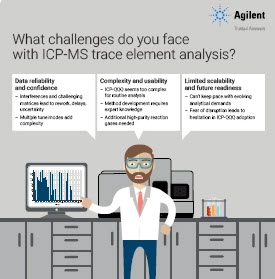
Interferences in trace element analysis result in repeat measurements and uncertain results. Labs may look to triple quadrupole ICP-MS to resolve difficult interferences, but complex method development and extra reaction gas supplies can make the move harder.
This infographic from Agilent shows how the 9500 ICP-MS brings triple quadrupole capabilities to your everyday work.
What You'll Learn:
- One helium collision mode for measurements across the full mass range
- Acquisition times typically more than 33% shorter than with multiple tune modes
- A reaction mode that uses ambient air to target interferences on arsenic and selenium
- Existing single quadrupole batches that convert automatically for triple quadrupole analysis
- Software guidance to help staff develop triple quadrupole methods
Download the infographic for a quick look at how the Agilent 9500 ICP-MS could fit your lab's current methods.

DOWNLOAD THIS INFOGRAPHIC
Become a member and enjoy exclusive benefits
Create an account now for exclusive benefits, personalized recommendations, and seamless order tracking. Elevate your lab experience today!