
Agilent 5987A MSD: Should 5977-Series Labs Upgrade?

Written By: Sharon Dong
Published: Nov 04, 2026
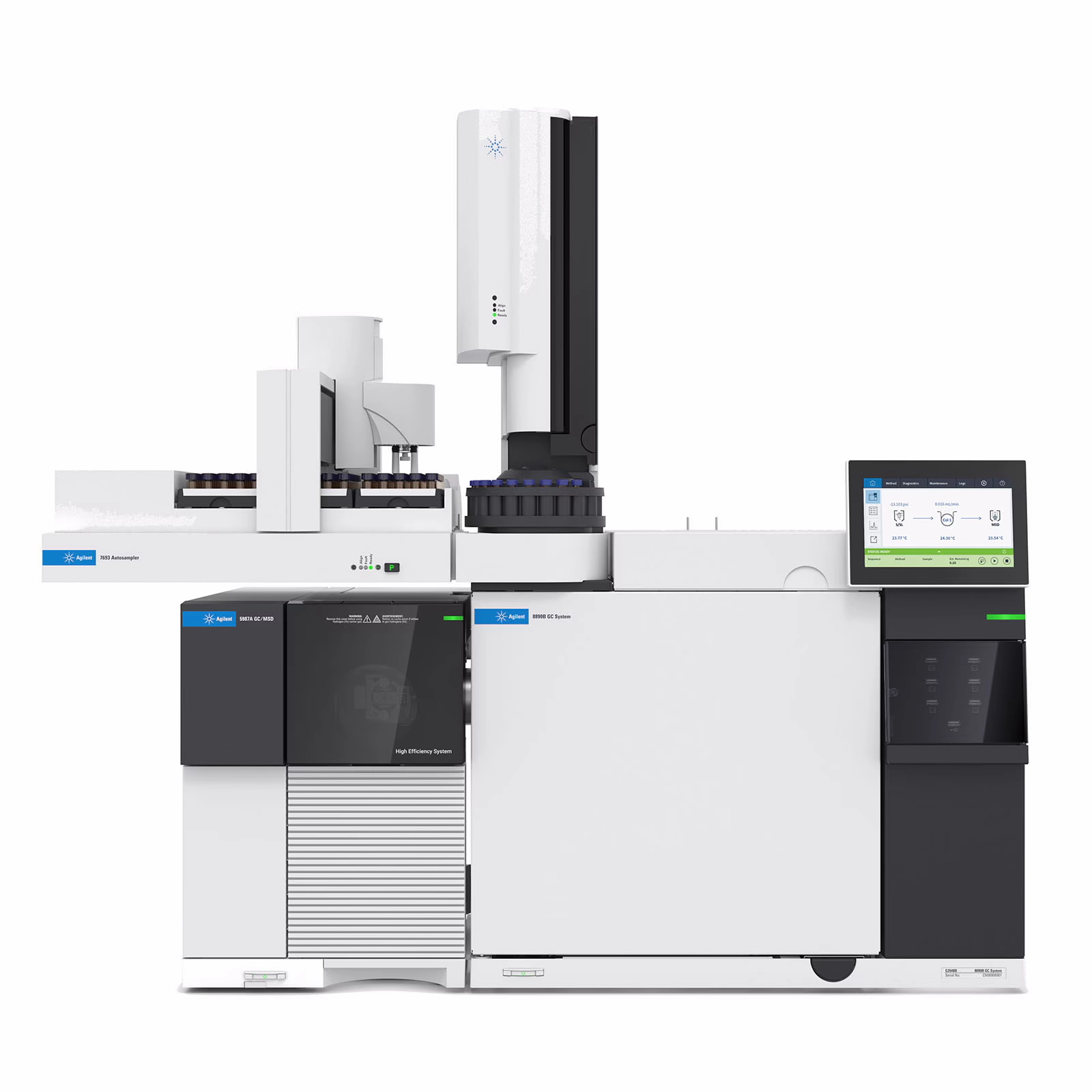
Agilent Technologies has launched the 5987A single quadrupole mass selective detector (MSD), its first new-generation GC/MSD since the 5977C arrived in 2022. Paired with MassHunter 14 software and an integrated monitoring system called GC Assist, the 5987A is designed to couple with the Agilent 8890B or 8860B gas chromatograph. Labs running 5977-series instruments, including the 5977A, 5977B, and 5977C, now face a direct upgrade decision.
Agilent has not disclosed a list price or confirmed an availability date for the 5987A. Whether the instrument’s three improvements, faster scanning, wider dynamic range, and lower energy use, justify the investment depends on current lab workload and matrix complexity. For labs whose applications fit within the 5977A or 5977B performance envelope, factory-refurbished units are on LabX at a fraction of a new-instrument purchase.
5987A vs. 5977 Series: Three Specs That Change the Upgrade Decision
The 5977C, Agilent’s current single-quadrupole GC/MSD launched in 2022, set the benchmark: a scan rate of up to 20,000 u/sec and an electronic dynamic range of 10⁶, both confirmed in Agilent’s published datasheets. The 5987A improves on both figures and adds GC Assist system monitoring with no equivalent in the 5977 series.
Dynamic range is the most consequential change for labs working with complex matrices. Moving from 10⁶ toward approximately 10⁷ (Agilent’s stated order-of-magnitude improvement, extrapolated from the predecessor spec) gives EPA Method 8270 semivolatile labs the headroom to quantify trace-level compounds against high-concentration matrix components without dilution steps or separate SIM runs.
Faster scanning benefits fast-GC workflows specifically. Labs using narrow-bore columns with tight oven ramp profiles face peak-definition constraints at the detector; higher acquisition speeds deliver more data points per peak at those run times. The faster scan rate also enables simultaneous dSIM/Scan in MassHunter 14, capturing regulatory SIM data and library-searchable full-scan results in one injection.
The used-market question. Agilent Certified Pre-Owned 5977A units are currently listed on LabX with refurbished certification at approximately $24,000 CAD, and 5977B units at approximately $33,000 CAD, both factory-refurbished with a one-year warranty. New-generation launches typically push used predecessor pricing lower over the following 12–18 months, a trend worth tracking for budget-constrained labs.
- Scan rate: Up to 25% faster than the 5977 series (5977C: up to 20,000 u/sec; 5987A absolute figure not yet published); unlocks simultaneous dSIM/Scan acquisition.
- Dynamic range: Approximately 10⁷ (inferred from Agilent’s stated order-of-magnitude gain over the confirmed 5977-series spec of 10⁶; no confirmed value at launch); most impactful for high-matrix environmental and food safety work.
- Energy consumption: Up to 40% lower than previous Agilent GC/MSD systems; reduces lifecycle operating cost and supports sustainability targets.
- GC Assist monitoring: More than 60 parameters tracked across the integrated GC/MS system, including GC-side gas and power usage, QC limit flagging, and carrier gas leak detection, none of which are available on 5977-series hardware.
- Supported GC platforms: 8890B and 8860B confirmed; compatibility with existing 8890 and 7890 platforms is unconfirmed at launch. Verify with Agilent before planning a detector-only upgrade.
- Software: MassHunter 14 is required for dSIM and the Optimizer method development tool. Labs on earlier MassHunter versions should factor the software upgrade path into total-cost planning.
Buyer’s note: The 5987A is specified for the 8890B and 8860B GC platforms. Buyers with existing 8890 or 7890 installations should confirm compatibility with Agilent before budgeting a detector-only upgrade; this question is not addressed in the launch announcement and represents a significant total-cost variable.
Does the 5987A Stand Out in the Single-Quadrupole GC/MS Market?
Single-quadrupole GC/MS systems serve routine targeted analysis across environmental, food safety, pharmaceutical, and industrial labs. The 5987A enters a category already occupied by current-generation platforms from multiple major instrument manufacturers. Four features set it apart from established alternatives.
System-level monitoring is the most distinctive. Established benchtop platforms in this category typically provide monitoring at the detector level or through a separate software layer. GC Assist extends intelligence to the full GC/MS stack, covering inlet, transfer line, and MSD, as standard.
Single-injection dSIM/Scan is not uniformly available at the single-quadrupole tier. Platforms prioritizing throughput over workflow flexibility require method switching between scan and SIM modes, increasing run time. MassHunter 14’s implementation eliminates that trade-off for labs that need both data types from one run.
Dynamic range and energy consumption together address two pressures that labs in every regulated sector face. An approximately 10⁷ dynamic range (inferred from the 10⁶ single-quadrupole baseline) positions the 5987A above entry-tier configurations. The up-to-40% energy reduction differentiates it from current-generation instruments that have not addressed power consumption.
MS/MS is not available. Labs requiring high-selectivity quantification in complex matrices, such as confirmatory pesticide residue work or clinical toxicology where co-eluting interferences demand additional specificity, still need a triple-quadrupole GC/MS. The 5987A is single-quadrupole only and does not provide the selectivity a second mass filter stage delivers.
Lab-by-Lab Assessment: Where the 5987A Adds the Most Value
The 5987A’s improvements do not deliver equal value across all lab types. Extended dynamic range, simultaneous dSIM/Scan, and GC Assist monitoring each favor specific workflows and regulatory contexts.
EPA and environmental testing labs
EPA Method 8260 and 8270 labs require SIM quantitation; simultaneous screening for unknowns is desirable but operationally costly under a 5977-series workflow. The 5987A’s simultaneous dSIM/Scan captures regulatory SIM and screening data in one injection, eliminating the second run. For labs with large 5977-series installed bases, the question is whether per-instrument productivity gains justify new pricing across the fleet or whether targeted deployment on the highest-matrix sample types is more cost-effective.
Food safety and agricultural residue labs
Labs that have documented reruns from dynamic range limitations on the 5977 series, where over-range results on dominant matrix components suppress trace detection, have the clearest upgrade case for the 5987A’s order-of-magnitude range improvement. Labs not yet hitting that limit should assess whether matrix complexity will increase before committing. Labs using H₂ carrier gas should confirm source configuration options with Agilent; the 5977C offered HydroInert source variants for hydrogen carrier applications, and the 5987A press release does not address this.
Pharmaceutical QC labs
Residual solvent analysis (ICH Q3C), GC headspace testing, and pharmaceutical identity testing are the primary GC/MS applications in regulated pharma environments. GC Assist’s QC limit flagging and system-health logging apply to 21 CFR Part 11 environments, but Agilent has not confirmed Part 11 compliance status for the 5987A and MassHunter 14 combination. Pharma labs should request formal qualification documentation from Agilent before purchase planning begins.
Regulated-workflow notice: Agilent’s press release does not address 21 CFR Part 11 compliance, FDA method validation support, or IQ/OQ/PQ qualification for the 5987A and MassHunter 14. Request this documentation from Agilent before beginning purchase planning.
Warren Potts, vice president and general manager of the Gas Phase Division at Agilent, said the 5987A “combines advanced analytical performance with built-in system intelligence, helping scientists identify potential issues earlier, simplify routine maintenance and remain focused on their analytical work.” GC Assist is designed to catch failures before they affect results, cutting the rerun cost that unplanned downtime generates in high-throughput labs.
5987A Upgrade Decision: Key Takeaways for 5977-Series Labs
The upgrade case is strongest for labs hitting dynamic range ceilings or running dual-injection workarounds to capture simultaneous SIM and scan data. Three questions Agilent’s launch leaves unanswered, list price, backward GC compatibility with 8890 and 7890 platforms, and 21 CFR Part 11 qualification status, must be resolved before any purchase commitment. Labs not yet at those limits have a credible alternative in certified pre-owned 5977A and 5977B units available through Agilent’s pre-owned GC/MS listings on LabX; for full product and ordering information, visit Agilent Technologies.
This article draws on an Agilent Technologies press release dated November 2, 2026 and was created with the assistance of Generative AI and has undergone editorial review before publishing. LabX’s editorial policy can be found here.
Nov 04, 2026
Product News
Agilent 5987A MSD: Should 5977-Series Labs Upgrade?
A spec-by-spec look at whether the 5987A’s 25% faster scanning, 10× dynamic range gain, and built-in GC Assist intelligence justify moving off the 5977 series — with LabX used-market context for current 5977A and 5977B owners.
Nov 02, 2026
Product News
ImageXpress HCS.ai Advanced Duo: Dual-Camera HCS Upgrade for Drug Discovery Labs
Molecular Devices has launched the ImageXpress HCS.ai Advanced Duo, a dual-camera high-content screening system that adds simultaneous image acquisition and integrated screening analytics to the existing HCS.ai Advanced platform — this article breaks down what changes for buyers already operating in the category and whether the upgrade is warranted.
Oct 27, 2026
Product News
Waters Fraction Collector IV: More Capacity, More Formats for Prep LC Labs
Waters has launched the Fraction Collector IV, upgrading prep-scale purification with 50% more collection capacity, flow rates to 300 mL/min, and native control through Empower, MassLynx, and ChromScope software — here’s what buyers in pharma, biotech, and CRO labs need to evaluate before purchasing.
Oct 20, 2026
Product News
LX-60T100R Refrigerated Benchtop Centrifuge: F-Gas Compliance for Clinical Trials
A new hydrocarbon-cooled benchtop centrifuge purpose-built for clinical trial sample processing arrives with a GWP of ~3, 5-minute pre-cooling, and exclusive distribution through Resonant Clinical Solutions — giving procurement teams an F-gas-ready option well ahead of the 2028 EU regulatory deadline.
Oct 16, 2026
Product News
CryoArc Vita-76: Azenta’s High-Density Cryogenic Storage for IVF Clinics
Azenta Life Sciences has launched the CryoArc Vita-76, a cryogenic storage system that consolidates up to seven traditional dewars into a single footprint — this article covers specifications, how it compares in the clinical IVF storage market, and what fertility clinic buyers should evaluate before purchasing.
Sep 30, 2026
Product News
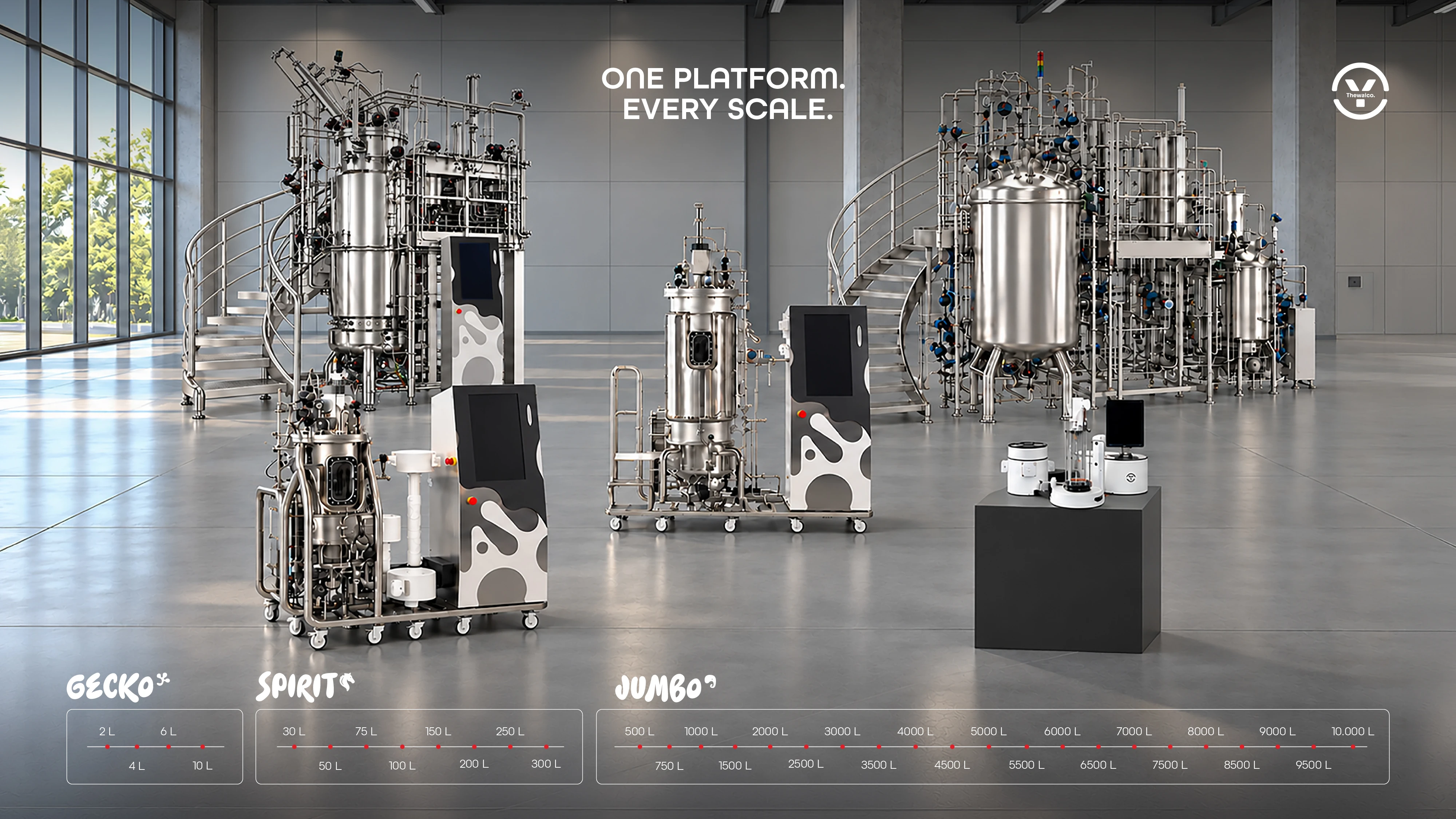
Thewaico Launches Integrated Bioreactor Platform to Solve Biomanufacturing Scale-Up
A new bioprocess company has emerged with three connected bioreactor platforms — spanning 2 L to 10,000+ L — and an AI-assisted control layer intended to eliminate the re-engineering step that derails most scale-up projects, alongside a direct-to-web pricing configurator.
Sep 28, 2026
Product News
Metrohm USA Launches IONIC Titrator With Built-In Cloud Access
Metrohm USA's new IONIC Titrator pairs a 10-inch touchscreen with direct cloud connectivity, letting labs monitor and share titration data without a PC; here's how it's specced, priced, and positioned for buyers comparing standalone titrators.
Sep 23, 2026
Product News
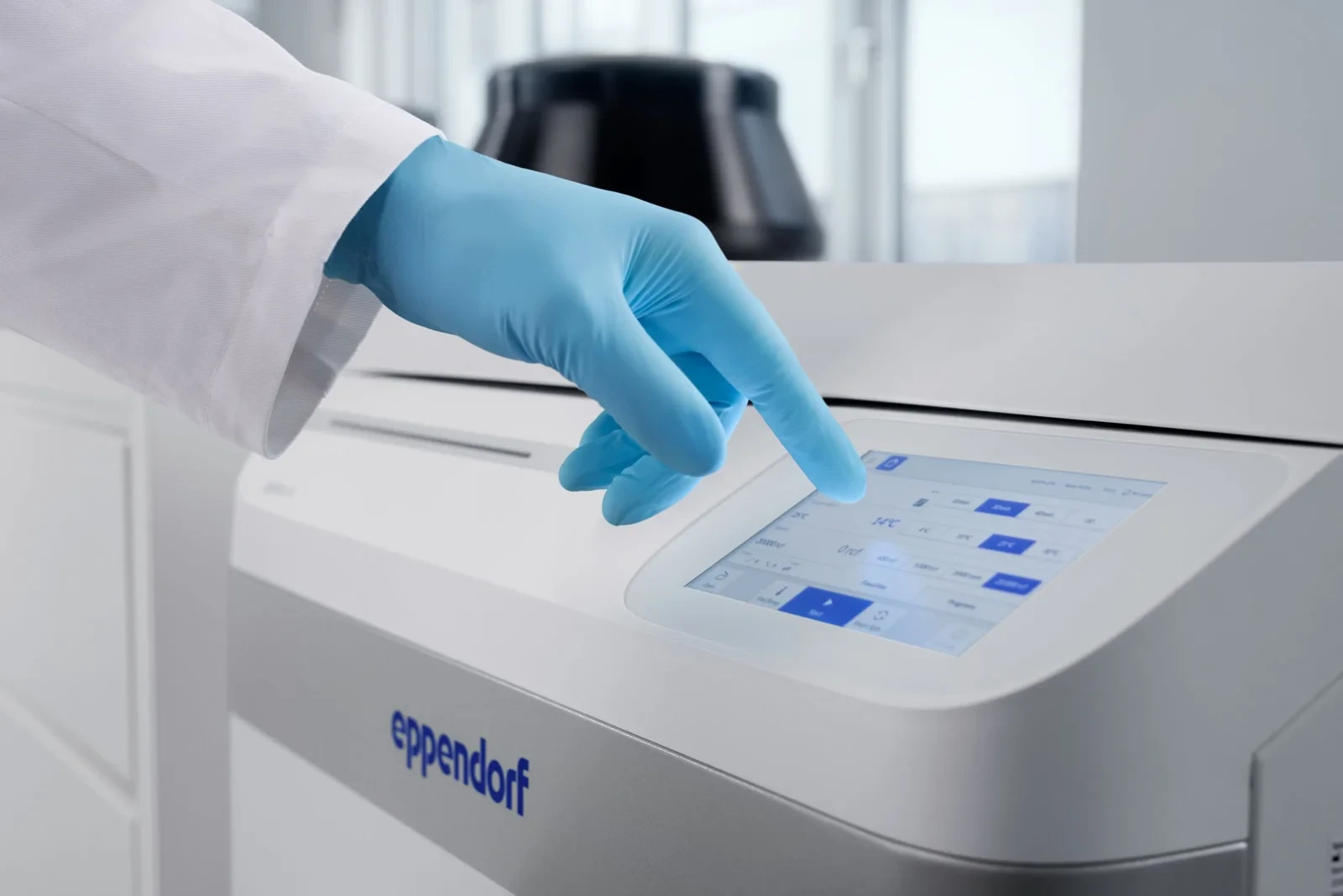
Eppendorf Introduces the SpinPro 8 R High-Speed Floor Centrifuge
Eppendorf's SpinPro 8 R floor-standing centrifuge launches with 6 L capacity, 35-rotor compatibility, CO₂-based refrigerant (GWP = 1), and AuditSafe documentation for pharma and biotech labs evaluating their next large-volume separation system.
Sep 22, 2026
Product News
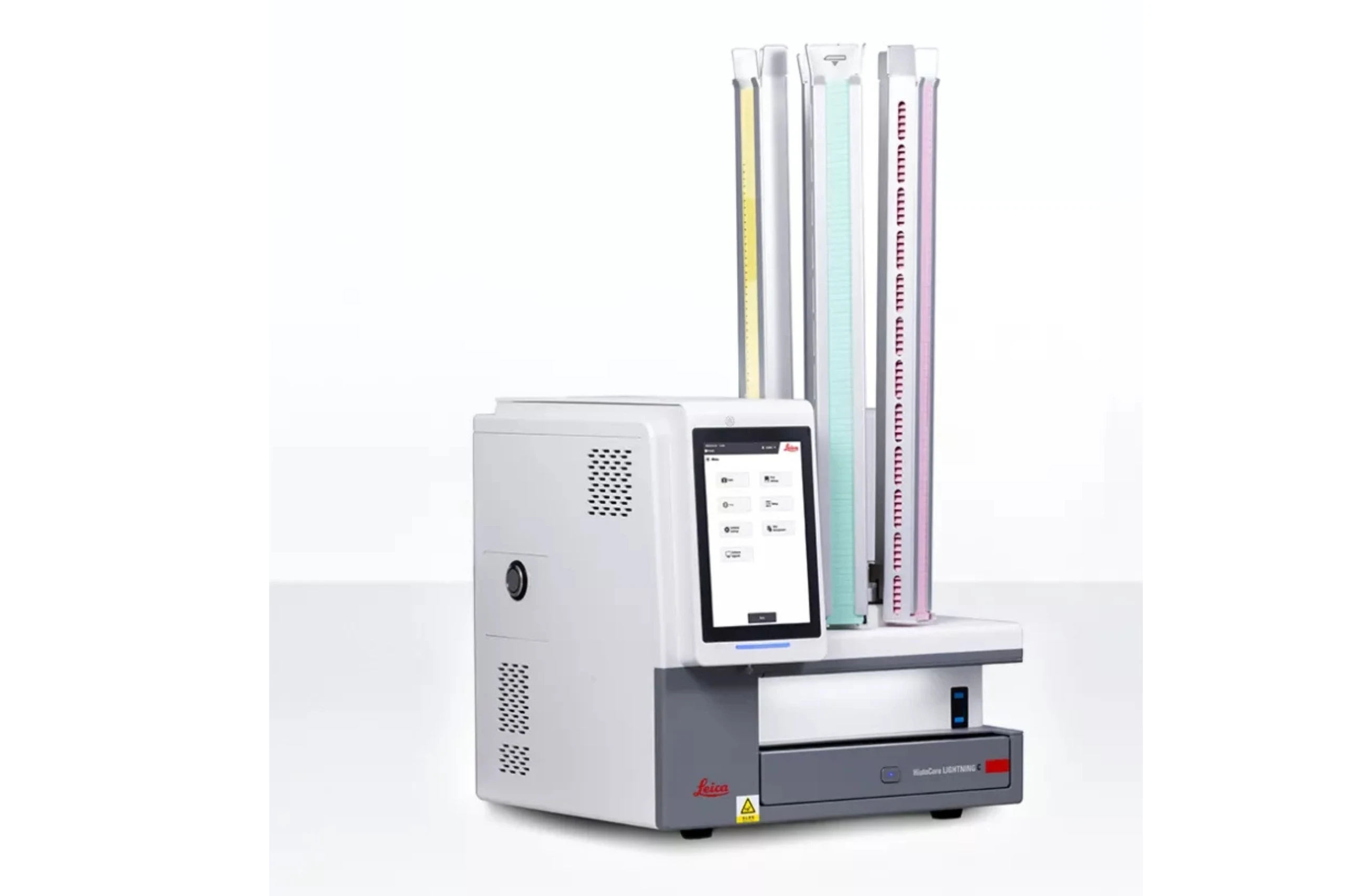
Leica Biosystems HistoCore LIGHTNING C Laser Cassette Printer: Speed and Traceability for High-Volume Histology Labs
Leica Biosystems' ink-free UV laser cassette printer delivers 2.5-second-per-cassette printing with 600-cassette capacity and LIS integration — what pathology lab buyers need to know before evaluating this system against their workflow needs and total cost of ownership.

Sep 17, 2026
Product News
Yamato Scientific America moves into life sciences with multi-technology partnership portfolio
Yamato Scientific America is entering the life sciences market through technology partnerships covering live-cell imaging, circulating tumor cell enrichment, and single-cell isolation — here is what buyers should evaluate before engaging.