
Waters Fraction Collector IV: More Capacity, More Formats for Prep LC Labs

Written By: Sharon Dong
Published: Oct 27, 2026
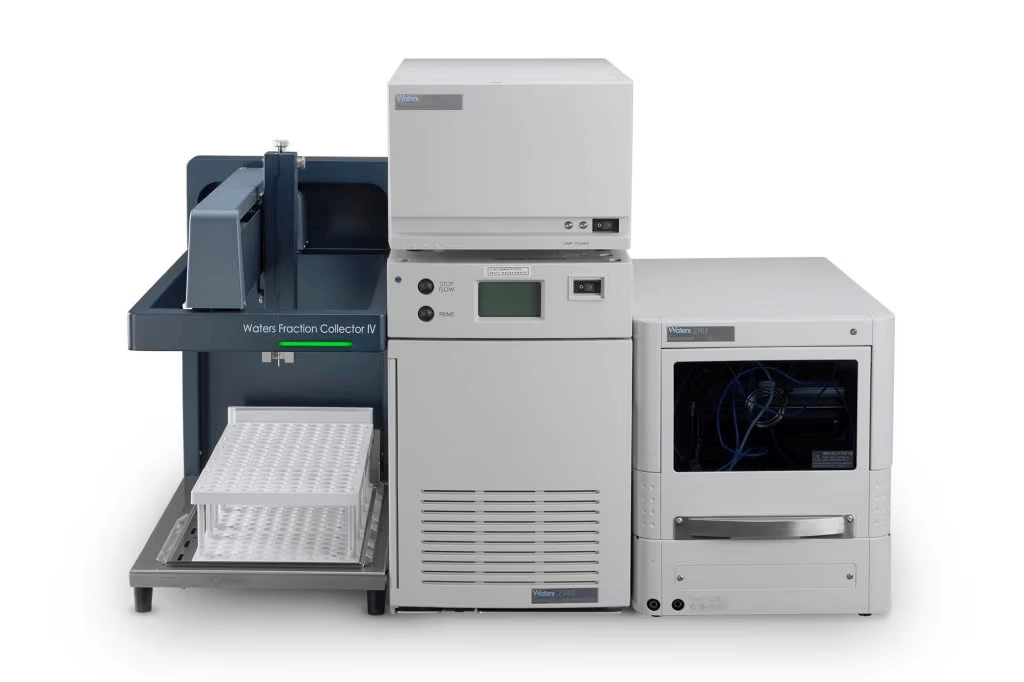
Scaling purification workflows from analytical to preparative liquid chromatography without switching platforms or rebuilding methods remains one of the more persistent capital-equipment headaches in drug discovery and early development. Labs isolating peptides, oligonucleotides, synthetic compounds, and lipids often face a forced choice: buy separate instruments for different workflow scales, or accept collection bottlenecks that cap throughput and require manual intervention. Waters Corporation's new Fraction Collector IV targets that trade-off directly.
The Fraction Collector IV supports flow rates up to 300 mL/min and offers 50% greater fraction collection capacity compared to the previous-generation Fraction Collector III. Compatible vessel types span microplates, vials, tubes, and preparative funnels, and the system operates natively within Empower™ Chromatography Data System, MassLynx™ Software, and ChromScope™ Software — tools that are standard across many Waters liquid chromatography (LC) environments. For labs already committed to Waters infrastructure, this integration eliminates the software-switching that often accompanies collector upgrades. Labs running non-Waters data systems should verify compatibility before specifying the instrument.
5 figures frame the purchase decision
- Flow rate ceiling: Up to 300 mL/min — adequate for most preparative purification workflows and consistent with Waters’ positioning of this system across analytical through preparative scale.
- Capacity increase: 50% more collection capacity versus the Fraction Collector III — the prior-generation instrument that remains actively available on the secondary market.
- Collection formats: Microplates, vials, tubes, and preparative funnels — customizable rack layouts are supported, reducing vessel changeover between project types.
- Software ecosystems: Native control through Empower CDS, MassLynx, and ChromScope — three of Waters’ primary data and control platforms.
- Market context: The global preparative chromatography market was valued at approximately $1.82 billion in 2025 and is projected to grow at a compound annual rate of roughly 7.5% through the early 2030s, driven largely by CDMO expansion and increasing demand for peptide and oligonucleotide drug substance purification.
Buyer’s note: The Fraction Collector IV has not yet been independently benchmarked against published third-party specifications at time of writing. The 50% capacity figure and 300 mL/min flow rate are drawn directly from Waters’ announced specifications. Buyers should request a formal datasheet and confirm vessel compatibility — particularly for non-standard collection formats — before issuing a purchase order. Waters indicates first customer shipments are expected “soon,” meaning lead times may vary at launch.
How the Fraction Collector IV compares in the preparative LC collection category
Fraction collectors occupy a well-established but often underspecified segment of preparative HPLC systems procurement. Most buying decisions hinge on four criteria: flow rate envelope, collection format flexibility, software integration, and scalability across workflow stages. The Fraction Collector IV positions competitively across all four, though the weight of each factor will vary by lab type.
- Flow rate range: The 300 mL/min ceiling is in line with what the broader preparative LC market expects from mid-to-high-range fraction collectors. Entry-tier platforms in this category typically top out at lower flow ceilings and may require separate instrumentation for true preparative-scale collection.
- Software integration: Native control through multiple chromatography data systems within a single vendor ecosystem is a meaningful differentiator. Platforms designed for more open-architecture operation offer flexibility but typically require additional configuration effort to match the workflow continuity Waters describes here.
- Vessel flexibility: The combination of microplates, vials, tubes, and preparative funnels in a single configurable platform addresses a genuine procurement pain point. Instruments optimized for a single vessel format impose requalification overhead when collection requirements shift — a real cost in CRO and CDMO environments that run diverse client projects.
- Generation upgrade path: The Fraction Collector III remains in active use and is available refurbished on the secondary market (listed pricing on LabX runs from approximately $1,999–$3,600 USD for used and refurbished units). Labs evaluating the IV against a III upgrade should assess whether the capacity increase and software advances justify the new-instrument capital outlay for their specific workflow volumes.
- Ecosystem dependency: The native software integration that makes this system efficient for Waters LC labs is also a consideration for labs that may diversify instrumentation vendors over time. The Fraction Collector IV is optimized within — and for — the Waters LC ecosystem.
Purchasing considerations by lab type
Pharmaceutical drug discovery labs
Discovery labs running lead optimization and candidate selection campaigns typically rotate through a wide range of compound classes and sample volumes. The Fraction Collector IV’s combinable time-based and peak-based collection modes, combined with the diverter valve for waste routing, reduce analyst intervention during multi-compound collection runs. Labs currently using the Fraction Collector III as part of an LC Prep AutoPurification or ACQUITY UPLC system should evaluate whether the 50% capacity increase directly addresses a throughput bottleneck or whether software continuity is the primary upgrade driver.
CRO and CDMO environments
For contract research and contract development and manufacturing organizations, purification throughput is a direct cost driver. The Fraction Collector IV’s ability to span analytical through preparative scale within a single platform, and within familiar software environments, reduces the instrument redundancy that adds overhead in multi-client settings. The customizable rack configurations are particularly relevant for CDMOs that routinely switch between project-specific collection formats.
Academic and government research labs
Capital budgets in academic settings are typically constrained and procurement cycles longer. The Fraction Collector IV’s compatibility with Waters’ preparative HPLC systems, including the LC Prep 150 and Modular Systems, offers a scalable entry point for labs that do not yet require full preparative-scale throughput but need a path to grow without re-procurement. Used and refurbished Fraction Collector III units may represent a cost-effective alternative for labs where collection volumes are stable and budget flexibility is limited.
Industrial and specialty chemistry labs
Industrial labs purifying natural products, synthetic compounds, or process intermediates may have atypical vessel requirements. The adjustable rack configurations and preparative funnel compatibility address high-volume collection needs. Labs running non-Waters LC platforms should confirm compatibility before specifying this system, as native software integration is specific to the Waters ecosystem.
Regulated-workflow notice: Laboratories operating under GMP or 21 CFR Part 11 requirements should confirm that the Fraction Collector IV’s Empower CDS integration meets their site’s current software validation standards before purchasing. Instrument qualification documentation requirements for new-generation hardware upgrades vary by site and should be confirmed with Waters’ regulatory support team prior to procurement.
Evaluate the Fraction Collector IV against your current workflow
Labs actively evaluating fraction collection upgrades should request a formal specification sheet from Waters and confirm which LC platform configurations — including modular systems — are explicitly supported at launch. Refurbished Fraction Collector III units currently available through Waters equipment listings on LabX provide a useful cost and capability baseline for buyers weighing upgrade economics. For buyers sourcing new preparative LC collection infrastructure, the Waters Fraction Collector product page on LabX includes active listings across generations. Visit waters.com for the Fraction Collector IV product page, solution sheet, and purification guide.
This article draws on a Waters press release and was created with the assistance of Generative AI and has undergone editorial review before publishing. LabX’s editorial policy can be found here.
Nov 04, 2026
Product News
Agilent 5987A MSD: Should 5977-Series Labs Upgrade?
A spec-by-spec look at whether the 5987A’s 25% faster scanning, 10× dynamic range gain, and built-in GC Assist intelligence justify moving off the 5977 series — with LabX used-market context for current 5977A and 5977B owners.
Nov 02, 2026
Product News
ImageXpress HCS.ai Advanced Duo: Dual-Camera HCS Upgrade for Drug Discovery Labs
Molecular Devices has launched the ImageXpress HCS.ai Advanced Duo, a dual-camera high-content screening system that adds simultaneous image acquisition and integrated screening analytics to the existing HCS.ai Advanced platform — this article breaks down what changes for buyers already operating in the category and whether the upgrade is warranted.
Oct 27, 2026
Product News
Waters Fraction Collector IV: More Capacity, More Formats for Prep LC Labs
Waters has launched the Fraction Collector IV, upgrading prep-scale purification with 50% more collection capacity, flow rates to 300 mL/min, and native control through Empower, MassLynx, and ChromScope software — here’s what buyers in pharma, biotech, and CRO labs need to evaluate before purchasing.
Oct 20, 2026
Product News
LX-60T100R Refrigerated Benchtop Centrifuge: F-Gas Compliance for Clinical Trials
A new hydrocarbon-cooled benchtop centrifuge purpose-built for clinical trial sample processing arrives with a GWP of ~3, 5-minute pre-cooling, and exclusive distribution through Resonant Clinical Solutions — giving procurement teams an F-gas-ready option well ahead of the 2028 EU regulatory deadline.
Oct 16, 2026
Product News
CryoArc Vita-76: Azenta’s High-Density Cryogenic Storage for IVF Clinics
Azenta Life Sciences has launched the CryoArc Vita-76, a cryogenic storage system that consolidates up to seven traditional dewars into a single footprint — this article covers specifications, how it compares in the clinical IVF storage market, and what fertility clinic buyers should evaluate before purchasing.
Sep 30, 2026
Product News
Thewaico Launches Integrated Bioreactor Platform to Solve Biomanufacturing Scale-Up
A new bioprocess company has emerged with three connected bioreactor platforms — spanning 2 L to 10,000+ L — and an AI-assisted control layer intended to eliminate the re-engineering step that derails most scale-up projects, alongside a direct-to-web pricing configurator.
Sep 28, 2026
Product News
Metrohm USA Launches IONIC Titrator With Built-In Cloud Access
Metrohm USA's new IONIC Titrator pairs a 10-inch touchscreen with direct cloud connectivity, letting labs monitor and share titration data without a PC; here's how it's specced, priced, and positioned for buyers comparing standalone titrators.
Sep 23, 2026
Product News
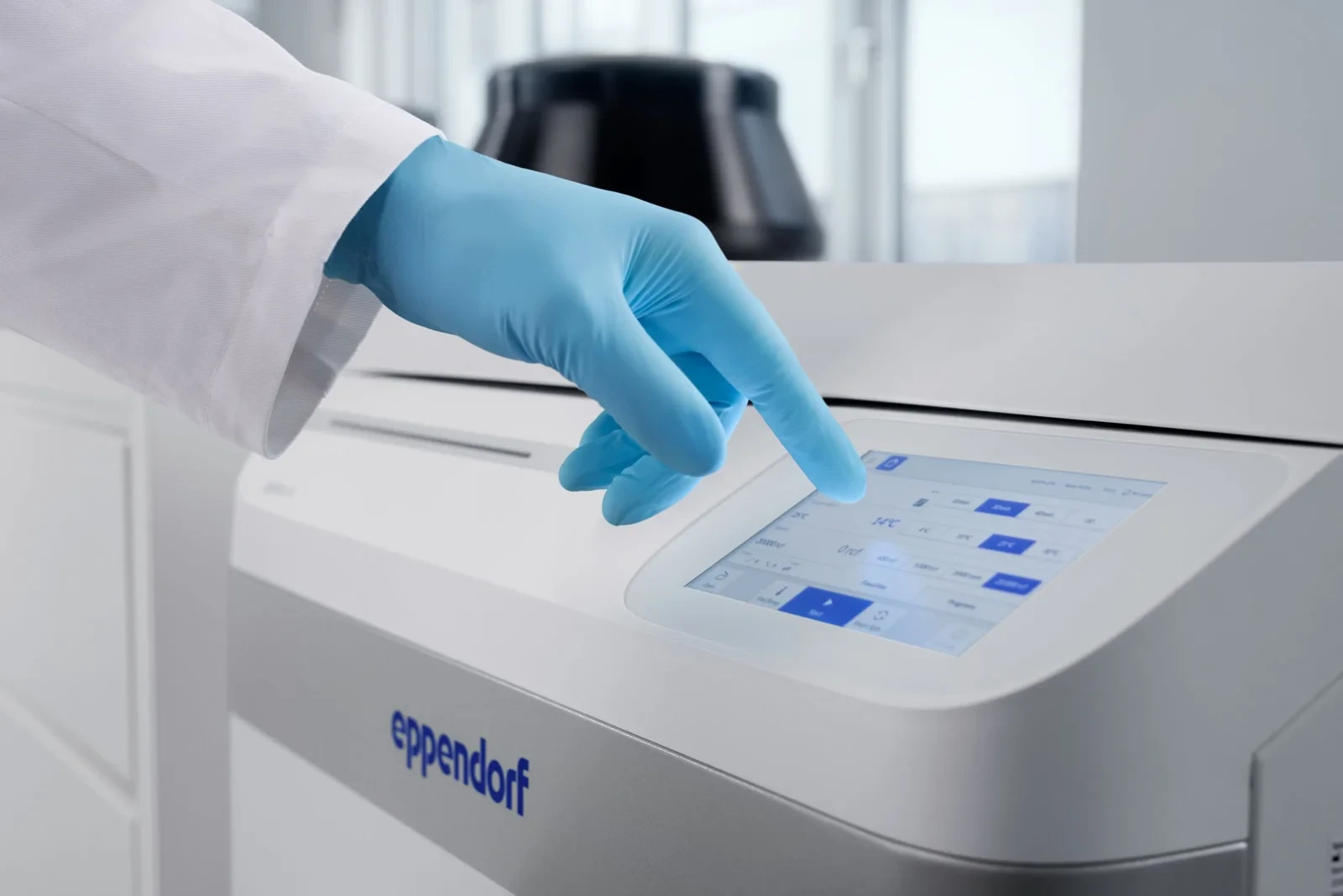
Eppendorf Introduces the SpinPro 8 R High-Speed Floor Centrifuge
Eppendorf's SpinPro 8 R floor-standing centrifuge launches with 6 L capacity, 35-rotor compatibility, CO₂-based refrigerant (GWP = 1), and AuditSafe documentation for pharma and biotech labs evaluating their next large-volume separation system.
Sep 22, 2026
Product News
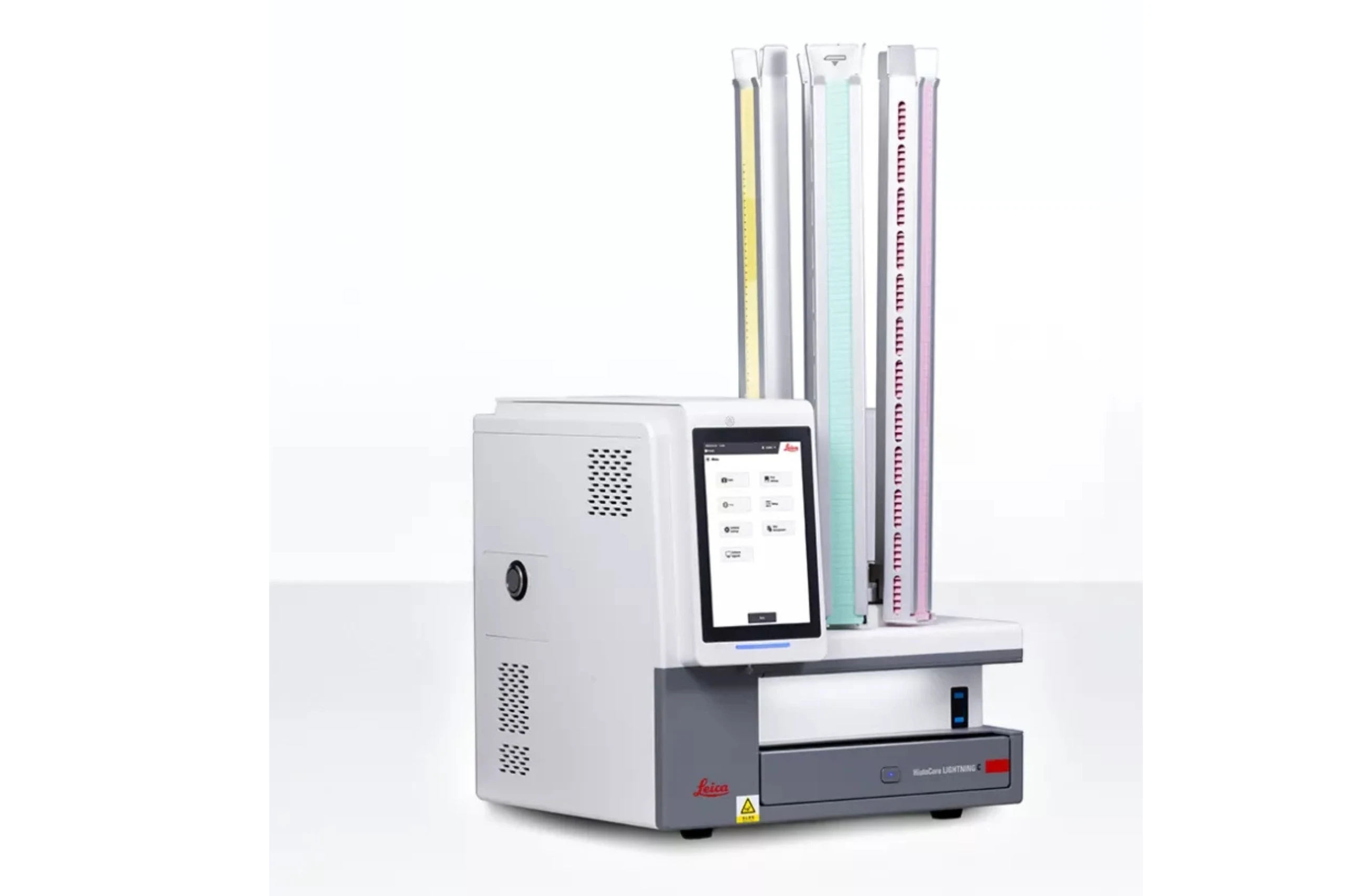
Leica Biosystems HistoCore LIGHTNING C Laser Cassette Printer: Speed and Traceability for High-Volume Histology Labs
Leica Biosystems' ink-free UV laser cassette printer delivers 2.5-second-per-cassette printing with 600-cassette capacity and LIS integration — what pathology lab buyers need to know before evaluating this system against their workflow needs and total cost of ownership.
Sep 17, 2026
Product News
Yamato Scientific America moves into life sciences with multi-technology partnership portfolio
Yamato Scientific America is entering the life sciences market through technology partnerships covering live-cell imaging, circulating tumor cell enrichment, and single-cell isolation — here is what buyers should evaluate before engaging.