
The Best FPLC Systems of 2026

Written By: Craig Bradley
Dec 11, 2025
In the landscape of biopharmaceutical research and protein engineering, the selection of a Fast Protein Liquid Chromatography (FPLC) system is a significant factor in operational workflows. Laboratory professionals require equipment that balances purification resolution with automation, reproducibility, and data integrity. The FPLC systems of 2026 reflect a shift toward modularity and AI-driven method development, addressing the diverse needs of academic labs and industrial production facilities. This guide evaluates five industry-leading models, analyzing their specifications, application suitability, and investment value to assist procurement teams in making data-driven acquisition decisions. Best Overall: Cytiva ÄKTA pure — A widely established system known for flexibility and modularity in research-scale purification. Best On A Budget: Knauer Azura Bio Compact AC — A cost-effective, compact solution designed for routine affinity chromatography. Best For Speed / Throughput: Cytiva ÄKTA avant 25 — Engineered for process development with integrated Design of Experiments (DoE) capabilities. Most Versatile: Bio-Rad NGC Quest 10 Plus — Features a configurable modular design that scales from basic to complex workflows. Best High-End Option: Shimadzu Nexera Prep — An AI-assisted platform delivering high precision and automated method optimization. Price Range: $65,000 – $95,000 (Estimated)
Best For: Best High-End Option Updated with a platform release in August 2024, the Shimadzu Nexera Prep represents the newest generation of preparative purification systems. While technically a Preparative HPLC, it is utilized for high-end protein purification due to its capability to integrate analytical functions into the workflow, connecting analytical precision with preparative scale operations. Key Specs Flow Rate: Up to 150 mL/min (configurable) Pressure Limit: High-pressure tolerance (suitable for polishing and peptides) Detection: Multi-wavelength UV-Vis with optional Mass Spectrometry (MS) integration Software: LabSolutions MD with AI-driven peak integration Release Date: August 2024 (Platform Update) Performance & Applications
The Nexera Prep is suitable for environments where precision and automation are priorities. Its primary feature is the "Analytical Quality by Design" (AQbD) approach, which uses simulation to determine separation parameters before sample consumption. This system is relevant for labs working with therapeutic proteins, peptides, or complex biosimilars where sample conservation is necessary. The integration of the LH-40 liquid handler and Open Solution software supports scale-up from analytical to preparative runs, making it a functional tool for pharmaceutical discovery labs requiring regulatory compliance. Price Range: $20,000 – $35,000
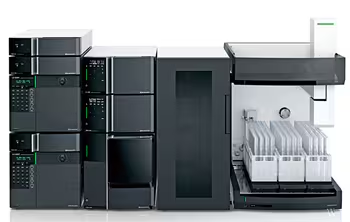
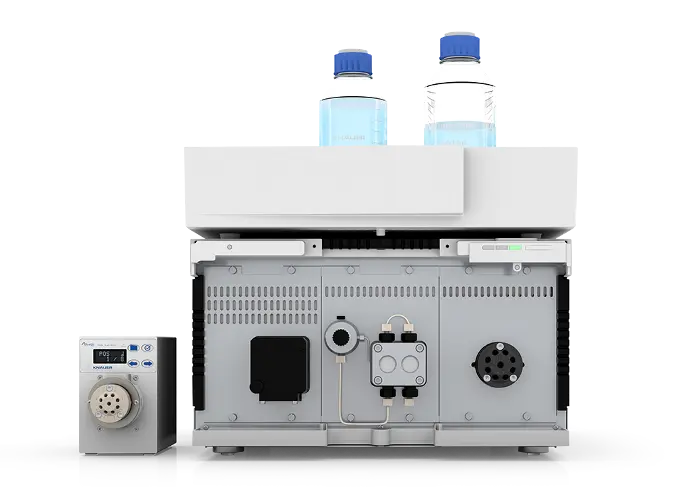
Best For: Best On A Budget Reconfigured for the biotech market in 2023, the Knauer Azura Bio Compact AC offers an alternative to larger FPLC units. This dedicated bio-chromatography configuration allows smaller laboratories and academic teams to access automated purification capabilities at a lower price point than enterprise systems. Key Specs Flow Rate: 0.01 – 50 mL/min Pressure Limit: 50 bar (725 psi) Detection: Variable single wavelength UV detector Footprint: Compact design (benchtop friendly) Material: Full biocompatible (metal-free) flow path Performance & Applications
The Azura Bio Compact AC addresses the essential requirements for affinity chromatography. It is engineered for the purification of tagged proteins and antibodies, handling tasks such as His-tag or Protein A purification. The system's "isocratic plus" pump technology allows for simple gradient formation, sufficient for many routine cleanup steps. Its operational focus is on simplicity and robustness; the system is designed to minimize downtime and maintenance, making it suitable for educational institutions or start-ups focused on specific, repetitive purification protocols rather than complex method development. Price Range: $60,000 – $110,000
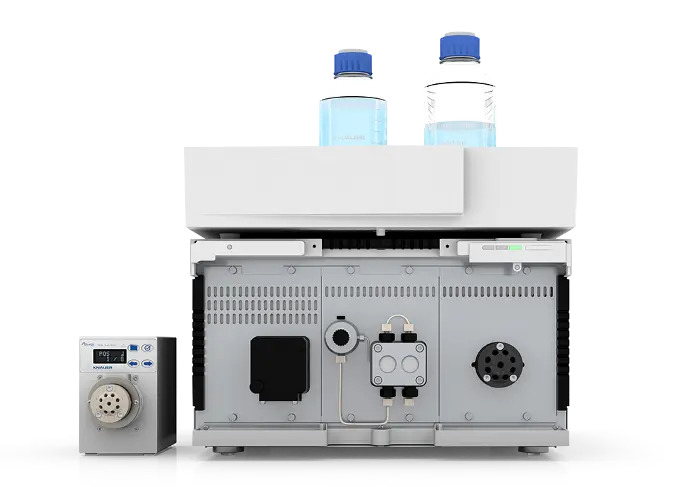
Best For: Best Overall The Cytiva ÄKTA pure is a widely established system in protein purification, utilized extensively due to its modularity and reliability. Continuous software updates and hardware accessories maintain its position in the industry in 2026. Key Specs Flow Rate: Up to 25 mL/min (Pure 25) or 150 mL/min (Pure 150) Pressure Limit: Up to 20 MPa (2900 psi) Detection: Advanced UV monitoring (up to 3 wavelengths), conductivity, and pH Modularity: Over 20 hardware options (valves, fraction collectors, detectors) Performance & Applications
The ÄKTA pure is designed for research flexibility. Its modular architecture allows scientists to customize the flow path to suit specific proteins, from enzymes requiring low shear forces to antibodies needing higher flow rates. The integration with UNICORN software provides control over method creation, allowing for complex multi-step purification protocols to be automated. It is relevant across various sectors, from basic academic research to pre-clinical drug development, capable of handling affinity, size exclusion (SEC), and ion exchange (IEX) chromatography. Price Range: $75,000 – $90,000
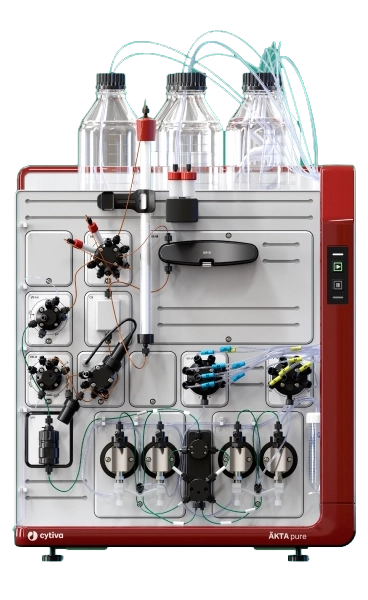
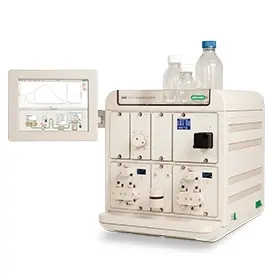
Best For: Most Versatile The Bio-Rad NGC Quest 10 Plus is engineered for scalability, featuring a "Tier Rotate" design that allows users to physically reconfigure the modules. This system is suitable for facilities that need a single instrument to adapt to varying project requirements. Key Specs Flow Rate: 0.001 – 10 mL/min (expandable in other NGC models) Pressure Limit: 25 MPa (3,650 psi) Detection: Multi-wavelength UV-Vis Interface: ChromLab software with touch-screen compatibility Automation: Automated buffer blending and sample injection Performance & Applications
Versatility is a primary characteristic of the NGC Quest 10 Plus. The system’s Point-to-Plumb lighting feature guides users through tubing connections, reducing setup errors—a benefit in shared laboratory spaces with users of varying experience levels. Suited for method scouting and optimization, the NGC platform supports automated column switching and buffer preparation. It is used in structural biology and biochemistry labs where the purification conditions for proteins must be tested and optimized before scale-up. Price Range: $100,000 – $140,000
Best For: Best For Speed / Throughput For laboratories focused on process development and throughput, the ÄKTA avant 25 offers specific functional capabilities. It is designed to facilitate the transition from bench-scale research to manufacturing by prioritizing speed and process security. Key Specs Flow Rate: Up to 25 mL/min Pressure Limit: 20 MPa (2900 psi) Cooling: Built-in fraction collector with temperature control Methodology: Integrated Design of Experiments (DoE) software Security: BufferPro automatic buffer preparation Performance & Applications
The ÄKTA avant 25 is built for data quality and efficiency. Its notable feature is the integrated DoE capability within the UNICORN software, which allows researchers to vary parameters systematically to identify robust purification conditions with fewer experiments. The system also features a cooled fraction collector to preserve the integrity of heat-sensitive proteins during long runs. This model is often selected by industrial bioprocessing groups and core facilities where maximizing throughput and establishing scalable manufacturing protocols are the primary objectives. Model Best For Key Features Typical Price Range Shimadzu Nexera Prep High-End / AI Features AI-assisted method development, AQbD compliance, LH-40 liquid handler $65,000 – $95,000 Knauer Azura Bio Compact AC Budget / Routine Compact footprint, metal-free flow path, "isocratic plus" gradient $20,000 – $35,000 Cytiva ÄKTA pure Overall Performance Highly modular hardware, extensive resin library support, UNICORN control $60,000 – $110,000 Bio-Rad NGC Quest 10 Plus Versatility LED-guided plumbing (Point-to-Plumb), modular Tier Rotate design $75,000 – $90,000 Cytiva ÄKTA avant 25 Speed / Throughput Integrated Design of Experiments (DoE), cooled fraction collection, BufferPro $100,000 – $140,000 Selecting an FPLC system for 2026 requires an assessment of a laboratory’s specific throughput demands, budget constraints, and long-term research goals. While established platforms like the Cytiva ÄKTA pure continue to offer proven reliability for general applications, recent entrants like the Shimadzu Nexera Prep (2024 update) and the reconfigured Knauer Azura Bio Compact AC demonstrate a shift toward AI-integration and compact design. By aligning equipment capabilities with the complexity of the target proteins—whether for simple tag removal or complex structural analysis—laboratories can ensure they invest in appropriate FPLC systems to support their scientific objectives. This article was created with the assistance of Generative AI and has undergone editorial review before publishing.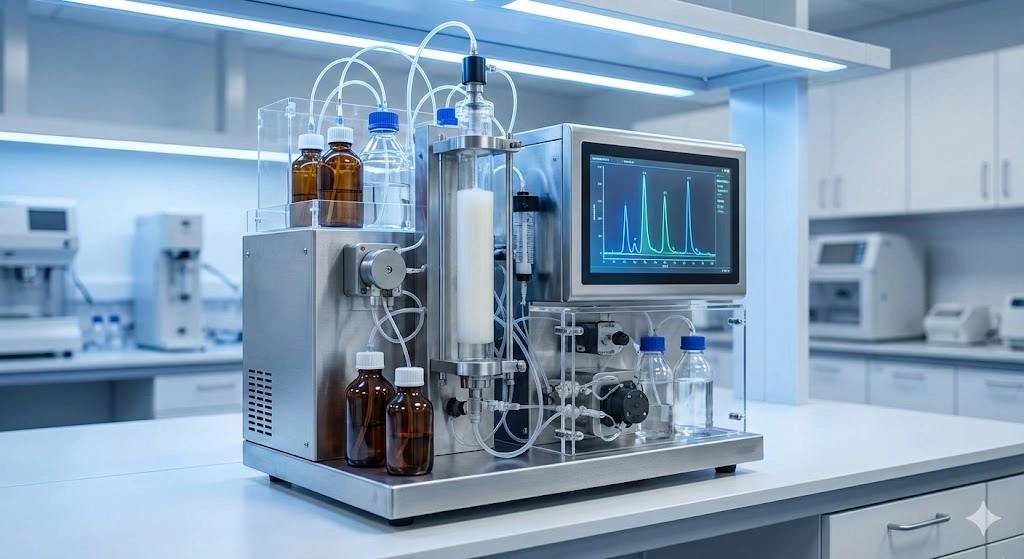
Quick Summary Box
Shimadzu Nexera Prep – Shimadzu
Knauer Azura Bio Compact AC – Knauer
Cytiva ÄKTA pure – Cytiva
Bio-Rad NGC Quest 10 Plus – Bio-Rad
Cytiva ÄKTA avant 25 – Cytiva
Comparison Table
Conclusion: Selecting the Best FPLC System for 2026
Jan 09, 2026
Product News
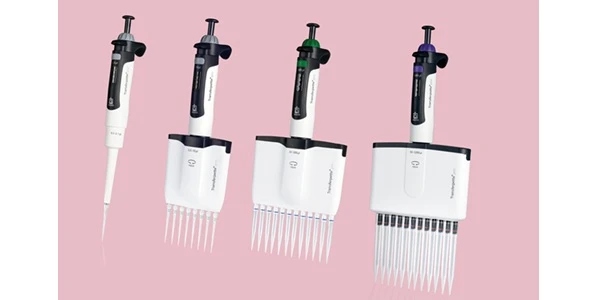
BRANDTECH Scientific Introduces the Transferpette® pro Micropipette: A New Twist on Comfort and Control
The latest addition to its trusted line of precision liquid handling instruments, engineered for comfort, control, and repeatable accuracy.
Jan 06, 2026
Featured, Technical Insight
New Research Frontiers Unlocked by Next-Generation Flow Cytometry
Next-generation flow cytometry systems using acoustic focusing are opening entirely new areas of research that were previously impractical or inaccessible with conventional flow cytometers.
Jan 05, 2026
Buying Guides
The Bottom Line: How Smart Microcentrifuge Tube Choices Impact Lab Efficiency and Cost
Innovative microcentrifuge tube solutions are more than just lab consumables—they’re strategic tools that can reduce costs, improve outcomes, and support long-term sustainability goals.
Jan 05, 2026
Buying Guides
Future-Proofing Your Lab with Innovative Microcentrifuge Tube Solutions
As laboratories evolve to meet the growing demands of modern science, even the most basic tools—like microcentrifuge tubes—are being reimagined.
Jan 05, 2026
Buying Guides
Microcentrifuge Tube Innovations: Driving Sustainable Change
Integrating next-generation consumables into standard workflows can lead to a more sustainable and responsible research environment.
Jan 05, 2026
Buying Guides
Single Use Plastics: How to Manage these Major Contributors to Lab Waste
Reducing lab waste isn’t just a sustainability issue—it’s a financial and operational one, too.
Jan 05, 2026
Buying Guides
Common Microcentrifuge Tube Challenges in Sensitive Molecular Workflows
Key factors that can impact the performance of microcentrifuge tubes for PCR, qPCR, and NGS and other sensitive applications
Jan 05, 2026
Buying Guides
How to Research the Right Microcentrifuge Tubes for Your Application
Selecting the right microcentrifuge tubes starts with understanding the specific demands of your application.
Jan 05, 2026
Technical Insight
The Best Confocal Microscopes of 2026
Discover the best confocal microscopes of 2026 for advanced imaging. Compare top models from Zeiss, Evident, and Nikon for speed, resolution, and budget.
Dec 24, 2025
Featured, Popular Products, Technical Insight
Emerging Mass Spectrometry Technologies to Improve Intraoperative Diagnostics
Advances in mass spectrometry may soon reshape surgery, improving diagnostic accuracy and impacting post-operative outcomes