
The Best ICP-MS Systems of 2026: A Buyer's Guide to Price and Features

Written By: Craig Bradley
Aug 23, 2024
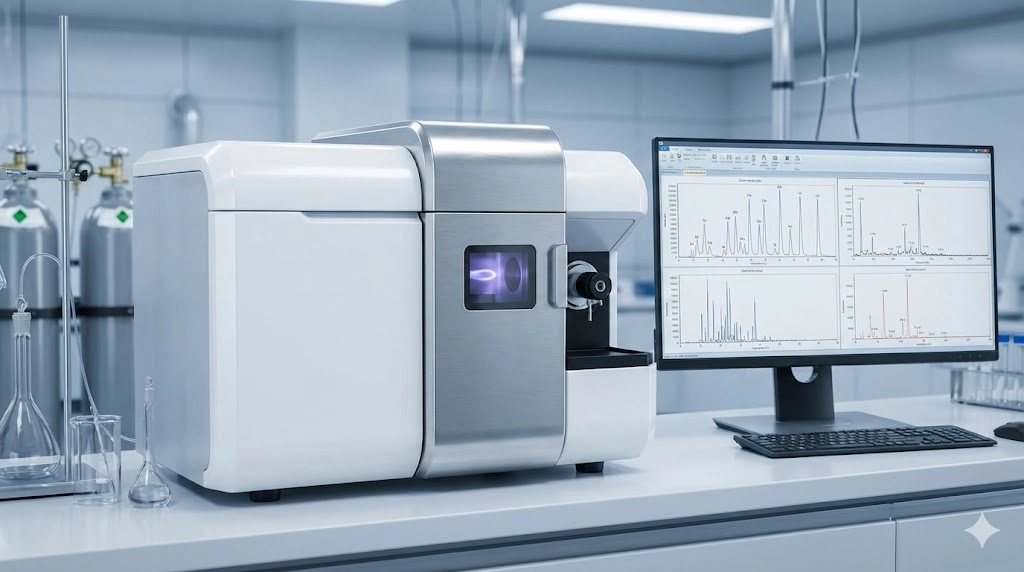
In the field of trace elemental analysis, Inductively Coupled Plasma Mass Spectrometry (ICP-MS) remains the gold standard for detecting metals and non-metals at concentrations as low as parts per quadrillion. Selecting the right instrumentation is critical for laboratory professionals facing increasing demands for sample throughput, lower detection limits, and robust interference removal. The best ICP-MS systems of 2026 prioritize intelligent workflow software, reduced argon consumption, and enhanced matrix tolerance to maintain uptime in rigorous analytical environments. This guide evaluates five industry-leading models, including recent releases that are redefining performance standards for environmental, pharmaceutical, and semiconductor applications.
Quick Summary
Best Overall: Agilent 7850 — Industry-standard reliability with smart software tools that minimize workflow errors.
Best On A Budget: Shimadzu ICPMS-2050 — Compact design with a mini-torch system that significantly reduces argon running costs.
Best For Speed / Throughput: Thermo Scientific iCAP RQplus — Robust handling of high-matrix samples without manual dilution, ensuring continuous operation.
Most Versatile: Analytik Jena PlasmaQuant MS Elite — Exceptional sensitivity suitable for both routine monitoring and complex research applications.
Best High-End Option: PerkinElmer NexION 5000 — Multi-quadrupole technology delivering the ultimate interference removal for ultra-trace analysis.
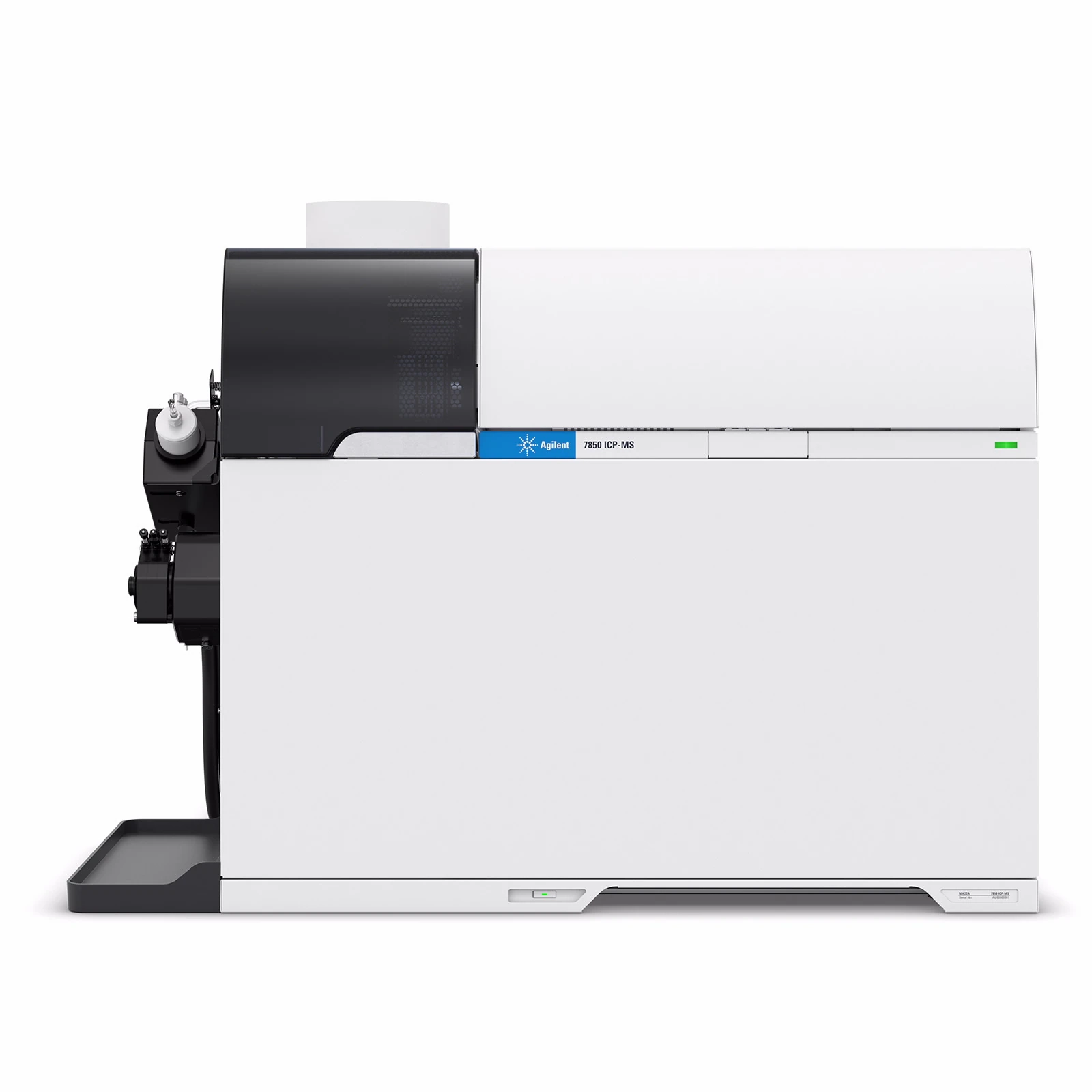
Agilent 7850 – Agilent Technologies
Price Range $160,000 – $220,000
Best For Best Overall (General Lab Efficiency & Workflow Intelligence)
Key Specs
Mass Range: 2–260 amu
Dynamic Range: 10–11 orders of magnitude
Detector: Orthogonal Detector System (ODS)
Software: ICP-MS MassHunter with IntelliQuant
Gas Requirement: Standard Argon inputs
Performance & Applications The Agilent 7850 is engineered to streamline routine workflows, addressing the common pain points of sample preparation errors and matrix interference. Its standout feature is the integration of smart software tools, such as IntelliQuant, which provides a complete elemental scan for every sample to identify spectral interferences before they impact data quality. This system is exceptionally robust for general analytical testing, including water quality, food safety, and pharmaceutical impurities (USP <232>/<233>). By automating method development and monitoring instrument health in real-time, the 7850 minimizes downtime and reduces the need for frequent recalibration, making it the top choice for laboratories requiring consistent, defensible data day after day.
Shimadzu ICPMS-2050 – Shimadzu Corporation
Price Range $130,000 – $170,000
Best For Best On A Budget (Eco-Efficiency & Compact Design)
Key Specs
Release Date: Late 2023 / Early 2024 (Global Availability)
Plasma Torch: Proprietary Mini-Torch System
Argon Consumption: 11 L/min (Running) / 6 L/min (Eco)
Dimensions: Compact footprint for benchtop conservation
Interference Removal: Collision/Reaction Cell
Performance & Applications Recognized with recent design awards, the Shimadzu ICPMS-2050 represents a significant leap in cost-effective elemental analysis. This model is defined by its proprietary mini-torch system, which dramatically lowers argon gas consumption compared to standard torches, directly reducing long-term operating costs. Despite its smaller physical footprint and lower utility requirements, it maintains high sensitivity and stability. It is particularly well-suited for environmental labs and contract testing facilities where profit margins depend on keeping cost-per-analysis low. The system includes advanced collision cell technology to effectively remove polyatomic interferences, ensuring that budget-friendly operation does not come at the expense of analytical accuracy for regulated environmental monitoring.
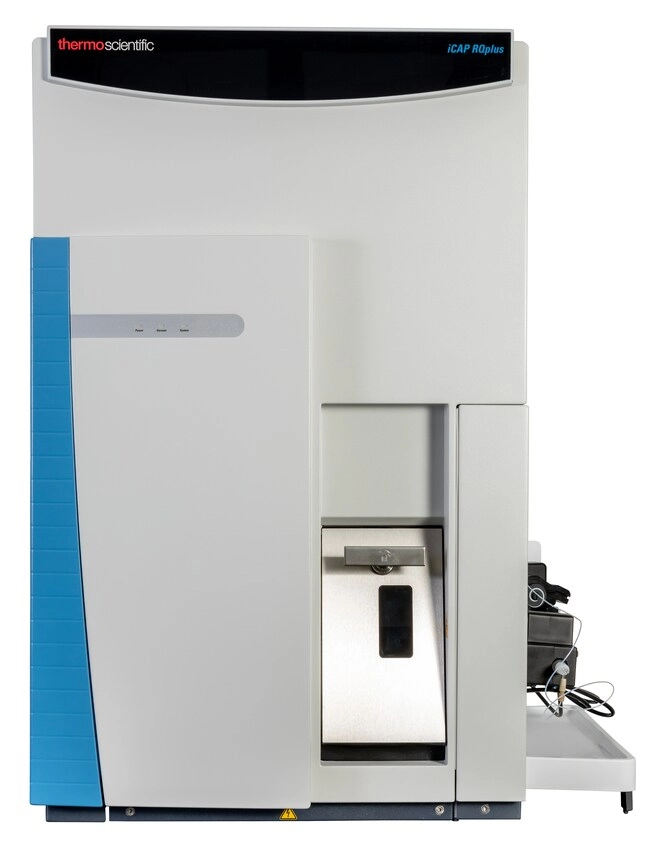
Thermo Scientific iCAP RQplus – Thermo Fisher Scientific
Price Range $150,000 – $190,000
Best For Best For Speed / Throughput
Key Specs
Release Date: 2023
Sample Introduction: Argon Gas Dilution (AGD) technology
Detector: Long-life electron multiplier
Software: Qtegra Intelligent Scientific Data Solution
Cleaning: Easy-access interface cone system
Performance & Applications The Thermo Scientific iCAP RQplus was launched with a singular focus: handling difficult samples without interruption. High-throughput laboratories often struggle with signal drift and cone clogging when analyzing heavy matrices like brines, wastewaters, or fused geological samples. The iCAP RQplus utilizes advanced Argon Gas Dilution (AGD) technology to automatically adjust for high total dissolved solids (TDS), eliminating the need for manual pre-dilution. This capability preserves sample integrity and drastically improves throughput by preventing the drift that typically forces re-runs. It is an ideal workhorse for geochemical exploration and large-scale environmental screening programs where speed and "measure-and-forget" reliability are paramount.
Analytik Jena PlasmaQuant MS Elite – Analytik Jena
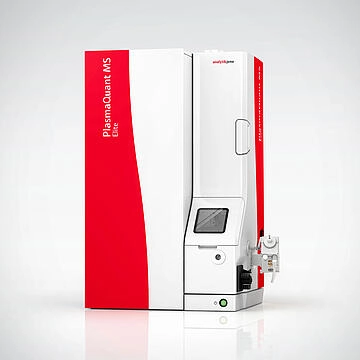
Price Range $170,000 – $220,000
Best For Most Versatile (High Sensitivity & Research)
Key Specs
Sensitivity: Gigahertz sensitivity (> 1.5 billion cps/ppm for In)
Optics: ReflexION 3D ion mirror
Background: < 1 count per second
Vacuum System: High-performance turbomolecular pumps
Gas Modes: Integrated collision and reaction cell (iCRC)
Performance & Applications The Analytik Jena PlasmaQuant MS Elite is distinguished by its incredible sensitivity, achieved through the patented ReflexION 3D ion mirror which reflects ions at 90 degrees to completely remove neutral particles. This optical arrangement results in market-leading signal-to-noise ratios, making the instrument versatile enough for everything from routine environmental compliance to cutting-edge geological isotope ratios. The system excels in applications requiring ultra-trace detection limits, such as purity testing in chemicals or biological research where sample volumes are limited. Its ability to switch between high-sensitivity modes and robust attenuation allows a single lab to handle diverse sample types without swapping instruments.
PerkinElmer NexION 5000 – PerkinElmer
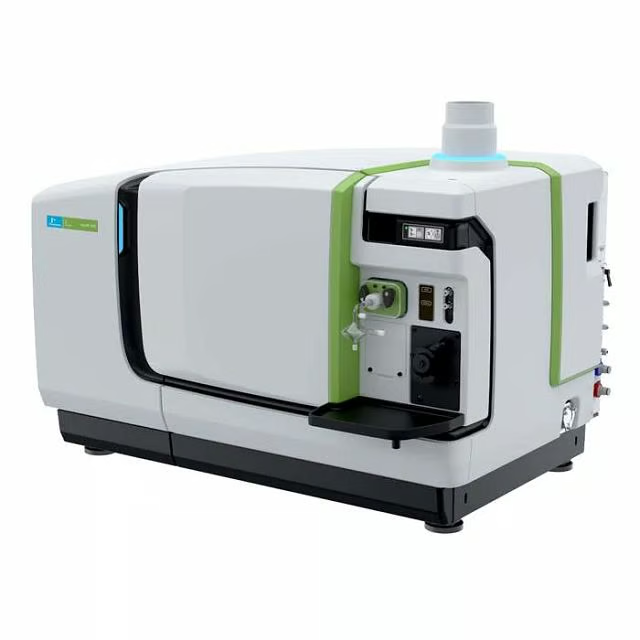
Price Range $250,000 – $320,000
Best For Best High-End Option (Interference Removal)
Key Specs
Configuration: Multi-Quadrupole (Four Quadrupoles)
Resolution: 0.7 amu (Standard) / < 0.3 amu (Custom)
Cell Technology: Universal Cell Technology (UCT) with dynamic bandpass
Plasma: LumiCoil RF coil (no water cooling required)
Control: Syngistix software platform
Performance & Applications For laboratories where data accuracy is non-negotiable and interferences are complex, the PerkinElmer NexION 5000 is the apex competitor. As a multi-quadrupole system, it uses four separate quadrupoles to control the ion beam, offering superior interference removal capabilities that single or triple-quad systems cannot match. This is particularly vital in the semiconductor industry, where elements like phosphorus, silicon, and sulfur must be measured at PPT (parts per trillion) levels without false positives from spectral overlaps. While the investment cost is higher, the NexION 5000 provides the analytical power necessary for advanced materials science, biomonitoring, and semiconductor fabrication plants requiring the absolute lowest detection limits possible.
Comparison of Top ICP-MS Models
Model | Best For | Key Features | Typical Price Range |
|---|---|---|---|
Agilent 7850 | Overall / Workflow | IntelliQuant smart software, 10–11 log dynamic range, robust interface. | $160k – $220k |
Shimadzu ICPMS-2050 | Budget / Efficiency | Mini-torch (11 L/min argon), compact footprint, 2024 Design Award winner. | $130k – $170k |
Thermo Scientific iCAP RQplus | Speed / Throughput | Argon Gas Dilution (AGD), supports 25% TDS, drift correction. | $150k – $190k |
Analytik Jena PlasmaQuant MS Elite | Versatility / Sensitivity | ReflexION 3D mirror, Gigahertz sensitivity, < 1 cps background. | $170k – $220k |
PerkinElmer NexION 5000 | High-End / Research | Four quadrupoles, sub-ppt detection, maintenance-free LumiCoil. | $250k – $320k |
Conclusion: Choosing the Best ICP-MS System
Selecting the best ICP-MS system for 2026 requires balancing analytical performance with operational realities like gas consumption and ease of use. While the Agilent 7850 continues to lead the market as a versatile all-rounder, recent innovations from competitors offer compelling alternatives. The Shimadzu ICPMS-2050 and Thermo Scientific iCAP RQplus demonstrate a clear industry trend toward efficiency—reducing cost-per-sample and simplifying the analysis of complex matrices. For laboratories pushing the boundaries of detection limits, the PerkinElmer NexION 5000 remains the definitive choice. Ultimately, the ideal ICP-MS systems will align with the specific sample load and detection requirements of the laboratory workflow.
This article was created with the assistance of Generative AI and has undergone editorial review before publishing.
Jan 09, 2026
Product News
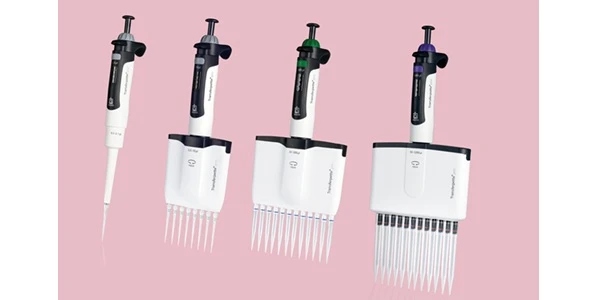
BRANDTECH Scientific Introduces the Transferpette® pro Micropipette: A New Twist on Comfort and Control
The latest addition to its trusted line of precision liquid handling instruments, engineered for comfort, control, and repeatable accuracy.

Jan 06, 2026
Featured, Technical Insight
New Research Frontiers Unlocked by Next-Generation Flow Cytometry
Next-generation flow cytometry systems using acoustic focusing are opening entirely new areas of research that were previously impractical or inaccessible with conventional flow cytometers.
Jan 05, 2026
Buying Guides
The Bottom Line: How Smart Microcentrifuge Tube Choices Impact Lab Efficiency and Cost
Innovative microcentrifuge tube solutions are more than just lab consumables—they’re strategic tools that can reduce costs, improve outcomes, and support long-term sustainability goals.
Jan 05, 2026
Buying Guides
Future-Proofing Your Lab with Innovative Microcentrifuge Tube Solutions
As laboratories evolve to meet the growing demands of modern science, even the most basic tools—like microcentrifuge tubes—are being reimagined.
Jan 05, 2026
Buying Guides
Microcentrifuge Tube Innovations: Driving Sustainable Change
Integrating next-generation consumables into standard workflows can lead to a more sustainable and responsible research environment.
Jan 05, 2026
Buying Guides
Single Use Plastics: How to Manage these Major Contributors to Lab Waste
Reducing lab waste isn’t just a sustainability issue—it’s a financial and operational one, too.
Jan 05, 2026
Buying Guides
Common Microcentrifuge Tube Challenges in Sensitive Molecular Workflows
Key factors that can impact the performance of microcentrifuge tubes for PCR, qPCR, and NGS and other sensitive applications
Jan 05, 2026
Buying Guides
How to Research the Right Microcentrifuge Tubes for Your Application
Selecting the right microcentrifuge tubes starts with understanding the specific demands of your application.
Jan 05, 2026
Technical Insight
The Best Confocal Microscopes of 2026
Discover the best confocal microscopes of 2026 for advanced imaging. Compare top models from Zeiss, Evident, and Nikon for speed, resolution, and budget.

Dec 24, 2025
Featured, Popular Products, Technical Insight
Emerging Mass Spectrometry Technologies to Improve Intraoperative Diagnostics
Advances in mass spectrometry may soon reshape surgery, improving diagnostic accuracy and impacting post-operative outcomes