
The Best Infrared and FTIR Spectroscopy Systems of 2026: A Buyer's Review of Price and Features

Written By: Craig Bradley
May 29, 2024
Selecting the right analytical instrumentation is critical for modern laboratories, and the best infrared and FTIR spectroscopy systems of 2026 offer unprecedented speed and connectivity. Laboratory professionals facing high sample volumes or requiring field mobility will find that this year’s top models integrate advanced automation with rugged durability. Whether your facility focuses on pharmaceutical quality control, polymer identification, or academic research, the latest generation of spectrometers delivers precise molecular data with streamlined workflows. Best Overall: Nicolet Apex — Delivers a perfect balance of high spectral resolution and multi-user workflow automation. Best High-End Portable: MOBILE-IR II — Offers true laboratory-grade performance in a battery-powered, weather-resistant field unit. Best For Speed / Throughput: IRXross — Features rapid spectral mapping and high sensitivity for fast-paced industrial environments. Most Versatile: Spectrum 3 — A tri-range powerhouse capable of covering NIR, MIR, and FIR in a single scan. Best Compact Option: Cary 630 — The smallest benchtop footprint with modular accessories for quick technique changes. Price Range: $25,000 – $40,000 (Estimate)
Best For: Overall Laboratory Performance
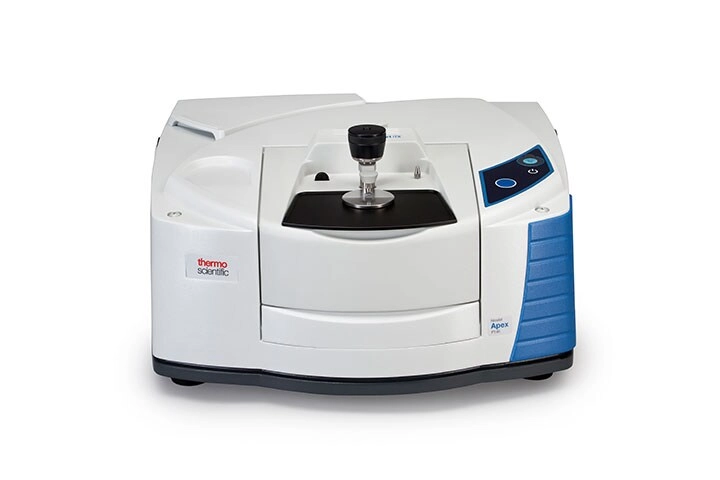
Primary Category: Versatility & Automation The Nicolet Apex represents the newest evolution in Thermo Fisher’s benchtop lineup, designed to replace older workhorses like the iS5. It is engineered for multi-user labs where ease of use cannot come at the expense of data quality. The system utilizes a LightDrive optical engine, which significantly improves spectral consistency and component lifetime. Its standout feature is the integration of OMNIC Paradigm software, which allows users to automate complex workflows and creates a visual dashboard for easy instrument status monitoring. Key Specs Signal-to-Noise Ratio: 50,000:1 (Guaranteed) Spectral Resolution: Better than 0.25 cm⁻¹ Dimensions: 550 x 570 x 250 mm Detector: Fast-recovery DTGS (Deuterated Triglycine Sulfate) Performance & Applications
The Nicolet Apex excels in environments requiring strict regulatory compliance and high sample throughput. Its "Smart Background" feature allows the instrument to collect background data while the user prepares the next sample, cutting total analysis time by up to 50%. This makes it scientifically relevant for pharmaceutical QA/QC labs that must adhere to pharmacopeia standards. Its robust optical design also suits academic research labs where students need a durable, error-tolerant system for polymer characterization and organic synthesis verification. Price Range: $35,000 – $60,000 (Estimate)
Best For: Field Analysis & Mobility
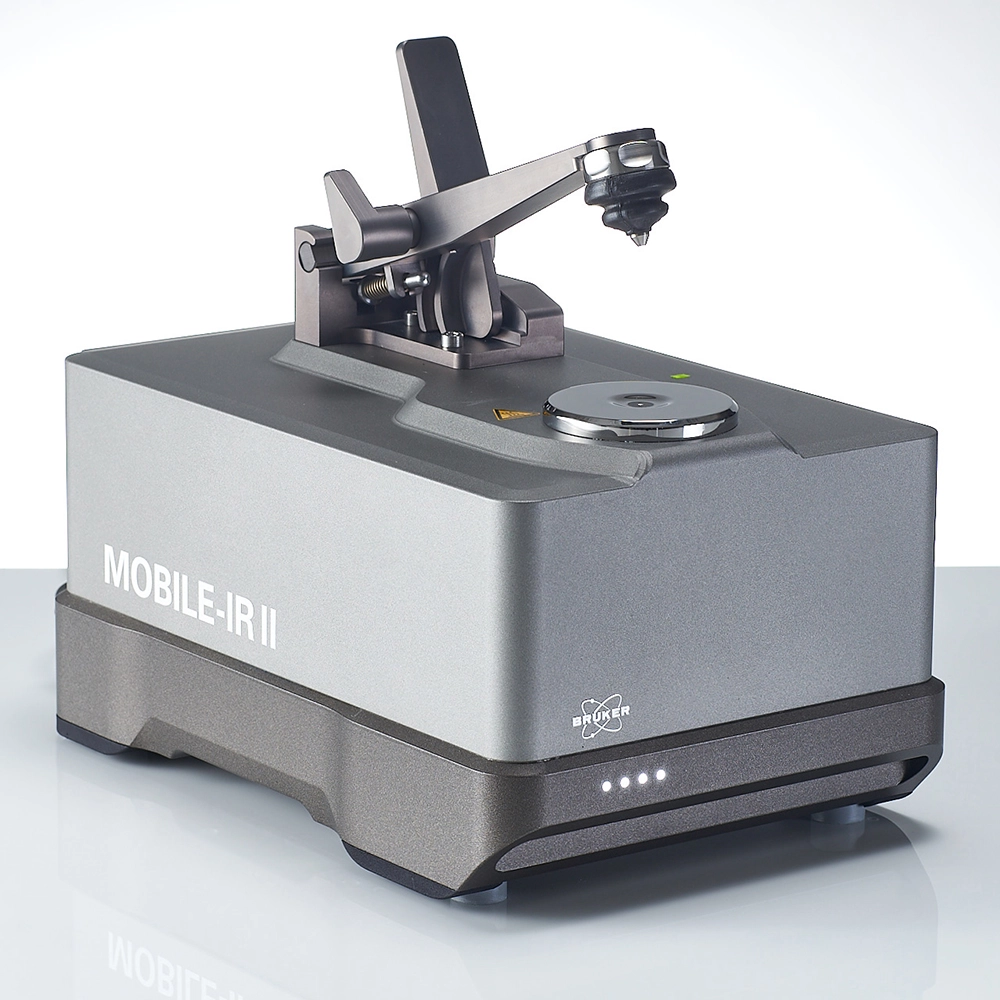
Primary Category: High-End Portable Released in late 2022, the MOBILE-IR II brings the power of a research-grade benchtop instrument into the field. Unlike typical handhelds that sacrifice resolution for portability, this unit maintains high spectral fidelity using a RockSolid interferometer. It is encased in an IP65-rated shell, making it resistant to dust and water jets, which is essential for on-site industrial testing. The integrated battery and thermoelectrically cooled MCT detector ensure that it is ready to measure immediately without the need for liquid nitrogen. Key Specs Spectral Resolution: 2 cm⁻¹ (Standard), 0.8 cm⁻¹ (Option) Protection Rating: IP65 (Dust and Water Resistant) Detector: TE-MCT (Thermoelectrically cooled) Battery Life: Integrated battery for off-grid operation Performance & Applications
Operational flexibility is the core strength of the MOBILE-IR II. It is specifically designed for applications such as incoming goods inspection at loading docks, mobile environmental analysis, and forensic investigations at crime scenes. The heatable diamond ATR (Attenuated Total Reflectance) interface allows for the analysis of intractable solids and liquids directly on-site. For professionals in the construction or mining sectors, this model eliminates the delay of transporting samples back to a central lab, providing immediate chemical identification in harsh environments. Price Range: $20,000 – $35,000 (Estimate)
Best For: Speed & Throughput
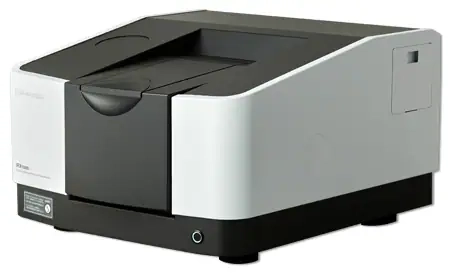
Primary Category: Speed / Throughput Shimadzu’s IRXross, a major release in 2023, addresses the need for speed in contamination analysis and failure tracking. Building on the success of the IRAffinity series, this model is optimized for rapid scanning and automated contaminant identification. It features a unique contaminant analysis program that automatically searches for spectral matches, significantly reducing the time an operator spends interpreting data. The system is engineered to handle high-throughput environments where reducing the "time-to-result" is the primary KPI. Key Specs Signal-to-Noise Ratio: 55,000:1 Max Resolution: 0.25 cm⁻¹ Scan Speed: 20 spectra/second (Rapid Scan) Software: LabSolutions IR with Contaminant Analysis Macro Performance & Applications
This model is particularly suited for the electronics and automotive industries, where detecting microscopic defects or foreign substances on circuit boards and parts is routine. The high-speed mapping capability allows for faster reaction tracking in kinetic studies, making it valuable for chemical research and development. Its high sensitivity ensures that even minute traces of contaminants are detected, providing reliability for failure analysis labs that support large-scale manufacturing operations. Price Range: $45,000 – $65,000+ (Depending on range config)
Best For: Advanced Research & Development
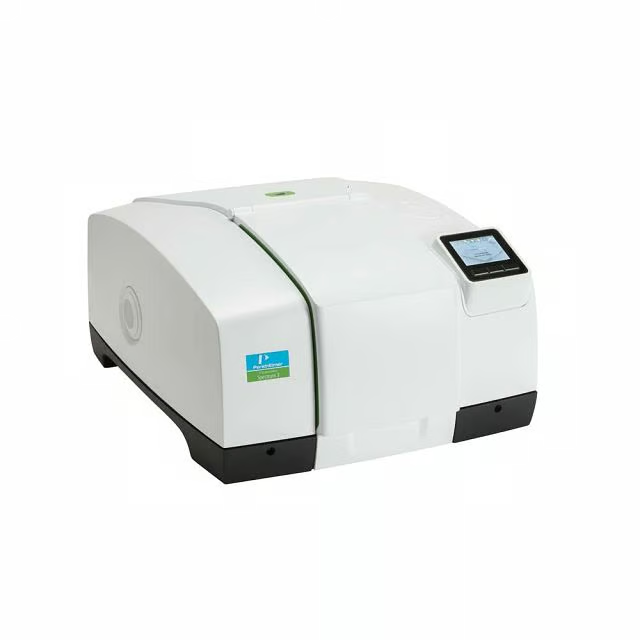
Primary Category: High-End / Versatile The PerkinElmer Spectrum 3 remains a top-tier choice for 2026 due to its unmatched versatility. It is a tri-range spectrometer, meaning a single instrument can be configured to cover Near-Infrared (NIR), Mid-Infrared (MIR), and Far-Infrared (FIR) regions. This eliminates the need to purchase multiple instruments for different spectral ranges. The system features automatic beam splitter switching, allowing users to move between ranges without manual intervention or breaking the purge, which preserves atmospheric stability inside the optical bench. Key Specs Spectral Range: 14,700 cm⁻¹ to 30 cm⁻¹ (Tri-range configuration) Scanning Speed: Up to 100 scans/second Detectors: Supports dual detector configuration (e.g., DTGS and MCT) Accessories: SmartPanel for tablet control Performance & Applications
The Spectrum 3 is the ideal solution for advanced materials research and pharmaceutical development. Its ability to access the FIR region is critical for analyzing inorganic fillers, crystal lattice vibrations, and polymorphs in drug compounds. The NIR capability allows for raw material qualification and moisture analysis. This model serves central analytical laboratories that encounter a diverse array of sample types, ranging from novel nanomaterials to standard organic solvents. Price Range: $14,000 – $22,000
Best For: Routine Analysis & Space Saving
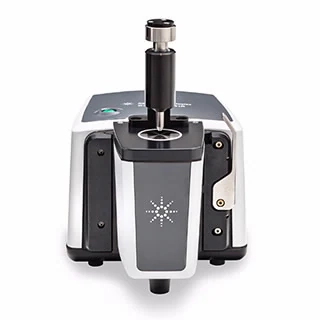
Primary Category: Compact / Budget The Agilent Cary 630 continues to be a dominant force in the compact FTIR market. Weighing only 3.8 kg (8.4 lbs), it is the smallest benchtop FTIR in its class, yet it uses the same high-performance engine found in Agilent’s larger research systems. Its modular design allows users to snap on different sampling modules—such as Diamond ATR, Transmission, or Diffuse Reflectance—in seconds. This "plug-and-play" architecture makes it a favorite for labs with limited bench space and budget constraints. Key Specs Weight: 3.8 kg (8.4 lbs) Dimensions: 16 x 31 x 13 cm Resolution: < 2 cm⁻¹ Interferometer: Michelson with mechanical flexure pivots Performance & Applications
Despite its small size, the Cary 630 delivers reliable quantitative data for routine applications. It is widely used in academic teaching labs, cannabis testing facilities, and small chemical production plants. The intuitive MicroLab software uses a picture-driven interface, which drastically reduces training time for new technicians. It is an excellent choice for targeted applications like determining the alcohol content in beverages or verifying the purity of incoming raw ingredients. Model Best For Key Features Typical Price Range Nicolet Apex Overall Lab Use Smart Background, 50,000:1 SNR, LightDrive Engine $25,000 – $40,000 MOBILE-IR II Field / Portable IP65 Rated, Battery Powered, TE-MCT Detector $35,000 – $60,000 IRXross Speed / Throughput Rapid Scan, Auto Contaminant ID, High Sensitivity $20,000 – $35,000 Spectrum 3 High-End Versatility Tri-Range (NIR/MIR/FIR), Auto Beam Splitter $45,000 – $65,000+ Cary 630 Compact / Budget Ultra-compact (3.8 kg), Modular Snap-on Accessories $14,000 – $22,000 The landscape of infrared and FTIR spectroscopy systems for 2026 is defined by a shift toward specialized efficiency. While the PerkinElmer Spectrum 3 remains the gold standard for complex, multi-range research, newer entrants like the Shimadzu IRXross and Thermo Scientific Nicolet Apex are pushing the boundaries of automation and speed for routine workflows. For professionals moving beyond the bench, the Bruker MOBILE-IR II offers a rugged solution that no longer compromises on data quality. By matching your laboratory’s specific throughput and portability needs to these top-rated models, you ensure precise, regulatory-compliant results for the year ahead. This article was created with the assistance of Generative AI and has undergone editorial review before publishing.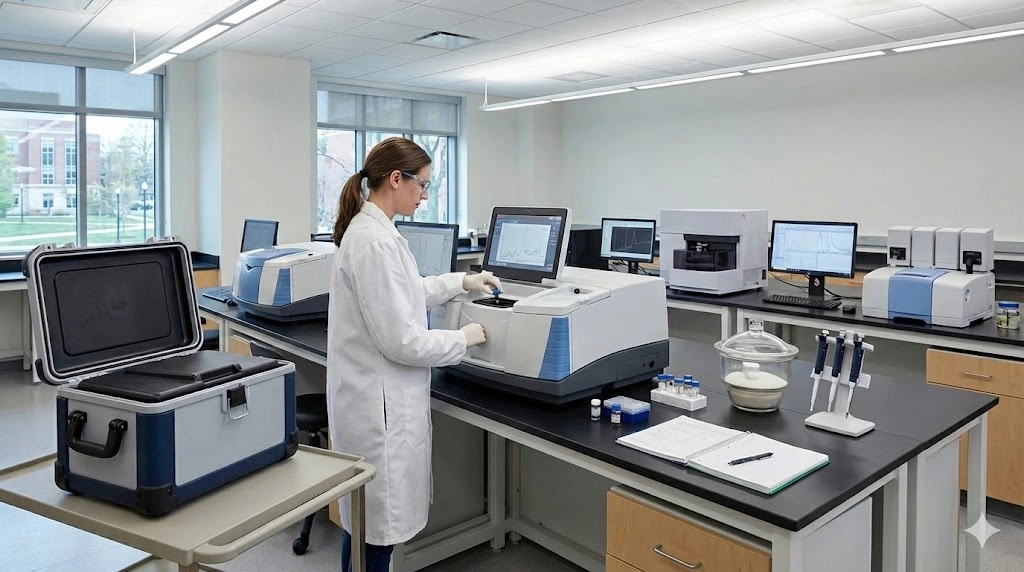
Quick Summary
Nicolet Apex – Thermo Fisher Scientific
MOBILE-IR II – Bruker
IRXross – Shimadzu
Spectrum 3 – PerkinElmer
Cary 630 – Agilent
Comparison Table
Conclusion: Selecting the Best FTIR Spectroscopy System for 2026
Jan 09, 2026
Product News
BRANDTECH Scientific Introduces the Transferpette® pro Micropipette: A New Twist on Comfort and Control
The latest addition to its trusted line of precision liquid handling instruments, engineered for comfort, control, and repeatable accuracy.
Jan 06, 2026
Featured, Technical Insight
New Research Frontiers Unlocked by Next-Generation Flow Cytometry
Next-generation flow cytometry systems using acoustic focusing are opening entirely new areas of research that were previously impractical or inaccessible with conventional flow cytometers.
Jan 05, 2026
Buying Guides
The Bottom Line: How Smart Microcentrifuge Tube Choices Impact Lab Efficiency and Cost
Innovative microcentrifuge tube solutions are more than just lab consumables—they’re strategic tools that can reduce costs, improve outcomes, and support long-term sustainability goals.
Jan 05, 2026
Buying Guides
Future-Proofing Your Lab with Innovative Microcentrifuge Tube Solutions
As laboratories evolve to meet the growing demands of modern science, even the most basic tools—like microcentrifuge tubes—are being reimagined.
Jan 05, 2026
Buying Guides
Microcentrifuge Tube Innovations: Driving Sustainable Change
Integrating next-generation consumables into standard workflows can lead to a more sustainable and responsible research environment.
Jan 05, 2026
Buying Guides
Single Use Plastics: How to Manage these Major Contributors to Lab Waste
Reducing lab waste isn’t just a sustainability issue—it’s a financial and operational one, too.
Jan 05, 2026
Buying Guides
Common Microcentrifuge Tube Challenges in Sensitive Molecular Workflows
Key factors that can impact the performance of microcentrifuge tubes for PCR, qPCR, and NGS and other sensitive applications
Jan 05, 2026
Buying Guides
How to Research the Right Microcentrifuge Tubes for Your Application
Selecting the right microcentrifuge tubes starts with understanding the specific demands of your application.
Jan 05, 2026
Technical Insight
The Best Confocal Microscopes of 2026
Discover the best confocal microscopes of 2026 for advanced imaging. Compare top models from Zeiss, Evident, and Nikon for speed, resolution, and budget.

Dec 24, 2025
Featured, Popular Products, Technical Insight
Emerging Mass Spectrometry Technologies to Improve Intraoperative Diagnostics
Advances in mass spectrometry may soon reshape surgery, improving diagnostic accuracy and impacting post-operative outcomes