
The Best Laboratory Incubators of 2026

Written By: Craig Bradley
Dec 05, 2025
Precise environmental control determines the success of cell culture and microbiological research, making the selection of a laboratory incubator a critical operational decision. Laboratory professionals navigating the market in 2026 encounter a diverse array of options, from high-throughput industrial units to advanced, contamination-resistant CO2 models designed for sensitive biological applications. This analysis evaluates five leading models, including recent market entrants, to assist facilities in optimizing their equipment procurement strategies. Best Overall: Eppendorf CellXpert C170i — Offers a superior balance of contamination protection, fanless design, and ease of cleaning. Best High-End Option: Thermo Scientific Heracell Vios iDx 165 — Features advanced Cell Locker technology for segregating sensitive cultures. Best On A Budget: MMM Group Incucell ECO — Delivers reliable natural convection heating at an accessible price point for routine microbiology. Best For Speed / Throughput: Shel Lab SCO31 — Provides massive capacity and roller bottle accommodation for high-volume production. Most Versatile: PHCbi Cell-IQ MCO-170AIC — Combines rapid decontamination options with precise environmental regulation for diverse protocols. Price Range: $12,500 – $15,000 USD
Best For: Overall Performance
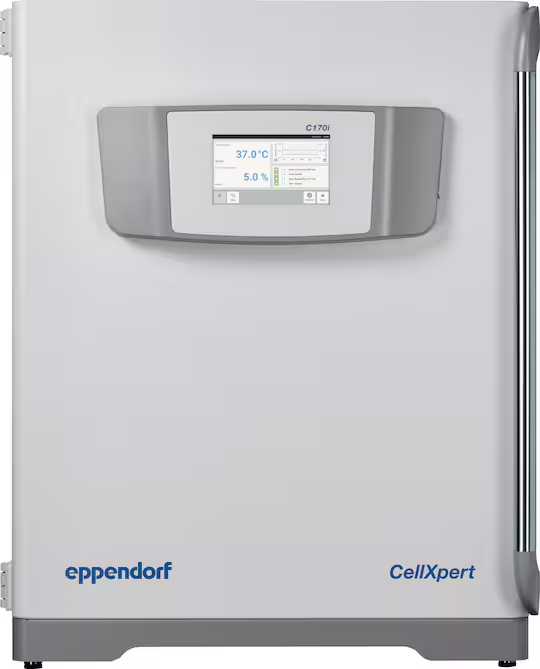
Primary Category: Versatility and Contamination Control Key Specs Capacity: 170 L (6.0 cu. ft.) Temperature Range: Ambient +4°C to 50°C Decontamination: 180°C High Temperature Disinfection (HTD) Sensor Type: Dual-channel IR CO2 sensor Interior: Seamless stainless steel or copper Performance & Applications
The CellXpert C170i distinguishes itself through a fanless design that maximizes internal usable space by up to 25% while eliminating airflow turbulence that often spreads contaminants. The absence of internal fans or HEPA filters simplifies cleaning protocols and cuts recurring consumable costs. Its 180°C sterilization cycle defends robustly against bacteria, fungi, and spores, making the unit highly relevant for stem cell research and sensitive assay development where researchers must minimize contamination risk. The unit maintains exceptional temperature uniformity without the vibration associated with fan-assisted models, which supports delicate cell attachment and growth. Price Range: $13,000 – $16,000 USD
Best For: Sensitive Cell Cultures
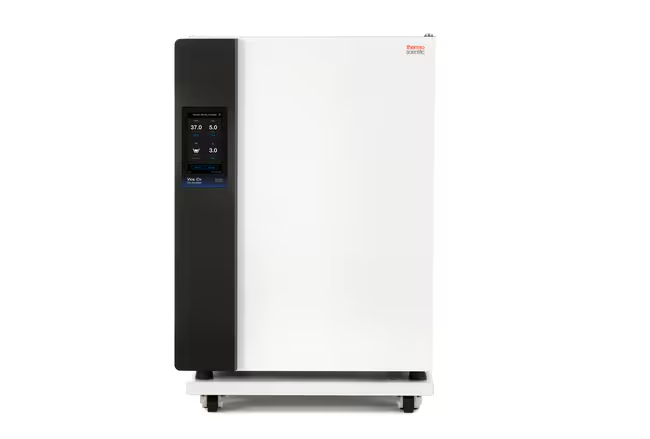
Primary Category: High-End Option Key Specs Capacity: 165 L (5.8 cu. ft.) Airflow: Active airflow technology with HEPA filtration Chamber Feature: Cell Locker System (segregated chambers) Connectivity: iCAN touchscreen with data logging Release Window: Featured in late 2025 product lineups Performance & Applications
Thermo Fisher prominently marketed the Vios iDx 165 in late 2025, integrating the proprietary Cell Locker system to divide the incubator chamber into separate, removable polycarbonate sub-chambers. This architecture performs two critical functions: it prevents cross-contamination between distinct projects and minimizes environmental fluctuations when the main door opens. For laboratories managing patient-specific samples or conducting highly regulated GMP work, this segregation capability proves invaluable. The system continuously filters chamber air to ISO Class 5 cleanroom quality, ensuring an optimal environment for immunotherapies and regenerative medicine applications. Price Range: $2,200 – $3,000 USD
Best For: Routine Microbiology
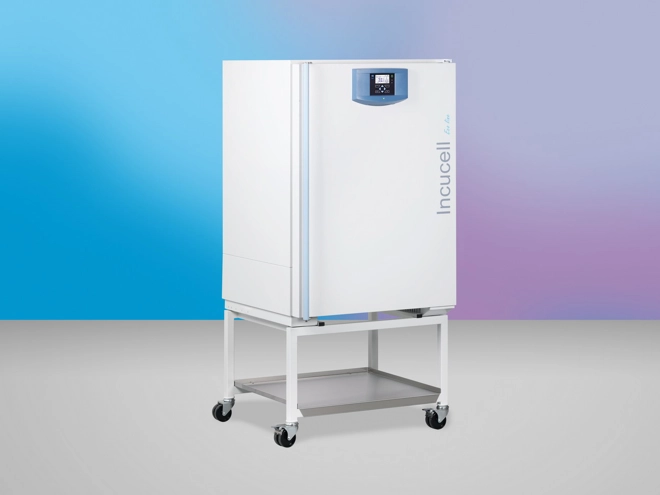
Primary Category: Budget Key Specs Capacity: Available in volumes from 22 L to 1212 L Convection Type: Natural gravity convection Temperature Range: +5°C above ambient to 100°C Interior: Anti-corrosion stainless steel Release Window: New ECO line enhancements introduced in 2025 Performance & Applications
The Incucell ECO series, which MMM Group expanded in 2025, uses natural gravity convection to ensure gentle air movement, preventing the sample desiccation often caused by forced air systems. This mechanism suits dermatological testing, microbiological cultures, and solid-state quality control where strong airflow proves detrimental. Despite its lower price point, the unit features a precise fuzzy logic microprocessor controller and an acoustic alarm system. It serves as an ideal solution for educational institutions, startup biotech firms, and general laboratory settings that require reliable thermal processing without the complexity of CO2 regulation. Price Range: $15,800 – $18,000 USD
Best For: Large Scale Production
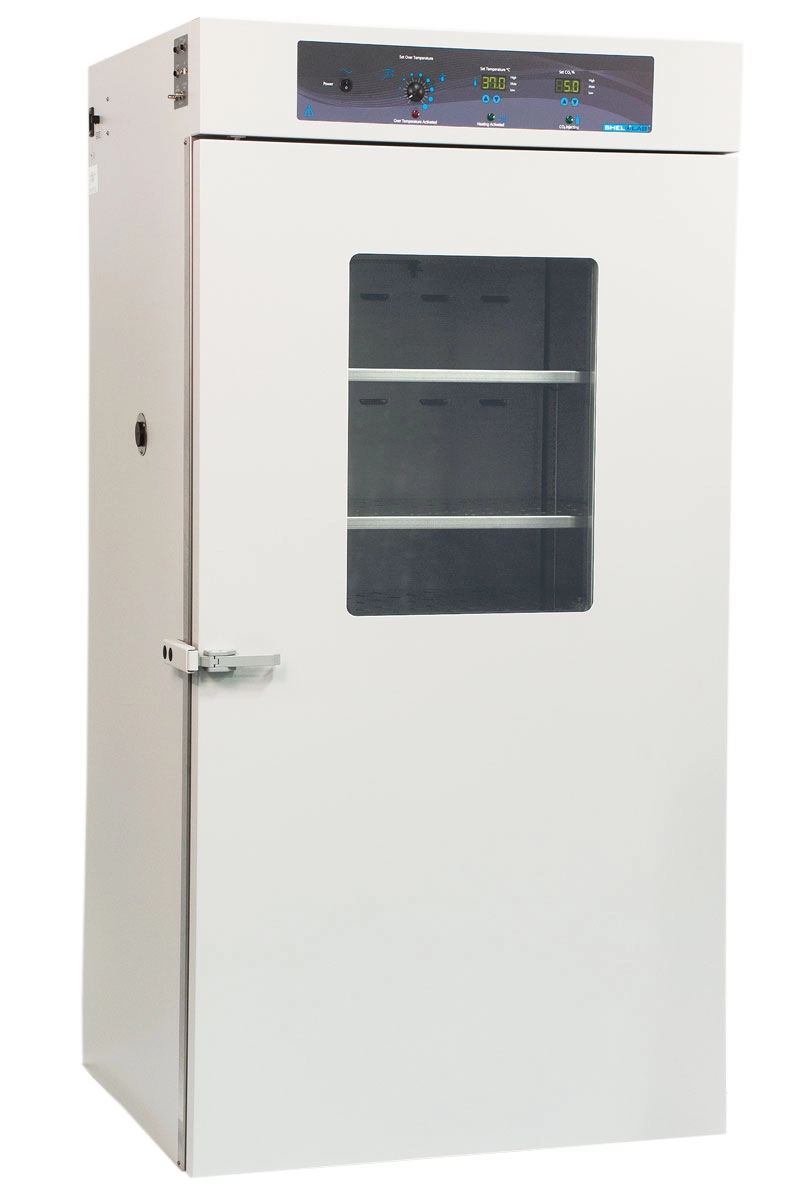
Primary Category: Throughput Key Specs Capacity: 879 L (31 cu. ft.) CO2 Sensor: Infrared (IR) Shelving: Reinforced stainless steel (roller bottle capable) Temperature Uniformity: ±0.5°C at 37°C Data Output: 4-20mA output for external monitoring Performance & Applications
Sheldon Manufacturing engineers the Shel Lab SCO31 for high-volume tissue culture, offering an expansive chamber that houses roller bottle apparatuses and large shakers. The horizontal airflow system ensures consistent temperature distribution across the massive internal volume, a critical factor when scaling up the production of vaccines or monoclonal antibodies. Facilities focused on bioproduction or large-scale media equilibration benefit from the unit’s robust construction and fast recovery times after door openings. The inclusion of interior electrical outlets allows users to seamlessly integrate auxiliary equipment, streamlining workflow in busy production environments. Shop Sheldon Manufacturing on LabX Price Range: $8,000 – $11,000 USD
Best For: Regulated Environments
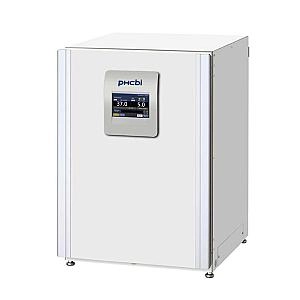
Primary Category: Versatility Key Specs Capacity: 165 L (5.8 cu. ft.) Decontamination: H2O2 vapor (optional) and UV light Material: InCu-saFe® copper-enriched stainless steel Stackability: Double-stackable design Control: PID control for CO2 and temperature Performance & Applications
The PHCbi Cell-IQ MCO-170AIC combines passive and active contamination control technologies to support rigorous research standards. The interior uses copper-enriched stainless steel to provide continuous germicidal protection without the corrosion risks of pure copper. Rapid decontamination protocols, utilizing hydrogen peroxide vapor and UV light, allow labs to turn over the unit quickly between experiments without lengthy downtime. This versatility makes the model excellent for core facilities that support multiple researchers with varying requirements, from IVF applications to general cancer research. Model Best For Key Features Typical Price Range Eppendorf CellXpert C170i Overall Performance Fanless design, 180°C sterilization, 25% more space $12,500 – $15,000 Thermo Scientific Heracell Vios iDx 165 Sensitive Cell Cultures Cell Locker system, ISO Class 5 air, Active airflow $13,000 – $16,000 MMM Group Incucell ECO Routine Microbiology Natural convection, noiseless operation, cost-effective $2,200 – $3,000 Shel Lab SCO31 High Throughput 31 cu. ft. capacity, roller bottle ready, horizontal airflow $15,800 – $18,000 PHCbi Cell-IQ MCO-170AIC Versatility InCu-saFe interior, H2O2/UV decon, rapid recovery $8,000 – $11,000 Selecting the best laboratory incubator of 2026 requires a careful assessment of specific workflow demands, ranging from sample throughput to contamination sensitivity. While the Eppendorf CellXpert C170i stands out for its all-around efficiency and cleanability, specialized units like the high-capacity Shel Lab SCO31 or the compartmentalized Thermo Scientific Heracell Vios iDx 165 offer targeted solutions for production and sensitive cell lines, respectively. Investing in modern incubation technology ensures consistent experimental reproducibility, safeguarding the integrity of critical scientific data. This article was created with the assistance of Generative AI and has undergone editorial review before publishing.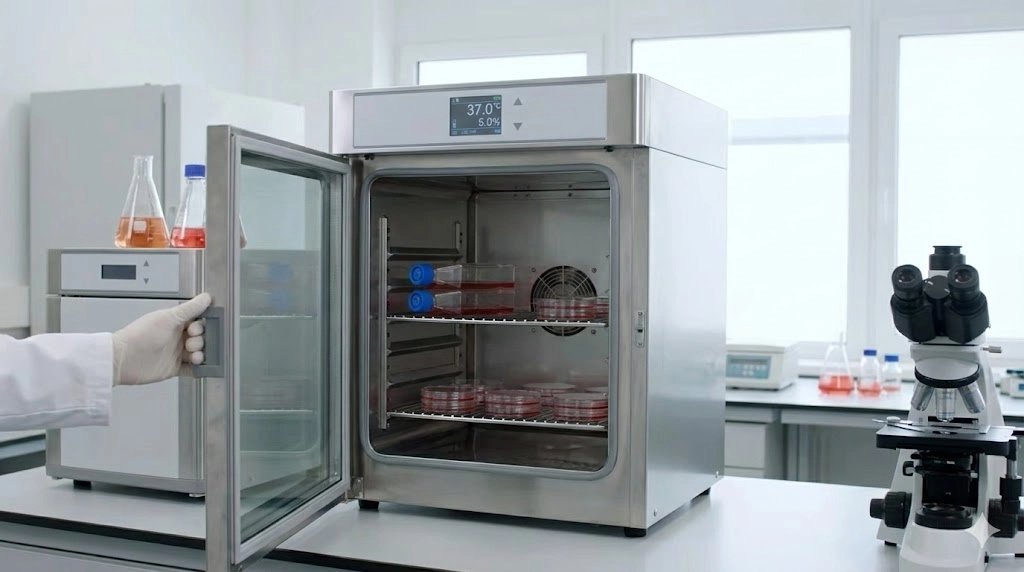
Quick Summary Box
Eppendorf CellXpert C170i – Eppendorf
Heracell Vios iDx 165 – Thermo Fisher Scientific
Incucell ECO – MMM Group
Shel Lab SCO31 – Sheldon Manufacturing
Cell-IQ MCO-170AIC – PHCbi
Comparison Table
Conclusion: Selecting the Best Laboratory Incubator
Jan 09, 2026
Product News
BRANDTECH Scientific Introduces the Transferpette® pro Micropipette: A New Twist on Comfort and Control
The latest addition to its trusted line of precision liquid handling instruments, engineered for comfort, control, and repeatable accuracy.

Jan 06, 2026
Featured, Technical Insight
New Research Frontiers Unlocked by Next-Generation Flow Cytometry
Next-generation flow cytometry systems using acoustic focusing are opening entirely new areas of research that were previously impractical or inaccessible with conventional flow cytometers.
Jan 05, 2026
Buying Guides
The Bottom Line: How Smart Microcentrifuge Tube Choices Impact Lab Efficiency and Cost
Innovative microcentrifuge tube solutions are more than just lab consumables—they’re strategic tools that can reduce costs, improve outcomes, and support long-term sustainability goals.
Jan 05, 2026
Buying Guides
Future-Proofing Your Lab with Innovative Microcentrifuge Tube Solutions
As laboratories evolve to meet the growing demands of modern science, even the most basic tools—like microcentrifuge tubes—are being reimagined.
Jan 05, 2026
Buying Guides
Microcentrifuge Tube Innovations: Driving Sustainable Change
Integrating next-generation consumables into standard workflows can lead to a more sustainable and responsible research environment.

Jan 05, 2026
Buying Guides
Single Use Plastics: How to Manage these Major Contributors to Lab Waste
Reducing lab waste isn’t just a sustainability issue—it’s a financial and operational one, too.
Jan 05, 2026
Buying Guides
Common Microcentrifuge Tube Challenges in Sensitive Molecular Workflows
Key factors that can impact the performance of microcentrifuge tubes for PCR, qPCR, and NGS and other sensitive applications
Jan 05, 2026
Buying Guides
How to Research the Right Microcentrifuge Tubes for Your Application
Selecting the right microcentrifuge tubes starts with understanding the specific demands of your application.
Jan 05, 2026
Technical Insight
The Best Confocal Microscopes of 2026
Discover the best confocal microscopes of 2026 for advanced imaging. Compare top models from Zeiss, Evident, and Nikon for speed, resolution, and budget.

Dec 24, 2025
Featured, Popular Products, Technical Insight
Emerging Mass Spectrometry Technologies to Improve Intraoperative Diagnostics
Advances in mass spectrometry may soon reshape surgery, improving diagnostic accuracy and impacting post-operative outcomes