
The Best Automated Liquid Handling Systems of 2026

Written By: Craig Bradley
May 28, 2024
Automated liquid handling systems have become indispensable tools for modern laboratories seeking to increase throughput and reproducibility while minimizing human error. As the demand for genomic sequencing, drug discovery, and clinical diagnostics grows, selecting the right automated liquid handling systems for 2026 requires a careful balance of speed, precision, and budget. This article evaluates five industry-leading models, highlighting recent innovations that are reshaping standard operating procedures in life sciences. Quick Summary Best Overall / High-End: Hamilton Microlab STAR V — Offers unmatched speed and precision with MagPip capabilities and CO-RE II technology. Best On A Budget: Opentrons Flex — Provides accessible, open-source automation with modular hardware at an entry-level price point. Best For Genomics: SPT Labtech firefly — A compact, all-in-one platform combining pipetting and dispensing specifically for NGS workflows. Most Versatile: Beckman Coulter Biomek i7 — Highly configurable deck space and hybrid pipetting heads suitable for complex, multi-stage protocols. Best Compact Option: Eppendorf epMotion 5075 — A reliable, user-friendly tabletop workstation ideal for routine PCR setup and nucleic acid purification. Price Range: $100,000 – $200,000+ (Highly dependent on configuration) Best For: High-End Performance & Throughput Primary Category: High-End / Throughput The Microlab STAR V, released in 2023, represents a significant leap forward in the Hamilton lineage, merging the flexibility of the STAR series with the high-throughput capabilities of the VANTAGE platform. It is designed for laboratories where speed and pipetting range are critical constraints. Key Specs Pipetting Technology: MagPip air-displacement channels (350 nL to 750 µL range). Deck Capacity: High-capacity deck with 270-degree accessibility for integration. Tip Technology: CO-RE II (Compressed O-Ring Expansion) for precise tip alignment and aerosol-free ejection. Software: VENUS software with Power Steps for simplified programming. Dimensions: Benchtop footprint with expanded vertical workspace. Performance & Applications
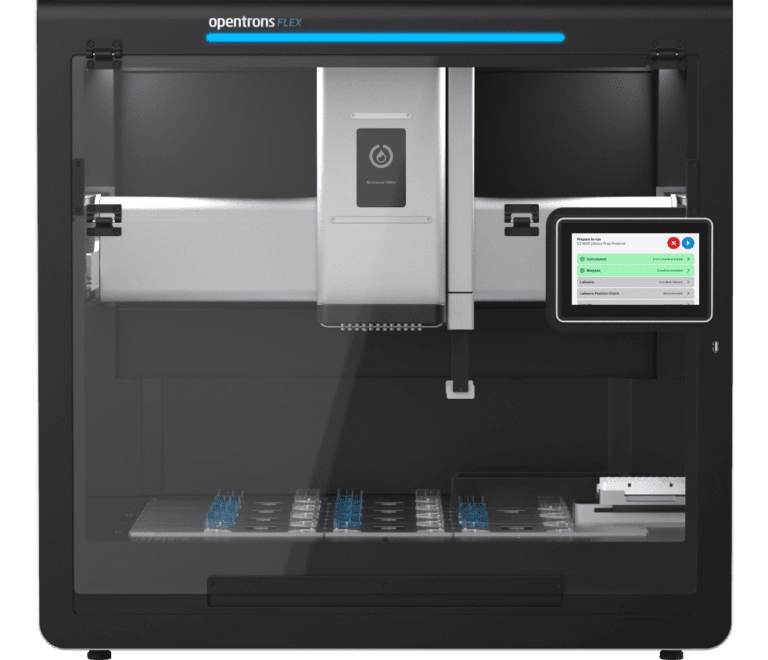
The STAR V excels in environments requiring rapid processing of variable volumes. The inclusion of MagPip channels allows for extremely fast acceleration and precise liquid transfer, significantly reducing cycle times for large sample sets. Its operational strengths lie in its ability to handle wide volume ranges without changing tools, making it ideal for high-throughput screening (HTS) and complex assay development. Laboratories conducting large-scale drug discovery or diagnostic testing benefit most from this system's robust error recovery and walk-away reliability. Price Range: $15,000 – $45,000 Best For: Budget-Conscious Labs & Open-Source Flexibility Primary Category: Budget Entering the market in mid-2023, the Opentrons Flex serves as a powerful successor to the OT-2, addressing the need for a more robust yet affordable automation solution. It democratizes access to automation by offering advanced features typically found in six-figure systems at a fraction of the cost. Key Specs Pipetting Heads: Swappable 1-, 8-, and 96-channel pipettes. Volume Range: 1 µL to 1000 µL. Interface: Integrated touchscreen with drag-and-drop protocol software. Hardware: Modular deck with magnetic blocks, thermocyclers, and HEPA filter options. Connectivity: Wi-Fi/Ethernet with API access for custom integrations. Performance & Applications
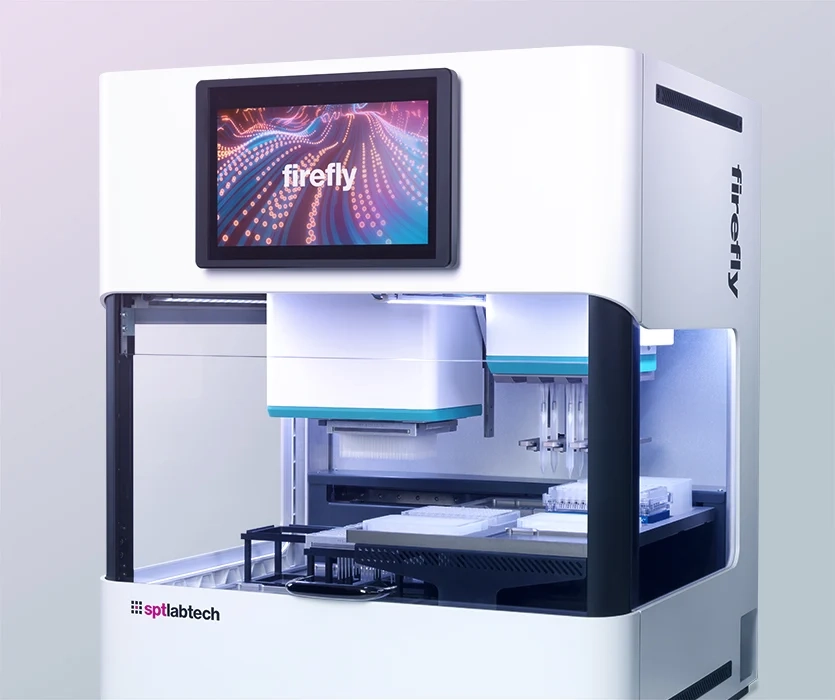
The Opentrons Flex is designed for adaptability, featuring a quick-swap mechanism for pipettes and grippers that allows users to reconfigure the robot in minutes. While it may not match the raw speed of the Hamilton STAR V, its open-source nature allows for extensive customization, appealing to startups and academic labs developing novel protocols. It is particularly suitable for NGS library prep, PCR setup, and general reagent aliquoting where budget constraints previously forced manual handling. The active community library of protocols further reduces the barrier to entry for new users. Price Range: $60,000 – $100,000 Best For: Genomics & NGS Library Preparation Primary Category: Genomics The SPT Labtech firefly is an innovative, all-in-one liquid handling platform that bridges the gap between bulk dispensing and accurate pipetting. Released to target the genomics sector, it combines technologies to streamline the specific bottlenecks found in Next-Generation Sequencing (NGS) workflows. Key Specs Pipetting Core: 384-channel air displacement head. Dispensing: 3 or 6 positive displacement syringes for non-contact dispensing (200 nL to 4 mL). Footprint: Compact benchtop design (approx. 66cm width). Tips: Disposable tips with automatic loading/unloading. Software: Visual, cloud-capable interface designed for genomics protocols. Performance & Applications
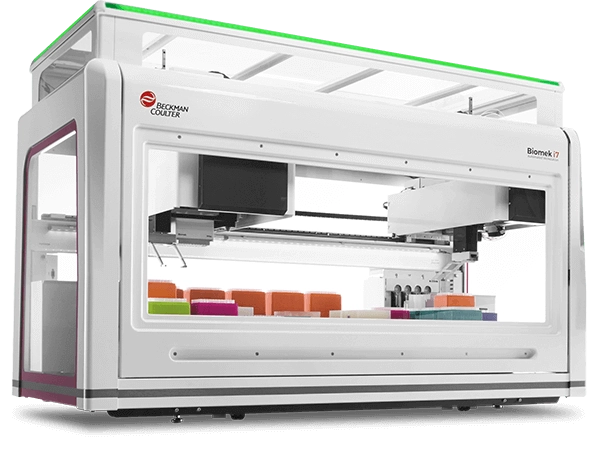
The firefly distinguishes itself by incorporating non-contact dispensing for reagents alongside standard pipetting for samples, reducing tip consumption and waste. This dual capability makes it exceptionally efficient for miniaturized genomics applications, such as qPCR setup and NGS library preparation. Its compact size allows it to fit into standard hoods, and the intuitive software requires minimal training. Research facilities focused on genomic precision medicine find the firefly valuable for maximizing reagent efficiency and ensuring high-quality sequencing data. Price Range: $100,000 – $180,000+ Best For: Versatility & Complex Workflows Primary Category: Versatility The Beckman Coulter Biomek i7 remains a dominant force in the high-end automation market in 2026 due to its proven reliability and "hybrid" deck configuration. It is engineered to handle everything from simple transfers to end-to-end workflow automation involving third-party device integrations. Key Specs Pipetting Heads: Dual-arm capability (Multichannel + Span-8). Deck Layout: 45 deck positions with grid-based design. Volume Range: 0.5 µL to 5,000 µL. Safety: Light curtain and optional full enclosure. Cameras: Deck observation cameras for error handling and monitoring. Performance & Applications
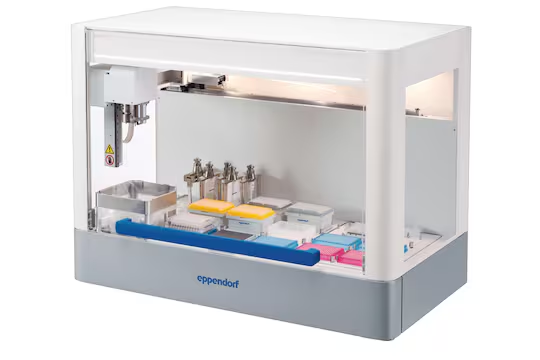
The Biomek i7 is defined by its versatility; the ability to combine a multichannel head for plate stamping with a Span-8 pod for tube-to-plate transfers enables seamless workflow transitions. This system is extensively used in clinical research, cell culture maintenance, and forensic analysis. Its open-platform architecture supports the integration of plate readers, washers, and shakers, making it a complete workstation solution. For labs running diverse protocols that change frequently, the Biomek i7 offers the necessary flexibility without sacrificing process security. Price Range: $40,000 – $70,000 Best For: Compactness & Ease of Use Primary Category: Compact / User-Friendly The Eppendorf epMotion 5075 continues to be a favorite in 2026 for laboratories requiring precise, automated pipetting in a manageable footprint. Known for its robust build and user-friendly epBlue software, it provides a straightforward transition from manual Eppendorf pipettes to automation. Key Specs Pipetting Tools: Automatic exchange of 2 single-channel and 2 multichannel tools. Positions: Up to 15 worktable positions. Sensor: Optical sensor for liquid level, labware, and tip detection. Accuracy: High precision at low volumes (< 2% systematic error at 1 µL). Accessories: Integrated ThermoMixer, vacuum manifold, and magnetic finger options. Performance & Applications
The epMotion 5075 focuses on reproducibility and ease of operation rather than extreme throughput. It features an optical sensor that verifies labware and liquid levels before a run begins, virtually eliminating user setup errors. This model is a staple in academic and biotech labs for routine tasks such as serial dilutions, nucleic acid purification (using the MagSep module), and PCR setup. Its CleanCap option and completely enclosed housing also make it suitable for applications requiring strict contamination control. Model Best For Key Features Typical Price Range Hamilton STAR V High-End / Speed MagPip technology, CO-RE II tips, 270° integration access $100k – $200k+ Opentrons Flex Budget / Open-Source Modular swappable pipettes, touchscreen, API access $15k – $45k SPT Labtech firefly Genomics / NGS Combined dispensing & pipetting, compact footprint $60k – $100k Biomek i7 Versatility Dual hybrid arms, large 45-position deck, extensive integrations $100k – $180k+ epMotion 5075 Compact / User-Friendly Optical sensors, integrated ThermoMixer, precise low-volume handling $40k – $70k Selecting the best automated liquid handling systems for 2026 depends heavily on the specific throughput requirements and budget of the laboratory. While the Hamilton STAR V dominates high-speed, high-volume industrial applications, the Opentrons Flex has successfully lowered the barrier to entry for smaller labs needing reliable automation. Specialized tools like the SPT Labtech firefly demonstrate the industry's shift toward application-specific designs, particularly for genomics. By integrating any of these top-tier systems, laboratory professionals can ensure higher data quality, reduced physical strain, and significantly improved operational efficiency in the coming year. This article was created with the assistance of Generative AI and has undergone editorial review before publishing.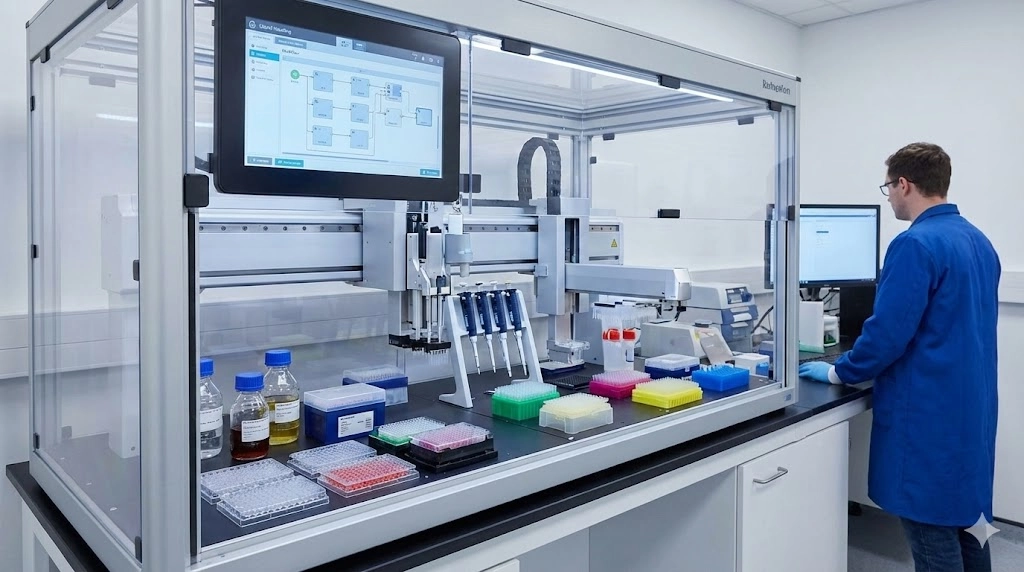
Microlab STAR V – Hamilton
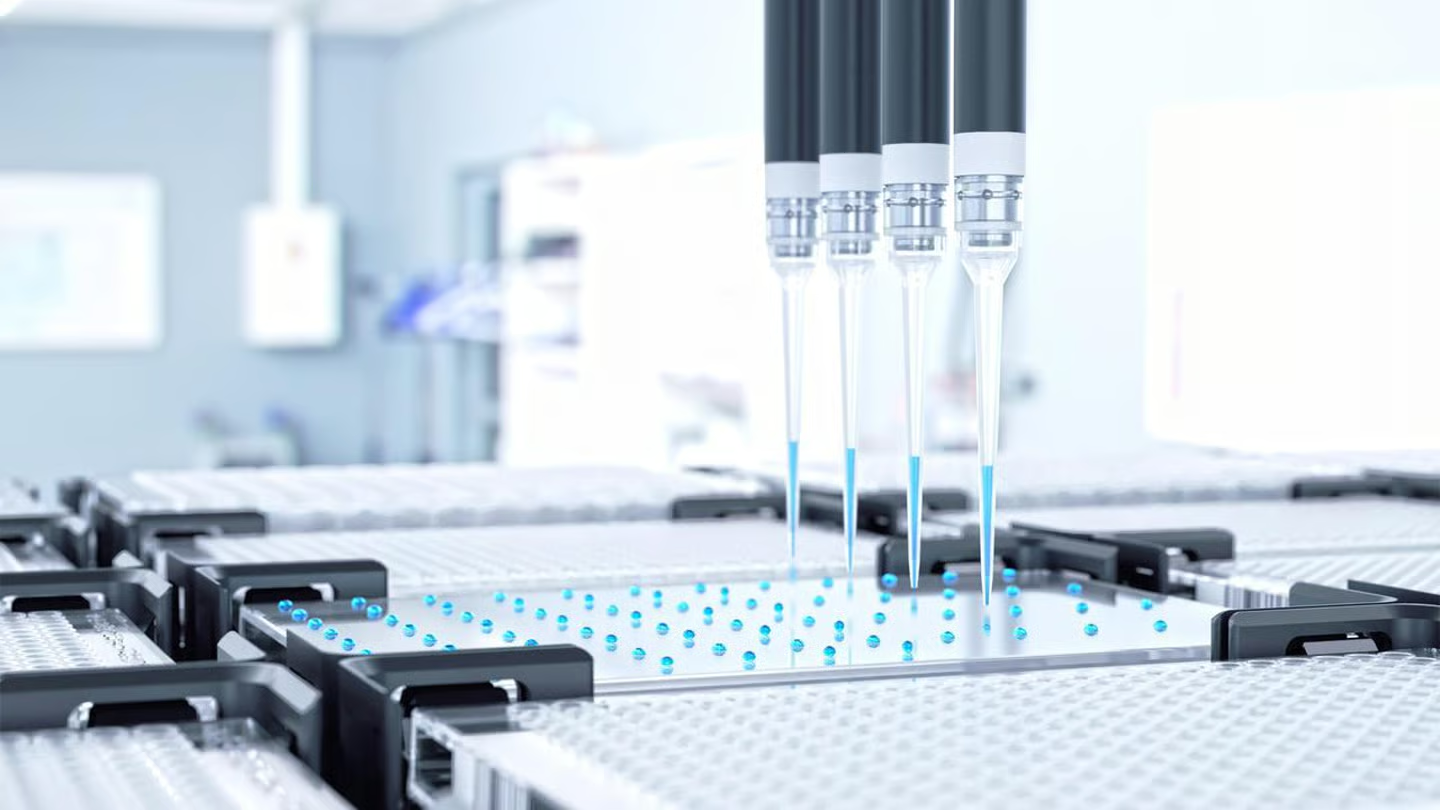
Opentrons Flex – Opentrons
firefly – SPT Labtech
Biomek i7 – Beckman Coulter
epMotion 5075 – Eppendorf
Comparison Table
Conclusion: Choosing the Best Automated Liquid Handling System
Jan 09, 2026
Product News
BRANDTECH Scientific Introduces the Transferpette® pro Micropipette: A New Twist on Comfort and Control
The latest addition to its trusted line of precision liquid handling instruments, engineered for comfort, control, and repeatable accuracy.
Jan 06, 2026
Featured, Technical Insight
New Research Frontiers Unlocked by Next-Generation Flow Cytometry
Next-generation flow cytometry systems using acoustic focusing are opening entirely new areas of research that were previously impractical or inaccessible with conventional flow cytometers.
Jan 05, 2026
Buying Guides
The Bottom Line: How Smart Microcentrifuge Tube Choices Impact Lab Efficiency and Cost
Innovative microcentrifuge tube solutions are more than just lab consumables—they’re strategic tools that can reduce costs, improve outcomes, and support long-term sustainability goals.
Jan 05, 2026
Buying Guides
Future-Proofing Your Lab with Innovative Microcentrifuge Tube Solutions
As laboratories evolve to meet the growing demands of modern science, even the most basic tools—like microcentrifuge tubes—are being reimagined.
Jan 05, 2026
Buying Guides
Microcentrifuge Tube Innovations: Driving Sustainable Change
Integrating next-generation consumables into standard workflows can lead to a more sustainable and responsible research environment.
Jan 05, 2026
Buying Guides
Single Use Plastics: How to Manage these Major Contributors to Lab Waste
Reducing lab waste isn’t just a sustainability issue—it’s a financial and operational one, too.
Jan 05, 2026
Buying Guides
Common Microcentrifuge Tube Challenges in Sensitive Molecular Workflows
Key factors that can impact the performance of microcentrifuge tubes for PCR, qPCR, and NGS and other sensitive applications
Jan 05, 2026
Buying Guides
How to Research the Right Microcentrifuge Tubes for Your Application
Selecting the right microcentrifuge tubes starts with understanding the specific demands of your application.
Jan 05, 2026
Technical Insight
The Best Confocal Microscopes of 2026
Discover the best confocal microscopes of 2026 for advanced imaging. Compare top models from Zeiss, Evident, and Nikon for speed, resolution, and budget.
Dec 24, 2025
Featured, Popular Products, Technical Insight
Emerging Mass Spectrometry Technologies to Improve Intraoperative Diagnostics
Advances in mass spectrometry may soon reshape surgery, improving diagnostic accuracy and impacting post-operative outcomes