
Used vs. Certified Pre-Owned Liquid Handlers: Know Before You Buy

Written By: Damon Anderson, PhD
Oct 02, 2025
Essential considerations for ensuring the right solution for your lab
Automated liquid handling systems are a backbone of modern labs—whether you’re running high-throughput screening, genomic assays, or routine sample prep. These instruments save time, reduce human error, and support reproducibility. But new liquid handlers can be expensive, and many labs turn to the secondary market to expand their automation capacity. The big question: should you buy used or certified pre-owned (CPO)?
Used Liquid Handlers: Lower Cost, Higher Risk
Buying a used liquid handler typically means acquiring an instrument “as-is” from a reseller, auction, or another lab.
-
Advantages
-
Lowest upfront price
-
Immediate availability
-
Good for labs needing backup units or training systems
-
-
Drawbacks
-
No guarantee of calibration or working sensors
-
Unknown maintenance history (pipetting accuracy, deck alignment, tip handling)
-
Potential hidden costs in repairs, replacement parts, or integration downtime
-
For labs with flexible workloads or lighter regulatory requirements, used systems can still make sense—but reliability is uncertain.
Certified Pre-Owned Liquid Handlers: Validated and Reliable
CPO liquid handlers undergo a rigorous refurbishment process before resale. Vendors typically:
-
Replace worn parts (pipetting heads, o-rings, motors)
-
Calibrate pipetting accuracy and deck movement
-
Run performance validation against manufacturer specs
-
Provide warranty and service support
Advantages
-
Validated performance ensures reproducible results
-
Warranty coverage reduces financial risk
-
Documentation supports audits and compliance needs
-
Longer lifespan and greater uptime compared to “as-is” purchases
While CPO costs more than used, it’s still significantly cheaper than buying new—often 30–50% less.
Which option Is right for your lab?
Feb 12, 2026
Product News
$5M+ in GMP Biopharma Manufacturing & QC Equipment Heads to Online Auction
A Southern California GMP manufacturing and clinical-stage QC laboratory is liquidating new and late-model equipment and unused inventory in an online auction opening February 11, 2026

Feb 12, 2026
Product News
2026 SLAS: Inspiration Catalyzing Discovery
A LabX look at the annual conference and exhibition, a key forum for networking, collaboration, and advancement of new technologies
Feb 11, 2026
Product News
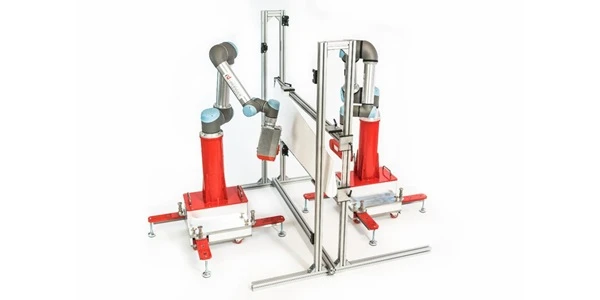
Angstrom Scientific Named U.S. Distributor for Radalytica’s RadalyX Robotic X-ray and CT System
Angstrom Scientific, known for representing microscopy and materials analysis technologies across North America, adds Radalytica’s robotic X-ray and CT platform to its portfolio of analytical and imaging solutions.

Feb 10, 2026
Technical Insight
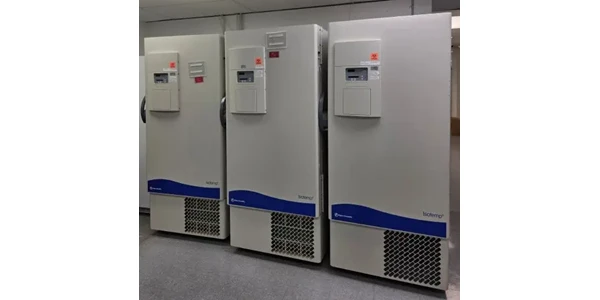
Eco-Friendly Refrigeration: Evaluating Natural Refrigerants and Low-GWP Cooling Systems
This guide explains the operational and environmental benefits of adopting natural refrigerants and low-GWP cooling systems in laboratory settings

Feb 10, 2026
Technical Insight
The Ultimate Guide to Sustainability in Laboratory Equipment and Operations
A comprehensive analysis of sustainable laboratory practices, focusing on energy-efficient equipment, waste management, and digital workflows
Jan 09, 2026
Product News
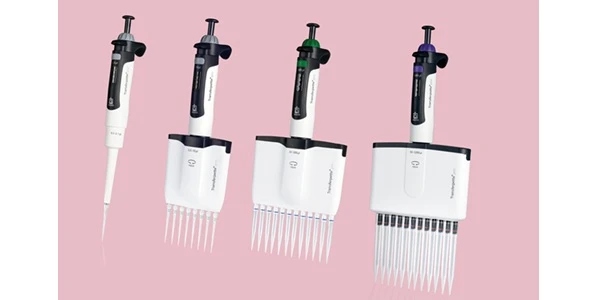
BRANDTECH Scientific Introduces the Transferpette® pro Micropipette: A New Twist on Comfort and Control
The latest addition to its trusted line of precision liquid handling instruments, engineered for comfort, control, and repeatable accuracy.

Jan 06, 2026
Featured, Technical Insight
New Research Frontiers Unlocked by Next-Generation Flow Cytometry
Next-generation flow cytometry systems using acoustic focusing are opening entirely new areas of research that were previously impractical or inaccessible with conventional flow cytometers.
Jan 05, 2026
Buying Guides
The Bottom Line: How Smart Microcentrifuge Tube Choices Impact Lab Efficiency and Cost
Innovative microcentrifuge tube solutions are more than just lab consumables—they’re strategic tools that can reduce costs, improve outcomes, and support long-term sustainability goals.
Jan 05, 2026
Buying Guides
Future-Proofing Your Lab with Innovative Microcentrifuge Tube Solutions
As laboratories evolve to meet the growing demands of modern science, even the most basic tools—like microcentrifuge tubes—are being reimagined.
Jan 05, 2026
Buying Guides
Microcentrifuge Tube Innovations: Driving Sustainable Change
Integrating next-generation consumables into standard workflows can lead to a more sustainable and responsible research environment.