
2026 SLAS: Inspiration Catalyzing Discovery

Written By: Damon Anderson, PhD
Feb 12, 2026
The Society for Lab Automation and Screening (SLAS) hosted its annual conference and exhibition in Boston February 7-11, 2026. Here’s a look at a few new technologies showcased at the conference that offer innovative approaches to research and development challenges.
Integrating high-throughput sample delivery with high resolution accurate mass (HRAM) quantitative mass spectrometry
Producing reliable, high-quality mass spectrometry data with direct, label-free measurement continues to be a challenge, particularly for high-throughput labs. Coupling two innovative technologies into a seamless workflow creates a synergistic solution to this challenge.
Sciex, a Danaher company and leader in life science analytical technologies, announced that the Echo® MS+ system, a high-throughput analytical solution, is now compatible with the ZenoTOF 8600 system, an industry leading accurate mass spectrometer recognized for enhanced sensitivity. This integration provides the industry’s highest-throughput accurate mass platform.
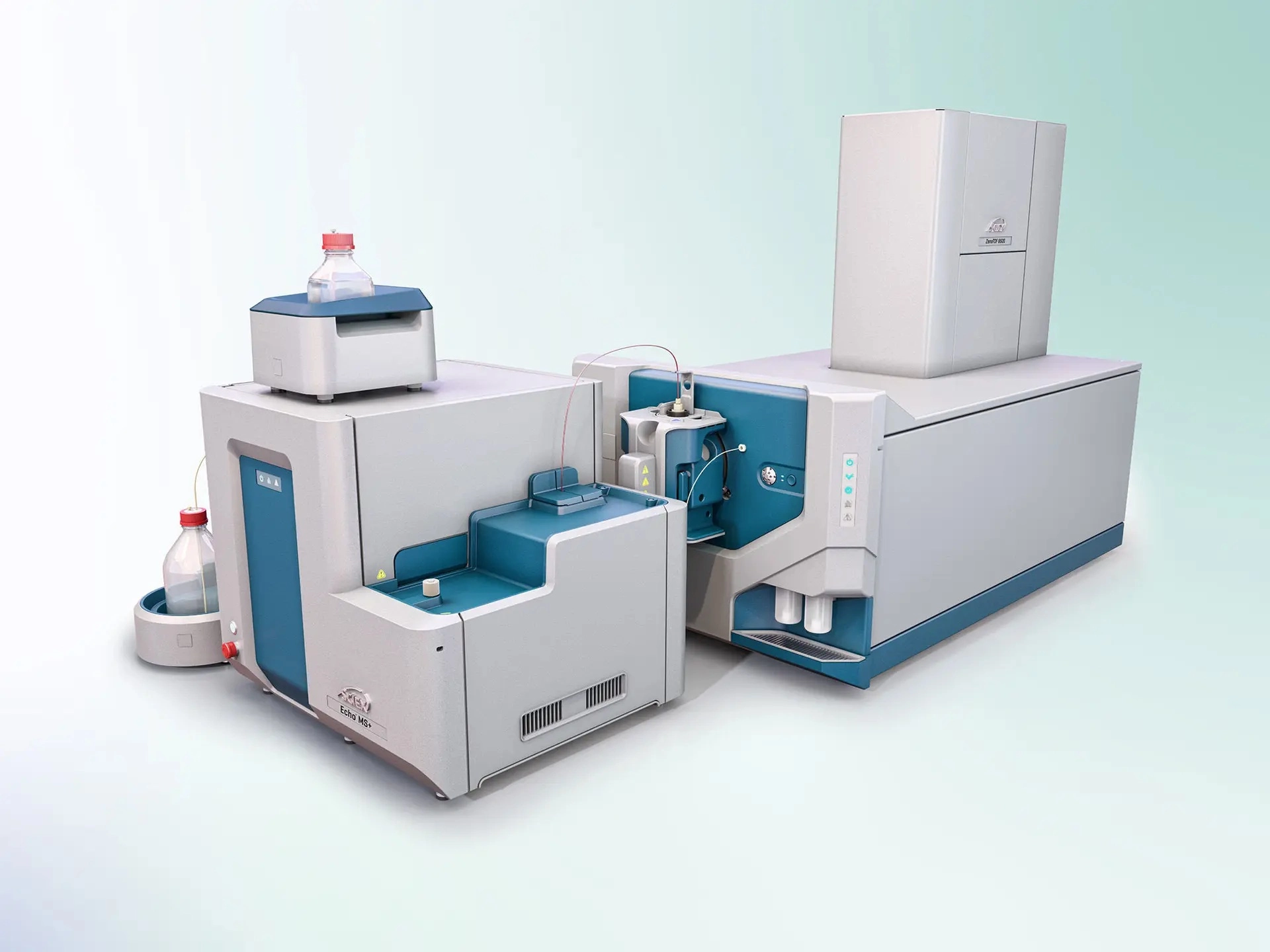 The Echo MS+ system leverages
acoustic-based contactless liquid handling, with minimal potential for
carryover using as little as 2.5 nL of sample.
The Echo MS+ system leverages
acoustic-based contactless liquid handling, with minimal potential for
carryover using as little as 2.5 nL of sample. - With a sampling rate of up to 1 sample per second, the can be coupled with front-end automation to achieve true high-throughput sample delivery.
- The recently introduced ZenoTOF 8600 accurate mass system offers fast, sensitive, and resilient quantitation.
- The platform is built upon the innovative and versatile Zeno trap qTOF technology, offering sensitivity and functional speed improvements and enhanced data quality across workflows.
Notable ZenoTOF 8600 performance markers include:
- 10X improvement in sensitivity in MS1 and MS2, enabling fast, sensitive quantitation of low-abundance biomolecules across targeted DIA and DDA methods.
- Up to 10-fold lower LOQs and a dynamic range up to 5 orders of magnitude.
- ZT Scan DIA 2.0, offering high-speed, broad molecule support with enhanced Q1 window selectivity for improved quantitative accuracy and identification.
- Extended mass range making it the most comprehensive and high-throughput SWATH DIA solution for all molecule types.
- SCIEX OS 4.0 software which streamlines and enhances workflows across the ZenoTOF 8600 system with innovative features for method development, real-time QC, and data acquisition.
Automated Antibody Discovery and Characterization
Gator Bio and Hudson Lab Automation announced an integrated biolayer interferometry (BLI) and robotics solution designed to remove throughput bottlenecks in antibody discovery and characterization workflows.
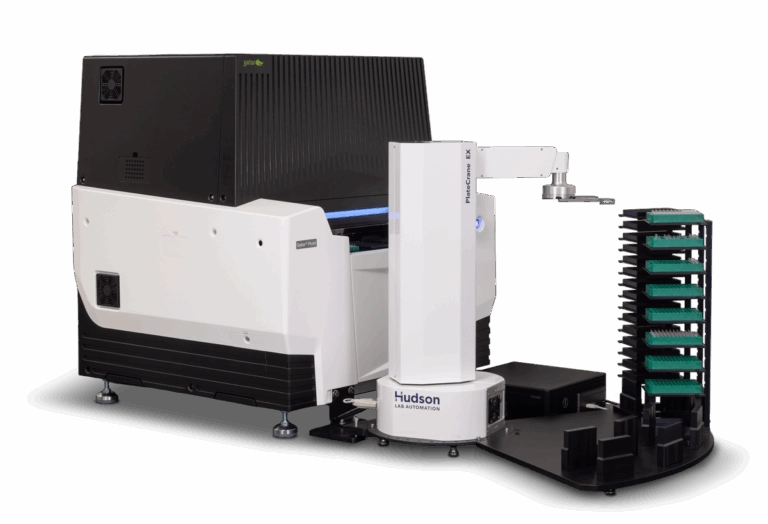 The system
combines Gator Bio’s Pivot and Pro BLI platforms with Hudson’s PlateCrane
automation technology, creating a unified, production-ready solution capable of
increasing daily sample throughput from approximately 400 samples to more than
1,200 samples, depending on workflow configuration.
The system
combines Gator Bio’s Pivot and Pro BLI platforms with Hudson’s PlateCrane
automation technology, creating a unified, production-ready solution capable of
increasing daily sample throughput from approximately 400 samples to more than
1,200 samples, depending on workflow configuration.
For laboratories scaling antibody discovery programs—particularly those working with AI-designed antibody libraries that generate thousands of candidates requiring rapid screening—throughput and automation are no longer optional. This integrated system addresses the need for faster screening, ranking, and characterization without compromising data quality.
The combined platform supports a wide range of applications across discovery, development, and QC environments, including:
- High-throughput hybridoma and yeast display screening
- Affinity ranking and epitope binning across large antibody panels
- Full kinetic characterization for lead optimization
- Bispecific and multi-specific antibody development
- Manufacturing process development and quality control workflows
- AAV capsid characterization and selection
By integrating modern BLI technology with robotic sample handling, the system is built to support production-scale operations where consistency, reproducibility, and instrument uptime directly impact timelines.
Gator Bio previously demonstrated the integrated platform at the Antibody Engineering & Therapeutics conference in December, signaling its readiness for deployment in high-demand biopharma environments.
For labs evaluating automation upgrades in antibody discovery, this collaboration reflects a broader industry trend: tighter integration between analytical instrumentation and robotic platforms to drive measurable gains in throughput and workflow efficiency.
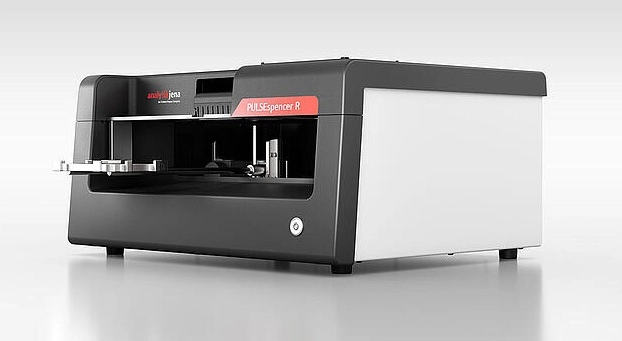 The
PULSEspencer R is engineered for accurate, contactless dispensing of ultra-low
volumes, supporting assay miniaturization without sacrificing repeatability or
control. Using optimized pulse-based dispensing technology, the system delivers
consistent microvolume transfers suited for high-throughput screening, reagent
conservation, and cost-sensitive workflows.
The
PULSEspencer R is engineered for accurate, contactless dispensing of ultra-low
volumes, supporting assay miniaturization without sacrificing repeatability or
control. Using optimized pulse-based dispensing technology, the system delivers
consistent microvolume transfers suited for high-throughput screening, reagent
conservation, and cost-sensitive workflows.
With a compact, modular footprint, the PULSEspencer R integrates into existing automation platforms or standalone laboratory setups with minimal disruption. Its configuration flexibility makes it suitable for research labs scaling from manual pipetting to semi- or fully automated liquid handling.
Built-in software wizards streamline method setup and operation, reducing training time and minimizing user error. The interface supports rapid protocol development while maintaining process security and traceability—key considerations for regulated or data-intensive environments.
For labs focused on improving precision, reducing reagent consumption, and increasing throughput, the PULSEspencer R offers a practical path to reliable microvolume dispensing within modern laboratory workflows.
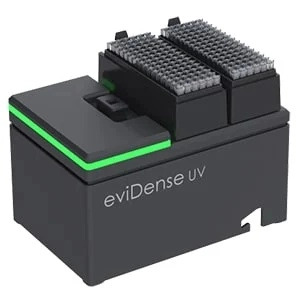 Beckman
Coulter Life Sciences has integrated the HSE eviDense UV Photometer directly
onto the deck of Biomek i-Series automated liquid handlers, enabling real-time
nucleic acid quantification without removing samples from the workflow.
Beckman
Coulter Life Sciences has integrated the HSE eviDense UV Photometer directly
onto the deck of Biomek i-Series automated liquid handlers, enabling real-time
nucleic acid quantification without removing samples from the workflow.
By embedding UV absorbance measurement at 260/280 and 260/230 ratios into the liquid handling process, the system eliminates manual transfer steps and reduces workflow interruptions. Labs can quantify DNA or RNA during method execution, improving turnaround time and minimizing hands-on intervention.
The platform uses micro-cuvette technology to perform non-destructive measurements, allowing full sample recovery for downstream applications. Because minimal volume is consumed during analysis, samples can immediately proceed to normalization, pooling, or additional processing steps.
Designed to fit within a standard SBS footprint, the eviDense module occupies a typical plate position and integrates into existing protocols as a drop-in component. When paired with a custom method solution, the system supports automated normalization within a single run—eliminating secondary pipetting steps—while also enabling direct post-quant pooling and structured data output for traceability.
For laboratories looking to reduce bottlenecks in NGS prep, PCR setup, or other nucleic acid workflows, this on-deck quantification approach streamlines automation while maintaining sample integrity and data reliability.
The AVA Emulation System is a next-generation Organ-Chip platform designed to increase throughput and reduce hands-on complexity in in vitro human biology studies.
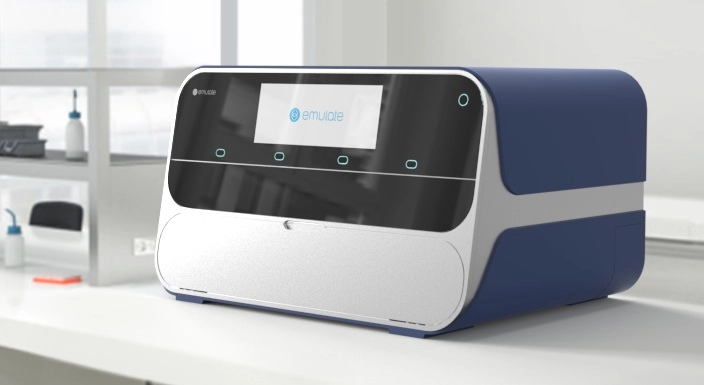 The system
integrates three core components of an Organ-Chip experiment into a single
workflow: a high-throughput culture module, a self-contained incubation
environment, and an automated imaging system. By consolidating culture,
environmental control, and microscopy, AVA reduces manual transfers and
streamlines experimental setup.
The system
integrates three core components of an Organ-Chip experiment into a single
workflow: a high-throughput culture module, a self-contained incubation
environment, and an automated imaging system. By consolidating culture,
environmental control, and microscopy, AVA reduces manual transfers and
streamlines experimental setup.
Throughput is enabled by the Chip-Array consumable, which adapts established Organ-Chip architecture into a 12-chip parallel format. This configuration allows up to 96 independent Organ-Chip samples per experiment, supporting larger studies without proportionally increasing labor or footprint.
An integrated automated microscope continuously captures high-resolution images under flow conditions, allowing researchers to monitor morphology and biomarker expression in real time. Automated imaging reduces hands-on labor by approximately 60% compared to traditional Organ-Chip workflows, while maintaining consistent data capture across runs.
For laboratories working in drug discovery, toxicology, disease modeling, or translational research, the AVA Emulation System offers a scalable approach to human-relevant in vitro testing—combining higher throughput, lower operating complexity, and data-rich outputs within a single automation-ready platform.
Galaxy-i is Portal’s latest high-throughput cell engineering solution, designed to integrate intracellular delivery directly into existing liquid handling workflows—without adding a standalone instrument to the lab.
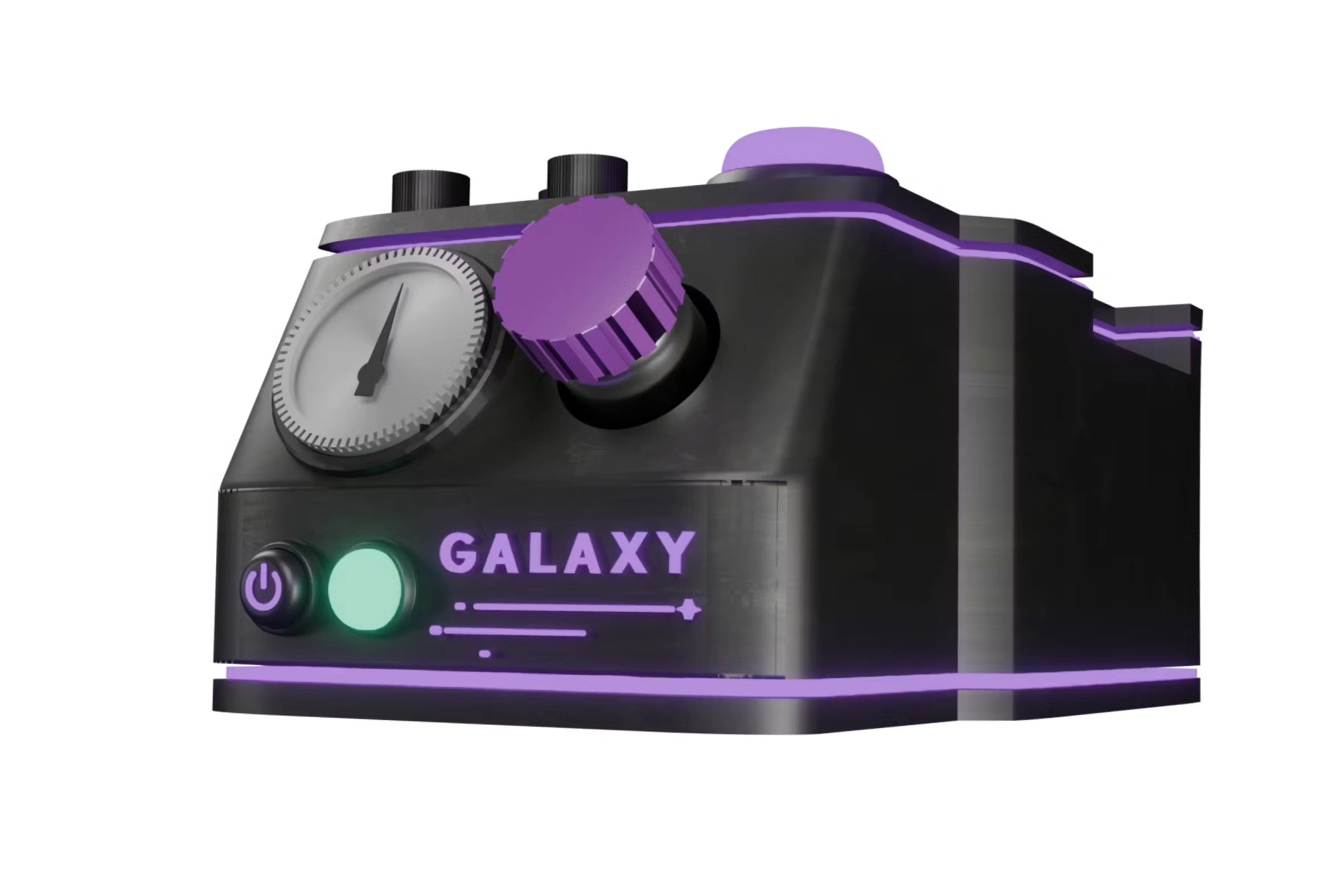 The system
connects to compatible liquid dispensers through a disposable cartridge,
allowing labs to incorporate mechanoporation capabilities into their current
setup. This approach reduces footprint requirements and simplifies adoption
compared to traditional dedicated delivery systems.
The system
connects to compatible liquid dispensers through a disposable cartridge,
allowing labs to incorporate mechanoporation capabilities into their current
setup. This approach reduces footprint requirements and simplifies adoption
compared to traditional dedicated delivery systems.
Portal’s technology uses a precisely engineered silicon membrane to transiently mechanoporate cells, enabling intracellular delivery across a broad range of cargo types and cell models while preserving cell viability and function. The platform is suited for applications in drug discovery, functional genomics, and advanced cell engineering workflows where throughput and consistency are critical.
Unlike earlier-generation systems that required dedicated hardware, Galaxy-i functions as a compact add-on compatible with multiple dispenser platforms. Current integrations include Certus Flex, Precision Drop II, GNF, and Integra Welljet systems, with additional integrations in development.
For laboratories seeking scalable, high-throughput intracellular delivery without expanding instrument footprint, Galaxy-i offers a workflow-compatible path to mechanoporation within established automation environments.
A new plastic-free pipet tip rack offers laboratories a sustainable alternative for automated liquid handling workflows—without requiring changes to existing protocols or hardware.
Designed as a drop-in replacement for OEM automation tip racks, the system maintains compatibility with standard automated liquid handlers while eliminating conventional plastic rack components. This allows labs to reduce plastic waste without compromising workflow efficiency or instrument performance.
Constructed from compostable, paper-based materials, the racks can be recycled alongside cardboard and other fiber-based packaging streams, supporting lab sustainability initiatives and waste-reduction goals.
For facilities operating high-throughput liquid handling platforms, where tip rack consumption is significant, this solution provides a practical path to lowering single-use plastic volume while maintaining automation-ready performance.
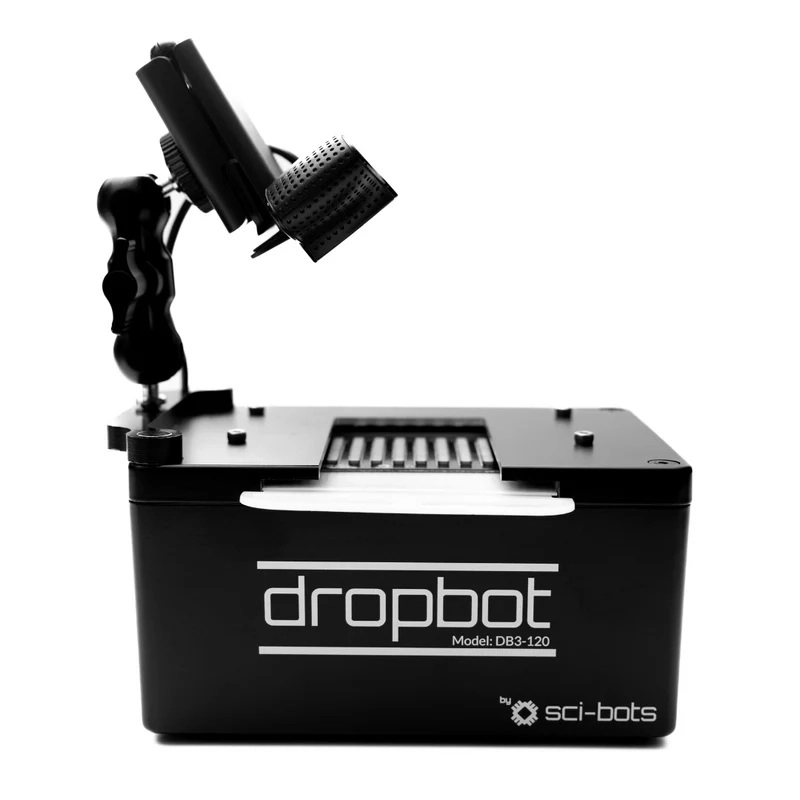 DropBot v4
is a compact benchtop system designed to automate nanoliter- to
microliter-scale sample preparation using programmable droplet manipulation on
a credit card–sized disposable chip.
DropBot v4
is a compact benchtop system designed to automate nanoliter- to
microliter-scale sample preparation using programmable droplet manipulation on
a credit card–sized disposable chip.
By eliminating the need for pumps and pipette tips, the platform reduces consumable use while improving repeatability across low-volume workflows. The droplet-based approach supports precise liquid handling at small scales, helping labs conserve reagents and minimize sample input—particularly valuable in cost-sensitive or limited-sample applications.
Integrated heating, magnetic control, and onboard imaging expand the system’s capabilities to support bead-based pulldowns, nucleic acid extraction and cleanup, immunoassays, and related molecular biology workflows.
For laboratories seeking to automate low-volume sample prep without adding complex fluidics or expanding footprint, DropBot v4 provides a self-contained, chip-based alternative that reduces hands-on time while maintaining process consistency.
The complete list of new product launches at SLAS can be found here: https://www.slas.org/events-calendar/slas2026-international-conference-exhibition/sponsor-and-exhibit/new-product-launches/

Feb 12, 2026
Product News
2026 SLAS: Inspiration Catalyzing Discovery
A LabX look at the annual conference and exhibition, a key forum for networking, collaboration, and advancement of new technologies
Feb 11, 2026
Product News
Angstrom Scientific Named U.S. Distributor for Radalytica’s RadalyX Robotic X-ray and CT System
Angstrom Scientific, known for representing microscopy and materials analysis technologies across North America, adds Radalytica’s robotic X-ray and CT platform to its portfolio of analytical and imaging solutions.
Feb 10, 2026
Technical Insight
Eco-Friendly Refrigeration: Evaluating Natural Refrigerants and Low-GWP Cooling Systems
This guide explains the operational and environmental benefits of adopting natural refrigerants and low-GWP cooling systems in laboratory settings

Feb 10, 2026
Technical Insight
The Ultimate Guide to Sustainability in Laboratory Equipment and Operations
A comprehensive analysis of sustainable laboratory practices, focusing on energy-efficient equipment, waste management, and digital workflows
Jan 09, 2026
Product News
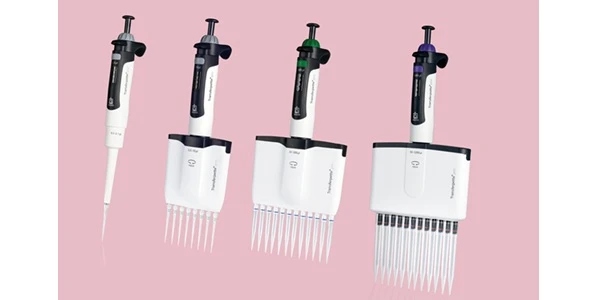
BRANDTECH Scientific Introduces the Transferpette® pro Micropipette: A New Twist on Comfort and Control
The latest addition to its trusted line of precision liquid handling instruments, engineered for comfort, control, and repeatable accuracy.
Jan 06, 2026
Featured, Technical Insight
New Research Frontiers Unlocked by Next-Generation Flow Cytometry
Next-generation flow cytometry systems using acoustic focusing are opening entirely new areas of research that were previously impractical or inaccessible with conventional flow cytometers.
Jan 05, 2026
Buying Guides
The Bottom Line: How Smart Microcentrifuge Tube Choices Impact Lab Efficiency and Cost
Innovative microcentrifuge tube solutions are more than just lab consumables—they’re strategic tools that can reduce costs, improve outcomes, and support long-term sustainability goals.
Jan 05, 2026
Buying Guides
Future-Proofing Your Lab with Innovative Microcentrifuge Tube Solutions
As laboratories evolve to meet the growing demands of modern science, even the most basic tools—like microcentrifuge tubes—are being reimagined.
Jan 05, 2026
Buying Guides
Microcentrifuge Tube Innovations: Driving Sustainable Change
Integrating next-generation consumables into standard workflows can lead to a more sustainable and responsible research environment.
Jan 05, 2026
Buying Guides
Single Use Plastics: How to Manage these Major Contributors to Lab Waste
Reducing lab waste isn’t just a sustainability issue—it’s a financial and operational one, too.