
Eco-Friendly Refrigeration: Evaluating Natural Refrigerants and Low-GWP Cooling Systems

Written By: Craig Bradley
Feb 10, 2026
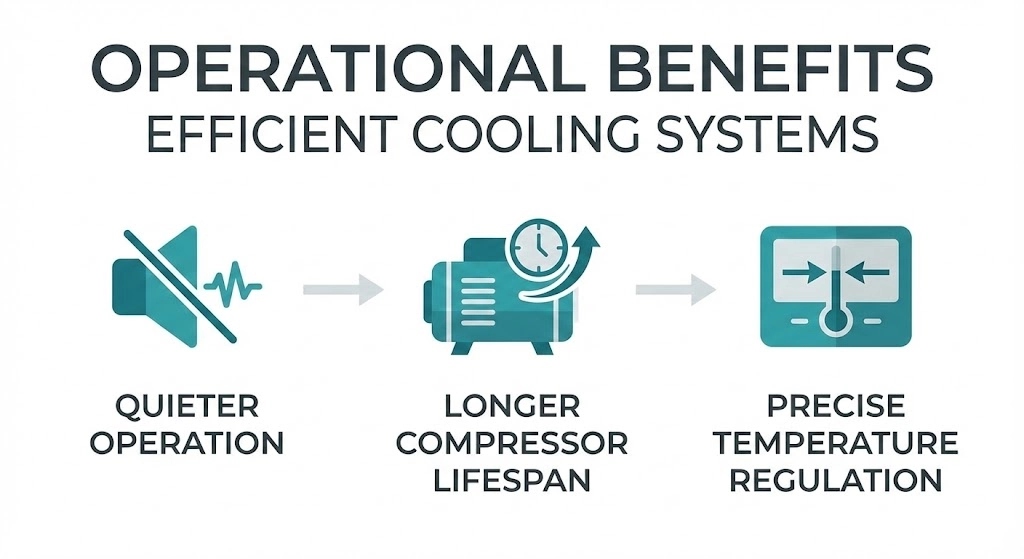
Laboratory sustainability initiatives increasingly prioritize eco-friendly lab refrigeration to reduce carbon footprints and operational costs while maintaining critical sample integrity. As international regulations phase out high-GWP hydrofluorocarbons (HFCs), facility managers must evaluate cooling systems that utilize natural refrigerants to ensure long-term compliance. Modern operational strategies now demand a shift toward thermodynamic technologies that balance environmental stewardship with the rigorous temperature stability required for scientific research. Global Warming Potential (GWP) serves as the primary metric for quantifying the long-term environmental impact of thermodynamic fluids used in temperature-controlled equipment. This relative scale measures how much heat a greenhouse gas traps in the atmosphere over a specific time horizon, typically 100 years, compared to carbon dioxide (CO2). Carbon dioxide is assigned a baseline GWP of 1, while legacy HFCs can possess values thousands of times higher. The refrigeration industry is currently moving away from hydrofluorocarbons like R-134a and R-404A due to their significant contribution to climate change. R-134a, a standard refrigerant for decades, carries a GWP of approximately 1,430, meaning its release is 1,430 times more potent than CO2. R-404A, common in older freezers, presents an even greater risk with a GWP of 3,922. Regulatory frameworks, such as the Kigali Amendment to the Montreal Protocol, mandate a phased reduction of these substances. This global accord aims to reduce HFC consumption by over 80% by 2047, driving manufacturers to innovate with alternative chemistries. Laboratories that continue to rely on high-GWP systems risk facing future maintenance challenges, rising refrigerant costs, and regulatory obsolescence. Low-GWP alternatives are essential for meeting institutional decarbonization targets and corporate sustainability goals. By replacing a single ultra-low temperature (ULT) freezer running on R-404A with a unit using natural refrigerants, a lab can prevent emissions equivalent to driving a gasoline car for tens of thousands of miles. This shift represents one of the most impactful operational changes a facility can make to reduce its direct greenhouse gas emissions. Natural refrigerants such as R-290 (propane) and R-170 (ethane) offer superior thermodynamic performance while virtually eliminating direct greenhouse gas emissions. Unlike synthetic HFCs, these hydrocarbons occur naturally in the environment and possess negligible ozone depletion potential (ODP) and extremely low GWP. R-290, for instance, has a GWP of approximately 3 (or less than 1 according to recent IPCC reports), making it a near-climate-neutral solution. The thermodynamic properties of hydrocarbon refrigerants allow for more efficient heat exchange compared to synthetic alternatives. Hydrocarbons possess a high latent heat of vaporization, which means they can absorb more heat per unit of mass during the evaporation process. This characteristic allows refrigeration systems to operate with significantly smaller refrigerant charges while maintaining the same cooling capacity. A reduction in refrigerant charge size contributes to both safety and system efficiency. Smaller charges reduce the potential fuel load in the event of a leak, addressing safety concerns in confined laboratory spaces. Furthermore, the lower viscosity of natural refrigerants reduces the mechanical work required by the compressor, directly lowering energy consumption. The following table compares common laboratory refrigerants: Refrigerant Type GWP (100-year) Common Application R-404A HFC 3,922 Legacy ULT Freezers R-134a HFC 1,430 General Refrigerators R-290 Hydrocarbon ~3 Eco-friendly lab refrigeration R-170 Hydrocarbon ~6 Low-GWP ULT Stages R-744 CO2 1 Industrial/Walk-in Units Adopting these natural refrigerants aligns laboratory operations with the principles of green chemistry and sustainable engineering. Manufacturers have optimized the refrigeration cycle to leverage the specific boiling points of R-290 (-42°C) and R-170 (-88.6°C) for different temperature ranges. This optimization ensures that green cooling technology delivers the pull-down speeds and temperature uniformity researchers expect. Modern ultra-low temperature (ULT) freezers utilize variable-speed compressors to adapt cooling cycles to real-time thermal loads, significantly reducing energy waste. Traditional fixed-speed compressors operate on a simple "on-off" cycle, running at full power to reach the setpoint and then shutting down until the temperature rises. This cycling creates energy spikes at startup and temperature fluctuations that can stress sensitive samples. Variable-speed drives (VSD), also known as inverter technology, allow the compressor to run continuously at lower speeds to maintain a stable temperature. By modulating motor speed, the system draws only the power necessary to counteract heat gain from the ambient environment. This approach can reduce energy consumption by 30% to 50% compared to conventional fixed-speed models. Improved energy efficiency directly correlates with lower operating costs and a reduced Total Cost of Ownership (TCO). While energy-efficient freezers may carry a higher initial purchase price, the reduction in electricity utility bills often results in a return on investment within three to five years. Additionally, utility providers frequently offer rebates for Energy Star-certified laboratory equipment, further offsetting upfront costs. The operational benefits of efficient cooling systems extend beyond electricity usage. High-efficiency units generate significantly less waste heat, reducing the burden on the facility's HVAC system. This lowers the building's overall cooling requirements, preventing the "lab within a lab" heating effect common in freezer farms. Reduced Noise Levels: Variable speed compressors operate more quietly, improving the working environment for lab personnel. Extended Compressor Life: Eliminating frequent hard start-ups reduces mechanical wear and tear on system components. Tighter Temperature Control: Continuous low-speed operation eliminates the overshoot and undershoot inherent in on/off cycling. Laboratories must adhere to specific safety protocols defined by UL 61010-2-011 when deploying equipment charged with A3 class flammable refrigerants. Because natural refrigerants like propane and ethane are flammable, equipment design must mitigate the risk of ignition. International safety standards have evolved to ensure these units are as safe as, or safer than, their HFC predecessors. UL 61010-2-011 and IEC 61010-2-011 mandate strict construction requirements for laboratory refrigerators and freezers. Key safety features include sealed electrical components that prevent sparks from contacting potential refrigerant leaks. Historically, the refrigerant charge in a single circuit was strictly limited to 150g; however, recent updates incorporating UL 60335-2-89 standards now permit up to 300g for closed appliances (typical of lab units) and 500g for open units, enabling larger capacity eco-friendly equipment. Proper ventilation is a critical operational requirement for housing hydrocarbon-based equipment. Facility managers should ensure that the volume of the room is sufficient to dilute any potential leak to below the Lower Flammability Limit (LFL) of the gas. For standard lab-sized units with small charges, the normal air volume of a laboratory is typically more than adequate to ensure safety. Maintenance procedures for eco-friendly lab refrigeration systems differ slightly from traditional units. Service technicians must be specifically trained to handle flammable refrigerants, using spark-proof tools and proper evacuation methods. Lab personnel should never attempt to service the refrigeration loop themselves and should rely on certified professionals for repairs. Spark-Free Interiors: Manufacturers design the interior cabinet to be free of ignition sources like fans or switches. Leak Detection: Some advanced units utilize integrated sensors to detect refrigerant leaks and trigger alarms. Clear Labeling: Equipment must display prominent FLAMMABLE warnings to alert users and service staff. Purchasing decisions should prioritize equipment carrying the ACT label to ensure verified environmental accountability and transparency. The ACT (Accountability, Consistency, and Transparency) label, developed by My Green Lab, functions like an eco-nutrition label for laboratory products. It provides an Environmental Impact Factor (EIF) score based on manufacturing, energy use, chemical management, and end-of-life disposal. Evaluating the EIF score allows procurement officers to objectively compare the sustainability profile of different freezers and refrigerators. A lower ACT score indicates a lower environmental impact. This standardized data helps labs avoid "greenwashing" and select products that genuinely contribute to sustainable centrifuges and cold storage goals. Compliance with the EPA's Significant New Alternatives Policy (SNAP) program is mandatory for US-based facilities. The SNAP program evaluates and lists substitutes for ozone-depleting substances, distinguishing between acceptable and unacceptable refrigerants for specific end-uses. Purchasing equipment that utilizes SNAP-approved refrigerants safeguards the lab against future regulatory bans and phase-outs. When selecting eco-friendly lab refrigeration, consider the following criteria for a holistic sustainability assessment: Refrigerant Type: Confirm the unit uses R-290, R-170, or R-600a rather than HFC blends. Insulation Blowing Agent: Ensure the foam insulation is blown with water or hydrocarbons, not HFCs. Recyclability: Check if the manufacturer offers a take-back program or if the unit is constructed from recyclable materials. Manufacturing Impact: Look for manufacturers that utilize renewable energy in their production facilities. The EPA Significant New Alternatives Policy (SNAP) program dictates acceptable substitutes for ozone-depleting substances in the United States and drives the adoption of safer chemical alternatives. Finalized in May 2024, SNAP Rule 26 explicitly references UL 60335-2-89, officially expanding the allowable charge limits for propane (R-290) up to 300g for closed refrigeration appliances and 500g for open units. Facility managers must verify that new equipment purchases align with these updated listings to ensure long-term regulatory compliance and avoid investing in technology scheduled for phase-out. This program ensures that the transition to low-GWP alternatives proceeds without introducing greater risks to human health or the environment, providing a vetted framework for sustainable procurement. Adopting eco-friendly lab refrigeration allows research facilities to meet decarbonization targets while ensuring the precise thermal stability required for sensitive biological samples. By integrating systems that utilize natural refrigerants and green cooling technology, laboratories significantly reduce their contribution to global warming and lower their monthly energy expenditures. The combination of advanced variable-speed compressors, robust safety standards, and transparent labeling like the ACT score empowers scientists to make responsible choices that benefit both their research and the planet. Sign up for the 2026 LabXpo Lab Sustainability & Environmental Monitoring digital event here! What is the GWP of R-290 compared to R-134a?
R-290 (propane) has a Global Warming Potential (GWP) of approximately 3, whereas R-134a has a GWP of 1,430. This makes R-290 significantly more environmentally friendly as it traps far less heat in the atmosphere. How does a variable speed compressor improve efficiency?
A variable speed compressor adjusts its motor speed to match the precise cooling demand rather than cycling on and off at full power. This continuous modulation reduces energy spikes and maintains more stable internal temperatures. When should laboratories replace legacy cold storage units?
Laboratories should consider replacing cold storage units that are over 10 years old or those that utilize high-GWP refrigerants like R-404A. Replacing these units often results in immediate energy savings and protection against future regulatory bans. Why is the ACT label important for equipment procurement?
The ACT label provides an independently verified score of a product's environmental impact, including manufacturing, energy use, and disposal. It allows purchasers to make data-driven comparisons regarding the true sustainability of laboratory equipment. This article was created with the assistance of Generative AI and has undergone editorial review before publishing.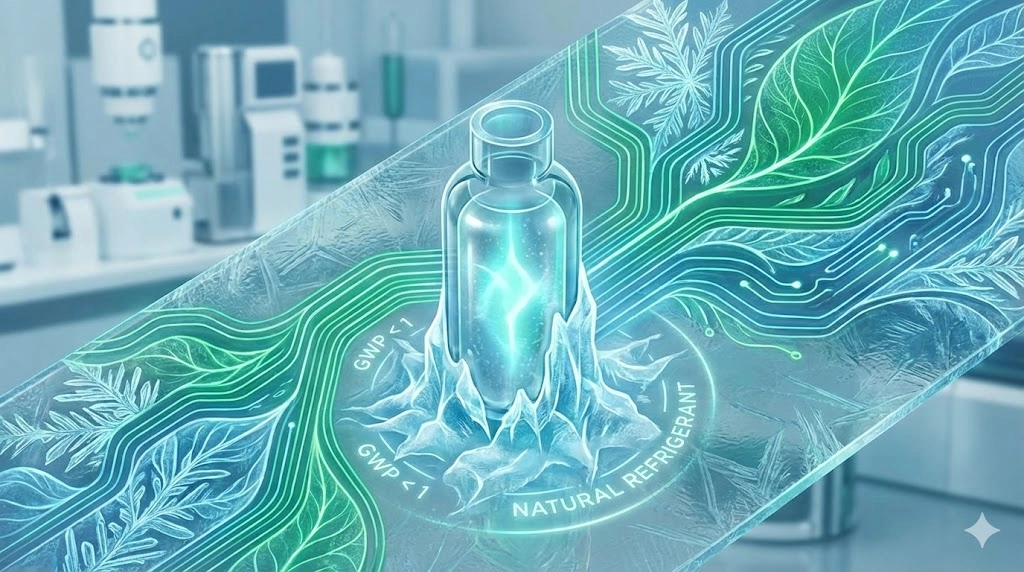
Understanding Global Warming Potential in Eco-Friendly Lab Refrigeration
Transitioning to Natural Refrigerants and Green Cooling Technology
Analyzing the Cost Benefits of Energy-Efficient Freezers
Implementing Safety Standards for Low-GWP Cooling Systems
Selecting Sustainable Equipment with the ACT Label
Complying with EPA SNAP Mandates for Natural Refrigerants
Conclusion: Adopting Eco-Friendly Lab Refrigeration for the Future
FAQ

Feb 10, 2026
Technical Insight
Eco-Friendly Refrigeration: Evaluating Natural Refrigerants and Low-GWP Cooling Systems
This guide explains the operational and environmental benefits of adopting natural refrigerants and low-GWP cooling systems in laboratory settings

Feb 10, 2026
Technical Insight
The Ultimate Guide to Sustainability in Laboratory Equipment and Operations
A comprehensive analysis of sustainable laboratory practices, focusing on energy-efficient equipment, waste management, and digital workflows
Jan 09, 2026
Product News
BRANDTECH Scientific Introduces the Transferpette® pro Micropipette: A New Twist on Comfort and Control
The latest addition to its trusted line of precision liquid handling instruments, engineered for comfort, control, and repeatable accuracy.
Jan 06, 2026
Featured, Technical Insight
New Research Frontiers Unlocked by Next-Generation Flow Cytometry
Next-generation flow cytometry systems using acoustic focusing are opening entirely new areas of research that were previously impractical or inaccessible with conventional flow cytometers.
Jan 05, 2026
Buying Guides
The Bottom Line: How Smart Microcentrifuge Tube Choices Impact Lab Efficiency and Cost
Innovative microcentrifuge tube solutions are more than just lab consumables—they’re strategic tools that can reduce costs, improve outcomes, and support long-term sustainability goals.
Jan 05, 2026
Buying Guides
Future-Proofing Your Lab with Innovative Microcentrifuge Tube Solutions
As laboratories evolve to meet the growing demands of modern science, even the most basic tools—like microcentrifuge tubes—are being reimagined.
Jan 05, 2026
Buying Guides
Microcentrifuge Tube Innovations: Driving Sustainable Change
Integrating next-generation consumables into standard workflows can lead to a more sustainable and responsible research environment.
Jan 05, 2026
Buying Guides
Single Use Plastics: How to Manage these Major Contributors to Lab Waste
Reducing lab waste isn’t just a sustainability issue—it’s a financial and operational one, too.
Jan 05, 2026
Buying Guides
Common Microcentrifuge Tube Challenges in Sensitive Molecular Workflows
Key factors that can impact the performance of microcentrifuge tubes for PCR, qPCR, and NGS and other sensitive applications
Jan 05, 2026
Buying Guides
How to Research the Right Microcentrifuge Tubes for Your Application
Selecting the right microcentrifuge tubes starts with understanding the specific demands of your application.