
Best PCR Systems of 2026: Top Picks for Research, Clinical & Industry Labs

Written By: Craig Bradley
May 28, 2024
GEMINI (2025)
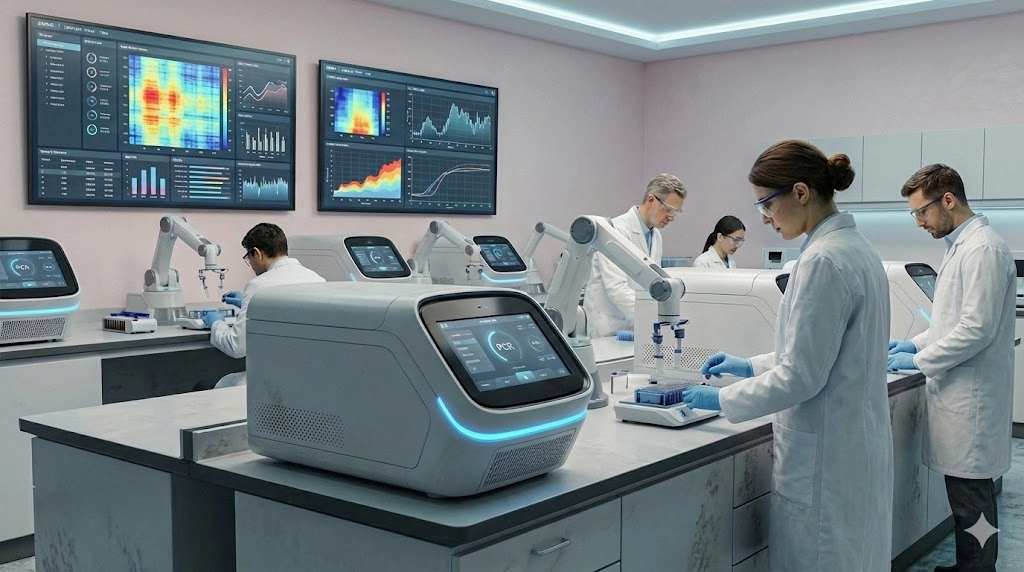
Selecting the right polymerase chain reaction (PCR) equipment is a critical decision that impacts the accuracy, throughput, and efficiency of your laboratory's genomic research. As we move into 2026, the best PCR systems have evolved to offer smarter automation, higher multiplexing capabilities, and more intuitive user interfaces to meet the rigorous demands of modern molecular biology. This guide highlights the top performing models of the year, ensuring you find the perfect match for your specific operational needs and budget.
Quick Summary: Top PCR Models for 2026
Best Overall: Roche LightCycler PRO — A cutting-edge 2024 release bridging the gap between translational research and diagnostics with superior temperature uniformity.
Best On A Budget: Thermo Fisher MiniAmp Plus — A compact, entry-level thermal cycler delivering reliability and essential features at an accessible price point.
Best For Speed / Throughput: Bio-Rad CFX Opus 384 — An industry powerhouse designed for high-volume labs requiring rapid cycling and robust data management.
Most Versatile: Bio-Rad PTC Tempo — The modern successor to the legendary PTC series, offering interchangeable blocks and flexible connectivity for diverse workflows.
Best High-End Option: Stilla Nio+ — A premier 7-color digital PCR (dPCR) system released in late 2023, setting the standard for absolute quantification and multiplexing.
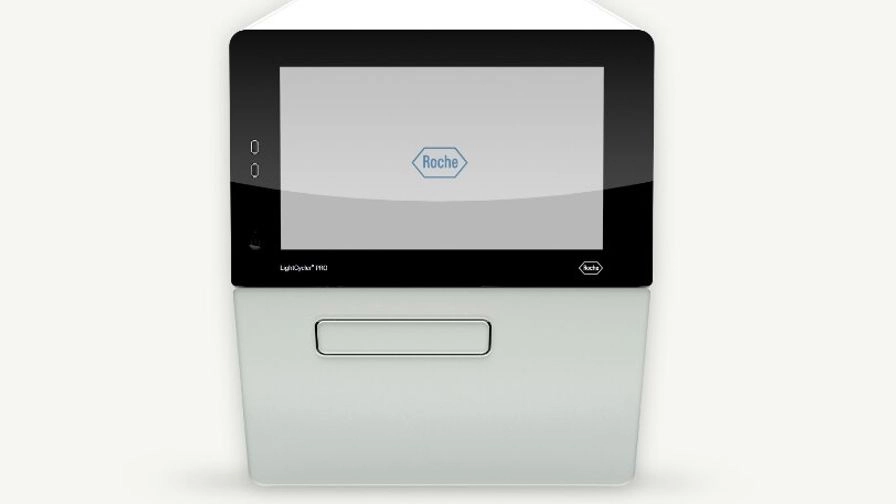
Roche LightCycler PRO – Roche Diagnostics
Price Range: $35,000 – $55,000 (Estimate)
Best For: Overall Performance & Hybrid Workflows
The Roche LightCycler PRO stands out as the premier choice for 2026, largely due to its significant technology update released in February 2024. It is designed to bridge the gap between pure research and in vitro diagnostics (IVD), making it an incredibly flexible asset for labs that may transition between assay development and clinical applications. Its standout feature is the new vapor chamber technology, which ensures unparalleled temperature uniformity across the block, reducing edge effects and improving data validity.
Key Specs
Block Format: 96-well or 384-well interchangeable
Channels: up to 7 optical channels
Temperature Uniformity: Vapor chamber cooling for < ±0.2°C variance
Release Year: 2024
Performance & Applications
The LightCycler PRO excels in environments where precision and regulatory readiness are paramount. Its updated software algorithms provide faster time-to-result without compromising sensitivity, making it ideal for oncology research, infectious disease surveillance, and genetic marker detection. The ability to switch between 96 and 384-well blocks adds a layer of adaptability that supports both improved assay optimization and higher throughput screening phases.
Thermo Fisher MiniAmp Plus – Thermo Fisher Scientific
Price Range: $3,500 – $5,800
Best For: Budget-Conscious Labs & Routine PCR
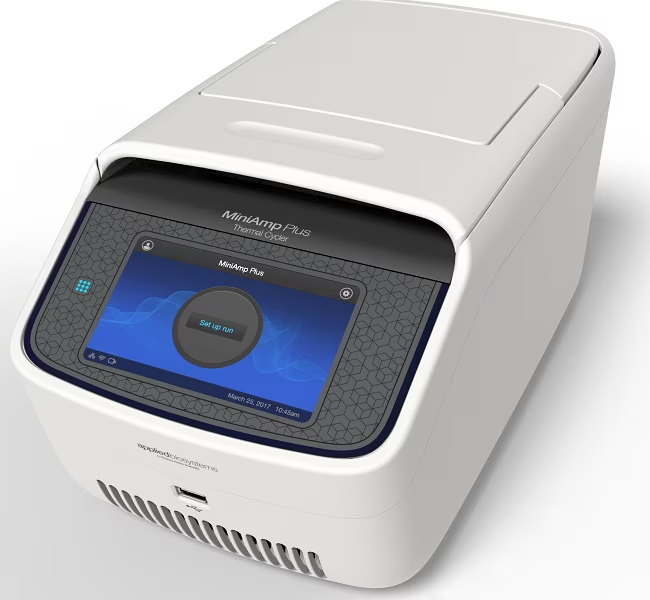
For laboratories focused on routine amplification where advanced real-time quantification is not required, the Thermo Fisher MiniAmp Plus remains the undisputed champion of value. While it lacks the bells and whistles of high-end qPCR systems, it offers the robust reliability associated with the Applied Biosystems brand in a footprint that respects crowded benchtops. It is the perfect "personal" cycler for academic bench work or small startups.
Key Specs
Block Format: 96-well (VeriFlex blocks)
Ramp Rate: 3.5°C/sec (Max block ramp)
Interface: 5-inch color touchscreen
Dimensions: Compact 19 cm width
Performance & Applications
The MiniAmp Plus is engineered for day-to-day conventional PCR tasks such as genotyping, colony PCR, and fragment amplification. Its defining feature in this price bracket is the VeriFlex block technology, which allows for independent temperature zones—essentially providing PCR optimization capabilities usually reserved for much more expensive systems. It is an excellent workhorse for educational institutions and general molecular biology labs running standard endpoint PCR.
Bio-Rad CFX Opus 384 – Bio-Rad Laboratories
Price Range: $40,000 – $55,000
Best For: Speed & High Throughput
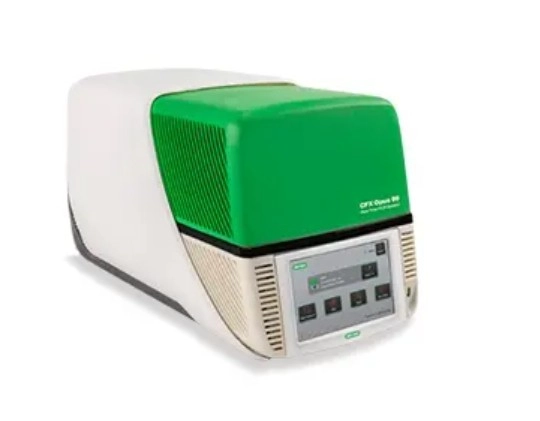
When throughput is the bottleneck, the Bio-Rad CFX Opus 384 offers a streamlined solution. As the modern evolution of the CFX series, the Opus 384 combines the optical precision Bio-Rad is known for with enhanced connectivity and speed. It is designed for laboratories processing hundreds of samples daily, such as those involved in large-scale pathogen detection or population genetics, where minimizing run time and maximizing plate capacity is non-negotiable.
Key Specs
Block Format: 384-well
Multiplexing: 4-target multiplexing
Connectivity: Wi-Fi, Ethernet, BR.io cloud platform
Scan Time: Reads all wells in < 20 seconds
Performance & Applications
The CFX Opus 384 is a powerhouse for gene expression analysis and viral load testing. Its optical shuttle system reads the entire plate quickly and consistently, eliminating the need for passive reference dyes in many applications. The integration with the BR.io cloud platform allows researchers to design experiments and analyze data remotely, significantly improving workflow efficiency in busy core facilities or shared laboratory spaces.
Shop Bio-Rad on LabXBio-Rad PTC Tempo – Bio-Rad Laboratories
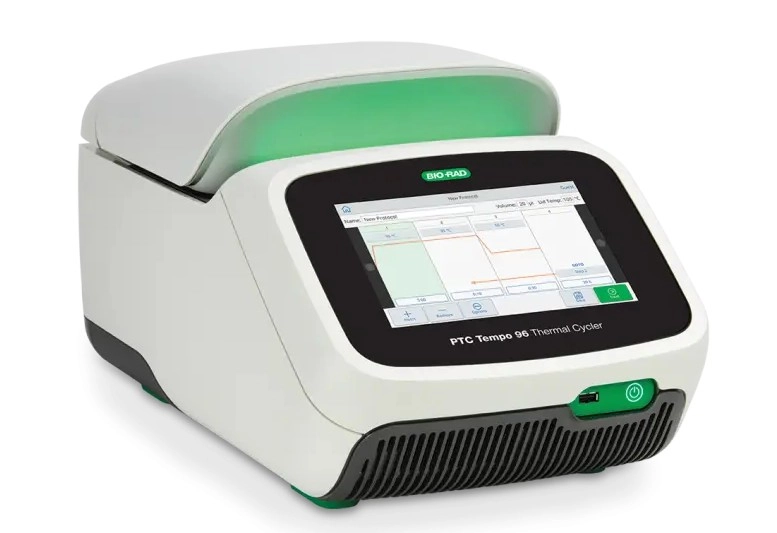
Price Range: $5,000 – $12,000
Best For: Versatility & Modern Standard PCR
Released as a successor to the legendary PTC-100 and PTC-200 thermal cyclers, the PTC Tempo brings the classic reliability of the "PTC" name into the modern era. It fits the "Most Versatile" category perfectly due to its modular design, allowing users to swap between 96-well, 96-deep well, and dual 48-well blocks. This flexibility makes it an easy choice for dynamic labs that might run a variety of protocols ranging from large-volume cloning to fast PCR optimization.
Key Specs
Block Options: 96-well, 96-deep, Dual 48/48, 384-well
Ramp Rate: Up to 5°C/sec
Security: User accounts and network folder access
Release Period: Late 2023 / Early 2024
Performance & Applications
The PTC Tempo is designed for the multi-user environment. Its modern touchscreen interface is intuitive, reducing training time for students or new technicians. The thermal gradient feature allows for rapid annealing temperature optimization, which is critical for developing new assays. It serves as the ideal primary thermal cycler for research labs that need one machine to handle everything from sequencing library prep to basic DNA amplification.
Stilla Nio+ – Stilla Technologies
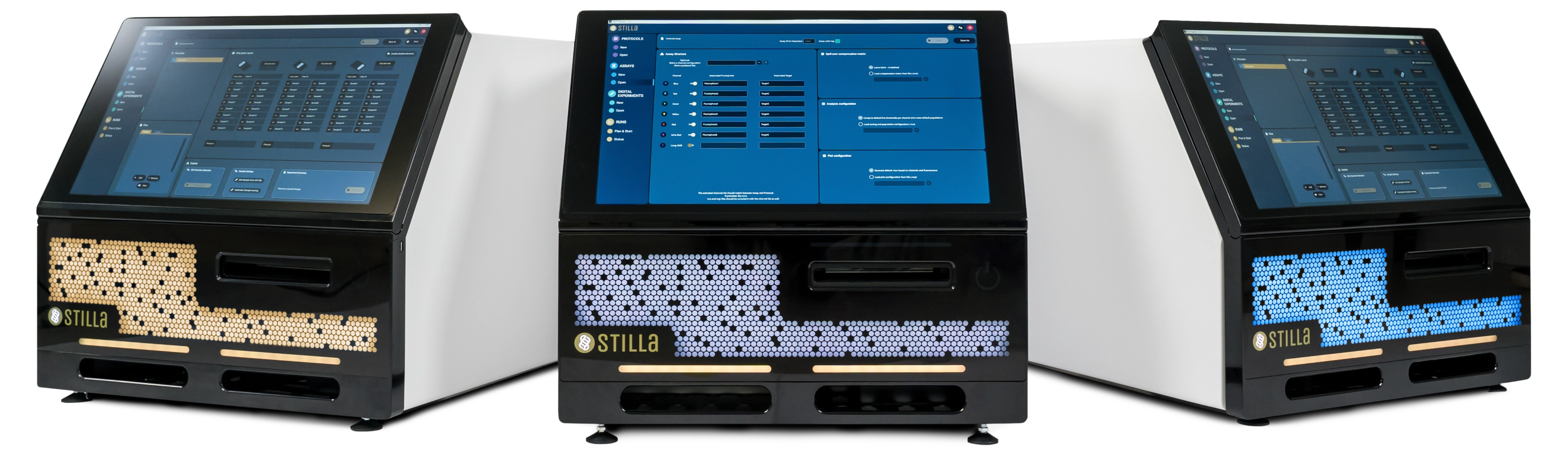
Price Range: $80,000 – $120,000+ (Estimate)
Best For: High-End Digital PCR (dPCR)
The Stilla Nio+, introduced in late 2023, represents the pinnacle of high-end PCR technology for 2026. While traditional qPCR is sufficient for many, the Nio+ utilizes Crystal Digital PCR™ technology to partition samples into thousands of droplets, allowing for absolute quantification without standard curves. With 7 optical channels, it offers the highest multiplexing capability in the digital PCR market, making it the ultimate tool for complex oncology and liquid biopsy research.
Key Specs
Technology: Crystal Digital PCR (droplet-based)
Channels: 7-color multiplexing
Throughput: Up to 384 samples per run (with 3 geode cycle)
Sensitivity: Detects 1 positive droplet in 25,000
Performance & Applications
The Nio+ is specifically built for "needle in a haystack" applications. It excels in liquid biopsy analysis (detecting rare circulating tumor DNA), gene therapy titration, and complex infectious disease quantification. By removing the need for reference standards and providing absolute copy numbers, it reduces ambiguity in critical data. For labs operating at the cutting edge of genomic medicine, the Nio+ justifies its high price tag with unmatched data quality and multiplexing power.
Comparison of the Best PCR Systems of 2026
Model | Best For | Key Features | Typical Price Range |
|---|---|---|---|
Roche LightCycler PRO | Overall Performance | Vapor chamber cooling, IVD/Research modes, 2024 release | $35,000 – $55,000 |
Thermo Fisher MiniAmp Plus | Budget / Routine | Compact, VeriFlex blocks, 5-inch touchscreen | $3,500 – $5,800 |
Bio-Rad CFX Opus 384 | Speed / Throughput | Cloud connectivity, 384-well format, optical shuttle | $40,000 – $55,000 |
Bio-Rad PTC Tempo | Versatility | Interchangeable blocks (96/48/384), thermal gradient | $5,000 – $12,000 |
Stilla Nio+ | High-End / dPCR | 7-color multiplexing, Crystal Digital PCR, absolute quantification | $80,000 – $120,000+ |
The Best PCR System for You
The best PCR equipment of 2026 reflects a clear industry trend toward connectivity, automation, and specialized quantification. For general laboratories, the Roche LightCycler PRO offers the most balanced mix of innovation and usability, making it our top pick for the year. However, labs with specific constraints—whether they be budgetary (Thermo Fisher MiniAmp Plus) or related to ultra-high precision (Stilla Nio+)—have excellent modern options available. By aligning your choice with your specific throughput and data requirements, you can secure a system that will drive your research forward for years to come.
See these and/or similar products here!
This article was created with the assistance of Generative AI and has undergone editorial review before publishing.
Jan 09, 2026
Product News
BRANDTECH Scientific Introduces the Transferpette® pro Micropipette: A New Twist on Comfort and Control
The latest addition to its trusted line of precision liquid handling instruments, engineered for comfort, control, and repeatable accuracy.
Jan 06, 2026
Featured, Technical Insight
New Research Frontiers Unlocked by Next-Generation Flow Cytometry
Next-generation flow cytometry systems using acoustic focusing are opening entirely new areas of research that were previously impractical or inaccessible with conventional flow cytometers.
Jan 05, 2026
Buying Guides
The Bottom Line: How Smart Microcentrifuge Tube Choices Impact Lab Efficiency and Cost
Innovative microcentrifuge tube solutions are more than just lab consumables—they’re strategic tools that can reduce costs, improve outcomes, and support long-term sustainability goals.
Jan 05, 2026
Buying Guides
Future-Proofing Your Lab with Innovative Microcentrifuge Tube Solutions
As laboratories evolve to meet the growing demands of modern science, even the most basic tools—like microcentrifuge tubes—are being reimagined.
Jan 05, 2026
Buying Guides
Microcentrifuge Tube Innovations: Driving Sustainable Change
Integrating next-generation consumables into standard workflows can lead to a more sustainable and responsible research environment.
Jan 05, 2026
Buying Guides
Single Use Plastics: How to Manage these Major Contributors to Lab Waste
Reducing lab waste isn’t just a sustainability issue—it’s a financial and operational one, too.
Jan 05, 2026
Buying Guides
Common Microcentrifuge Tube Challenges in Sensitive Molecular Workflows
Key factors that can impact the performance of microcentrifuge tubes for PCR, qPCR, and NGS and other sensitive applications
Jan 05, 2026
Buying Guides
How to Research the Right Microcentrifuge Tubes for Your Application
Selecting the right microcentrifuge tubes starts with understanding the specific demands of your application.
Jan 05, 2026
Technical Insight
The Best Confocal Microscopes of 2026
Discover the best confocal microscopes of 2026 for advanced imaging. Compare top models from Zeiss, Evident, and Nikon for speed, resolution, and budget.

Dec 24, 2025
Featured, Popular Products, Technical Insight
Emerging Mass Spectrometry Technologies to Improve Intraoperative Diagnostics
Advances in mass spectrometry may soon reshape surgery, improving diagnostic accuracy and impacting post-operative outcomes