
The Best Atomic Absorption Spectroscopy (AAS) Systems of 2026

Written By: Craig Bradley
May 29, 2024
Laboratories facing increasing sample loads require Atomic Absorption Spectroscopy (AAS) systems that deliver exceptional precision without sacrificing throughput. The best Atomic Absorption Spectroscopy (AAS) systems of 2026 combine robust hardware with intelligent software to streamline trace metal analysis in environmental, pharmaceutical, and industrial applications. Modern instruments have evolved beyond simple absorbance measurement, now offering automated optimization, enhanced safety features, and sequential analysis capabilities that rival more expensive techniques. This article evaluates five industry-leading models to help laboratory managers identify the ideal instrument for their specific analytical requirements. Best Overall: Shimadzu AA-7800 Series — A versatile all-rounder offering flexible configurations and advanced safety features for diverse sample types. Best For Speed / Throughput: Agilent 280FS AA — Utilizes Fast Sequential technology to analyze multiple elements in a single aspiration, significantly reducing run times. Best High-End Option: PerkinElmer PinAAcle 900T — Features a stacked flame and furnace design for maximum sensitivity and minimal footprint in demanding labs. Most Versatile: Analytik Jena contrAA 800 D — Uses a unique continuum source to measure any element with a single lamp, ideal for research and complex matrices. Best On A Budget: PG Instruments AA500 — Delivers reliable automated analysis and essential features at a cost-effective price point for routine testing. Price Range: $35,000 – $55,000
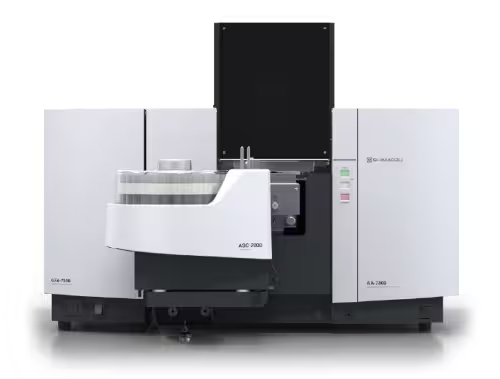
Best For: Overall Performance and Flexibility Released recently to address the growing demand for automated and safe analysis, the Shimadzu AA-7800 Series stands out as the best overall system for 2026. It is designed to accommodate a wide variety of analytical applications, termed "Any Application, Any User, Any Location" by the manufacturer. The system allows for easy switching between flame and furnace atomizers and includes advanced safety mechanisms like a vibration sensor and gas leak detection, making it suitable for both novice users and experienced technicians. Key Specs: Optics: Double-beam optical system with automatic optimization. Lamp Turret: 8-lamp automatic turret. Background Correction: Deuterium (D2) and High-Speed Self-Reversal (SR). Detector: High-sensitivity photomultiplier. Connectivity: LabSolutions CS network compatible for remote data analysis. Performance & Applications:
The AA-7800 excels in laboratories that handle diverse sample matrices, from environmental waters to food quality control. Its "WizAArd" software simplifies method development, while the high-speed dual-beam optics ensure baseline stability even during long automated runs. The instrument is particularly relevant for food safety testing and environmental monitoring where regulatory compliance requires strict data integrity and safety protocols. The ability to handle high-concentration samples without manual dilution adds to its operational efficiency in busy QA/QC labs. Price Range: $40,000 – $60,000
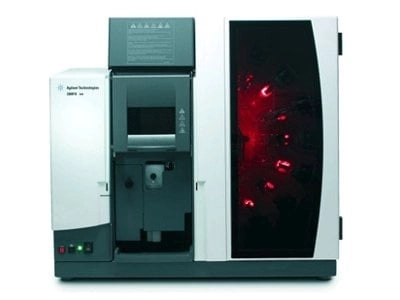
Best For: Speed and High Throughput The Agilent 280FS AA remains a dominant force in high-throughput environments due to its Fast Sequential (FS) mode. Unlike traditional AAS systems that analyze one element at a time across all samples, the 280FS measures all specified elements in a single sample aspiration. This workflow operates similarly to an ICP-OES system but at a fraction of the cost, making it the premier choice for laboratories prioritizing speed. Key Specs: Throughput: Measures up to 10 elements per sample in less than 2 minutes. Lamp Turret: 8-lamp capacity with automated selection. Optics: Narrow-beam optics for maximum light throughput. Atomization: Mark 7 flame atomization system. Background Correction: High-speed Deuterium correction. Performance & Applications:
Operational efficiency is the core strength of the 280FS, which can cut analysis time by up to 50% compared to conventional AA instruments. This speed reduction drastically lowers gas consumption and sample waste, providing long-term operational savings. It is highly relevant for mining, agriculture, and contract laboratories where hundreds of samples must be processed daily for a standard suite of elements. The Mark 7 spray chamber is designed to handle difficult matrices with high total dissolved solids (TDS) without blockage, ensuring consistent performance in rugged industrial applications. Price Range: $65,000 – $85,000+
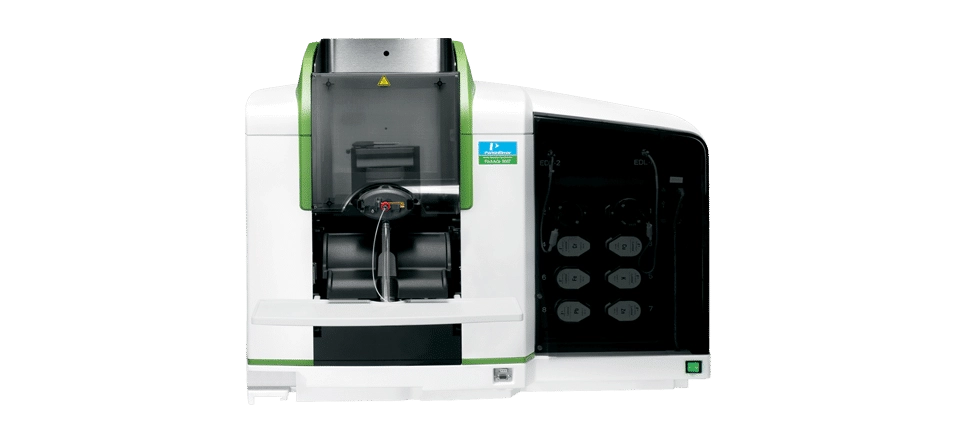
Best For: High-End Sensitivity and Dual Analysis The PerkinElmer PinAAcle 900T is a sophisticated high-end instrument that integrates both flame and longitudinal Zeeman graphite furnace atomizers into a single, compact chassis. This "stacked" design eliminates the need to physically swap atomizers or align mechanical parts, providing seamless transitions between high-concentration and ultra-trace measurements. It represents the gold standard for laboratories requiring sub-ppb detection limits and maximum uptime. Key Specs: Design: Stacked flame and transverse graphite furnace (no mechanical changeover). Background Correction: Longitudinal Zeeman for furnace; Deuterium for flame. Camera: TubeView™ color furnace camera for real-time monitoring. Optics: True double-beam system with fiber optic light efficiency. Throughput: High-speed scanning capabilities. Performance & Applications:
The PinAAcle 900T is engineered for research and strictly regulated industries such as pharmaceuticals and clinical toxicology. The inclusion of the TubeView camera allows operators to verify the probe position and drying stages inside the graphite tube, eliminating errors during method development for complex biological matrices. Its superior sensitivity makes it the ideal instrument for detecting toxic trace metals like arsenic, lead, and cadmium in blood, serum, or high-purity chemical reagents where accuracy is non-negotiable. Price Range: $80,000 – $100,000+
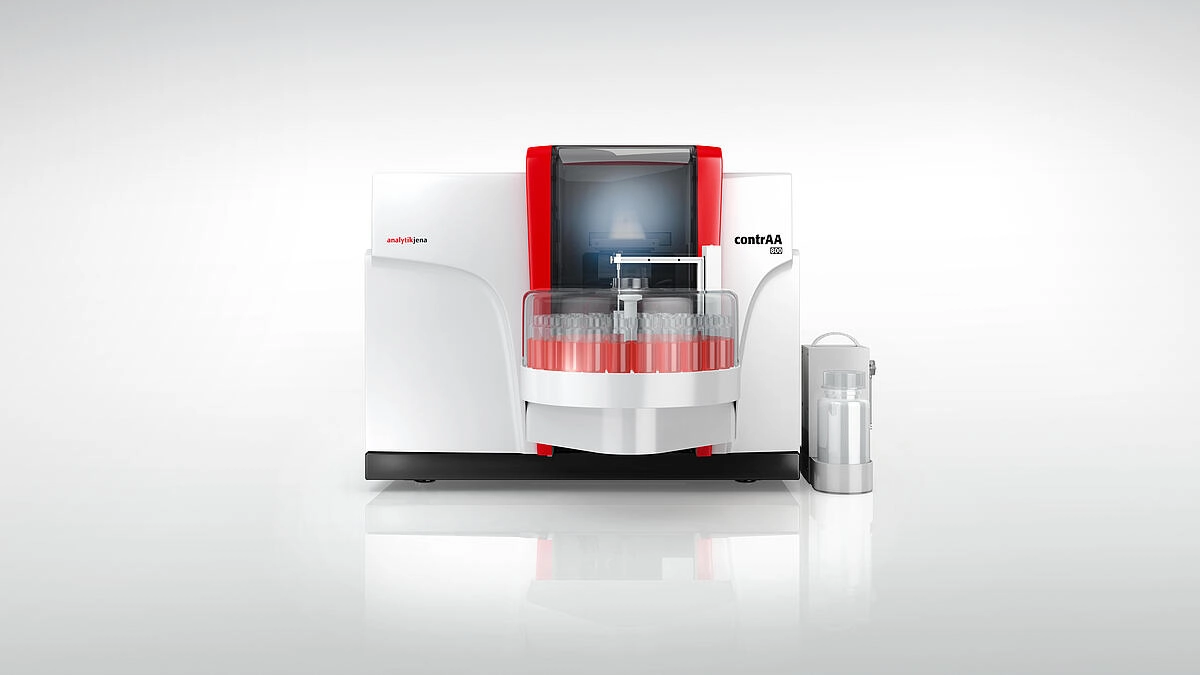
Best For: Versatility and Research Updated with enhanced specifications for 2024/2025, the Analytik Jena contrAA 800 D revolutionizes AAS by replacing traditional hollow cathode lamps with a single Xenon short-arc lamp. This High-Resolution Continuum Source (HR-CS) technology enables the instrument to access the entire relevant spectrum tailored to any element, offering versatility previously restricted to ICP-OES. It is the most technically advanced AAS available, bridging the gap between AAS and ICP. Key Specs: Light Source: Single Xenon short-arc lamp (covers 185–900 nm). Resolution: High-resolution Echelle monochromator. Atomizer: Automatic switch between flame and graphite furnace. Correction: Simultaneous background correction (real-time). Detection: CCD detector for 3D spectral visualization. Performance & Applications:
The contrAA 800 D is unmatched for research institutions and specialized testing facilities dealing with unknown or interference-rich samples. The ability to visualize the spectral environment in 3D allows analysts to identify and correct spectral interferences that would cause errors in standard instruments. It is particularly suitable for materials science and advanced environmental research, allowing for the determination of non-metals like phosphorus and sulfur, which are typically impossible to analyze with conventional AAS. Price Range: $15,000 – $25,000
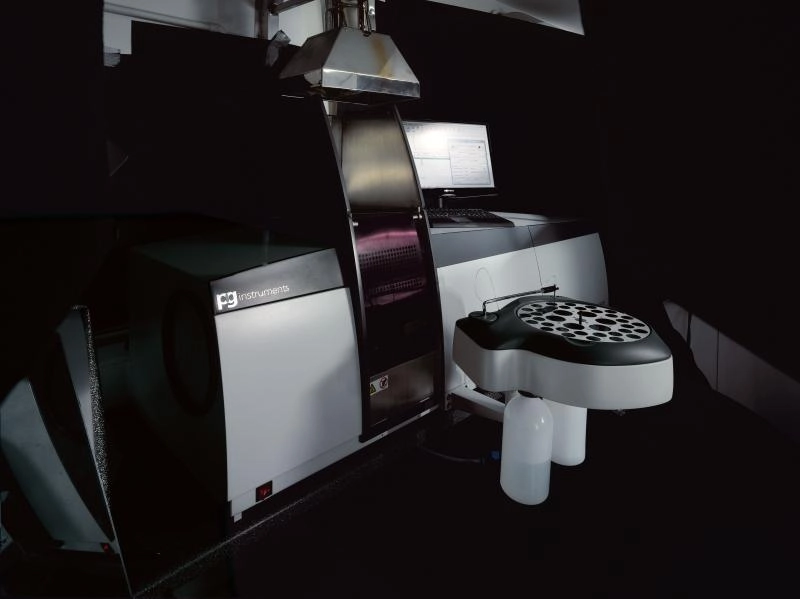
Best For: Budget-Conscious Routine Analysis For laboratories with tight capital equipment budgets, the PG Instruments AA500 offers a compelling balance of performance and affordability. While it lacks the high-end automation of the premium models, it provides fully automated flame and furnace control, an 8-lamp turret, and robust safety features. It allows smaller commercial labs and educational institutions to perform compliant metal analysis without the six-figure investment. Key Specs: Turret: Automated 8-lamp turret with auto-alignment. Control: Fully PC-controlled flame and graphite furnace system. Background Correction: Deuterium Arc and Smith-Hieftje (Self-Reversal). Safety: Automatic gas leak and flame monitoring sensors. Atomizer: Available as Flame (F), Furnace (G), or Combined (FG) configurations. Performance & Applications:
The AA500 is a workhorse for routine applications where sample throughput is moderate and matrices are relatively simple. It is widely used in agricultural soil testing, basic water analysis, and educational teaching labs. Despite its lower price, it includes essential modern features like automated wavelength selection and slit adjustment, ensuring that data quality remains high for standard regulatory limits. It is an excellent entry-level choice for labs transitioning from manual wet chemistry to instrumental analysis. Model Best For Key Features Typical Price Range Shimadzu AA-7800 Overall Performance Dual atomizer option, WizAArd software, advanced safety sensors $35,000 – $55,000 Agilent 280FS AA Speed / Throughput Fast Sequential mode, 10 elements/sample in <2 mins $40,000 – $60,000 PerkinElmer PinAAcle 900T High-End Sensitivity Stacked flame/furnace, TubeView camera, minimal footprint $65,000 – $85,000+ Analytik Jena contrAA 800 D Versatility / Research Xenon continuum source (one lamp for all), 3D spectra, HR-CS $80,000 – $100,000+ PG Instruments AA500 Budget / Routine Cost-effective, automated 8-lamp turret, reliable basic analysis $15,000 – $25,000 Selecting the right atomic absorption spectrometer depends heavily on the specific balance between throughput requirements, detection limit needs, and available budget. The Shimadzu AA-7800 offers the most balanced solution for general laboratories, while the Agilent 280FS is the clear winner for high-volume environments requiring speed. For research-grade applications demanding the highest versatility, the Analytik Jena contrAA 800 D remains unrivaled. By investing in one of these top-tier Atomic Absorption Spectroscopy (AAS) systems, laboratories can ensure long-term reliability and compliance with evolving analytical standards in 2026. This article was created with the assistance of Generative AI and has undergone editorial review before publishing.
Quick Summary
Shimadzu AA-7800 Series
Agilent 280FS AA
PerkinElmer PinAAcle 900T
Analytik Jena contrAA 800 D
PG Instruments AA500
Comparison of Top AAS Models
Conclusion: Choosing the Right AAS System for 2026
Jan 09, 2026
Product News
BRANDTECH Scientific Introduces the Transferpette® pro Micropipette: A New Twist on Comfort and Control
The latest addition to its trusted line of precision liquid handling instruments, engineered for comfort, control, and repeatable accuracy.

Jan 06, 2026
Featured, Technical Insight
New Research Frontiers Unlocked by Next-Generation Flow Cytometry
Next-generation flow cytometry systems using acoustic focusing are opening entirely new areas of research that were previously impractical or inaccessible with conventional flow cytometers.
Jan 05, 2026
Buying Guides
The Bottom Line: How Smart Microcentrifuge Tube Choices Impact Lab Efficiency and Cost
Innovative microcentrifuge tube solutions are more than just lab consumables—they’re strategic tools that can reduce costs, improve outcomes, and support long-term sustainability goals.
Jan 05, 2026
Buying Guides
Future-Proofing Your Lab with Innovative Microcentrifuge Tube Solutions
As laboratories evolve to meet the growing demands of modern science, even the most basic tools—like microcentrifuge tubes—are being reimagined.
Jan 05, 2026
Buying Guides
Microcentrifuge Tube Innovations: Driving Sustainable Change
Integrating next-generation consumables into standard workflows can lead to a more sustainable and responsible research environment.
Jan 05, 2026
Buying Guides
Single Use Plastics: How to Manage these Major Contributors to Lab Waste
Reducing lab waste isn’t just a sustainability issue—it’s a financial and operational one, too.
Jan 05, 2026
Buying Guides
Common Microcentrifuge Tube Challenges in Sensitive Molecular Workflows
Key factors that can impact the performance of microcentrifuge tubes for PCR, qPCR, and NGS and other sensitive applications
Jan 05, 2026
Buying Guides
How to Research the Right Microcentrifuge Tubes for Your Application
Selecting the right microcentrifuge tubes starts with understanding the specific demands of your application.
Jan 05, 2026
Technical Insight
The Best Confocal Microscopes of 2026
Discover the best confocal microscopes of 2026 for advanced imaging. Compare top models from Zeiss, Evident, and Nikon for speed, resolution, and budget.

Dec 24, 2025
Featured, Popular Products, Technical Insight
Emerging Mass Spectrometry Technologies to Improve Intraoperative Diagnostics
Advances in mass spectrometry may soon reshape surgery, improving diagnostic accuracy and impacting post-operative outcomes