
The Best ELISA Kits and Immunoassay Systems of 2026

Written By: Craig Bradley
Dec 11, 2025
For laboratory professionals, selecting the right diagnostic machinery is a balance of throughput, sensitivity, and operational cost. As we move into 2026, the market for ELISA kits and immunoassay systems has shifted toward automation and integration, reducing hands-on time while increasing the speed of results. This guide breaks down the top equipment available this year, featuring recent releases and established models that define the current standard of care and research applications. Quick Summary Best Overall: Beckman Coulter DxI 9000 — ZeroDaily maintenance and high throughput per footprint. Best On A Budget: Bio-Techne Ella — Compact, automated benchtop performance at a lower entry cost. Best For Speed / Throughput: Siemens Atellica IM 1600 — Magnetic sample transport delivers rapid results for high-volume labs. Most Versatile: Beckman Coulter DxC 500i — Newly released integrated chemistry and immunoassay system for satellite labs. Best High-End Option: Roche cobas e 801 — Intelligent continuous loading and 9-minute STAT assays for critical care. Price Range: $150,000+ (New) / Inquire for secondary market availability
Best For: Overall
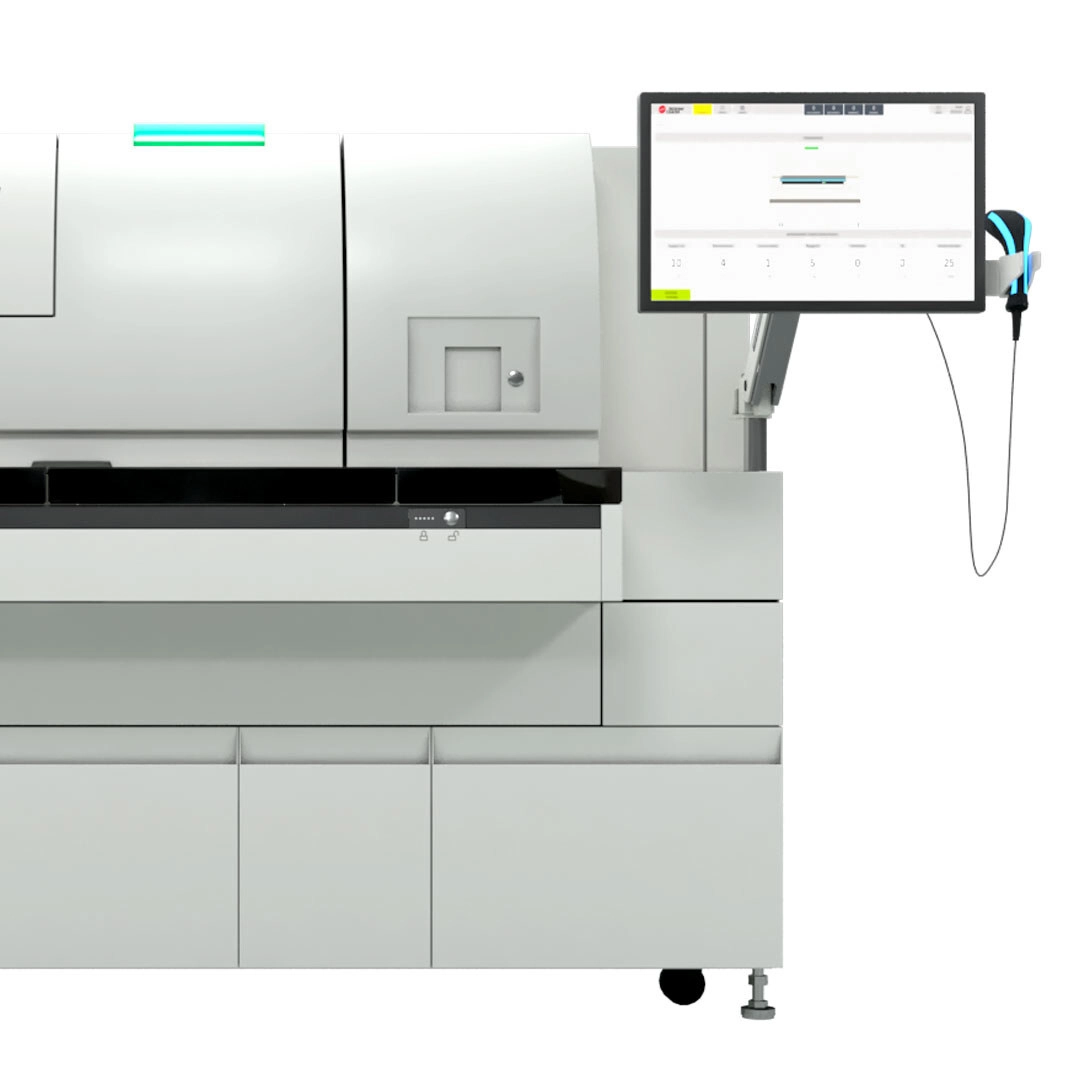
Primary Category: High-performance clinical automation The DxI 9000 represents a distinct advancement in immunoassay technology, positioning it as a widely used option for 2026. Released initially in 2023 and gaining widespread adoption through 2025, this analyzer addresses a common laboratory pain point: maintenance downtime. Its "ZeroDaily Maintenance" feature eliminates daily cleaning routines, potentially saving labs hundreds of hours annually. It is a high-capacity system for mid-to-high-volume laboratories requiring consistent uptime and high precision. Key Specs Throughput: Up to 450 tests per hour. Time to First Result: Less than 30 minutes for most assays. Sample Capacity: Continuous loading with on-the-fly reagent replacement. Technology: Chemiluminescent immunoassay (CLIA) with PrecisionVision Technology. Performance & Applications
The DxI 9000 functions effectively in core laboratories where speed and error reduction are prioritized. Its PrecisionVision Technology uses automated cameras to identify tube processing errors—such as insufficient volume—before they affect results. This system is particularly relevant for cardiac and infectious disease testing, where assay sensitivity and rapid turnaround can directly impact patient outcomes. Its ability to run the novel NT-proBNP assays with high precision makes it a frequent choice for modern cardiac care units. Price Range: $15,000 – $35,000 (Refurbished vs. New)
Best For: A Budget
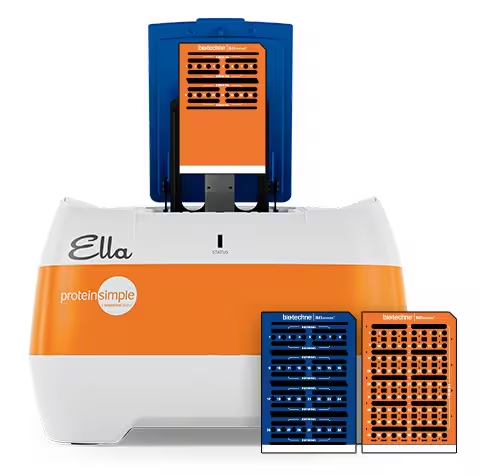
Primary Category: Benchtop research and clinical crossover While floor-standing analyzers dominate high-volume hospitals, the Bio-Techne Ella remains a prominent option for smaller labs and translational research facilities on a budget. Often described as a "Next Generation ELISA," Ella utilizes a unique microfluidic cartridge system (Simple Plex) to automate the entire immunoassay workflow. This design removes the manual wash and reagent steps associated with traditional ELISA kits, reducing user error and variability without the high capital cost of larger systems. Key Specs Format: Benchtop automated cartridge system. Time to Result: ~90 minutes. Sample Volume: Low volume requirement (25 µL). Dynamic Range: 4-5 logs, eliminating many manual dilution steps. Performance & Applications
Ella is suitable for laboratories that need high-quality data but lack the space or capital for a central lab analyzer. It bridges the gap between manual ELISA plates and fully automated clinical systems. Its sub-picogram sensitivity makes it highly relevant for cytokine profiling and biomarker discovery in neurology and oncology. Because the system is factory-calibrated, it allows researchers and clinicians to run single samples or small batches cost-effectively without utilizing entire 96-well plates. Price Range: $40,000 – $75,000 (Refurbished) / $180,000+ (New)
Best For: Speed / Throughput
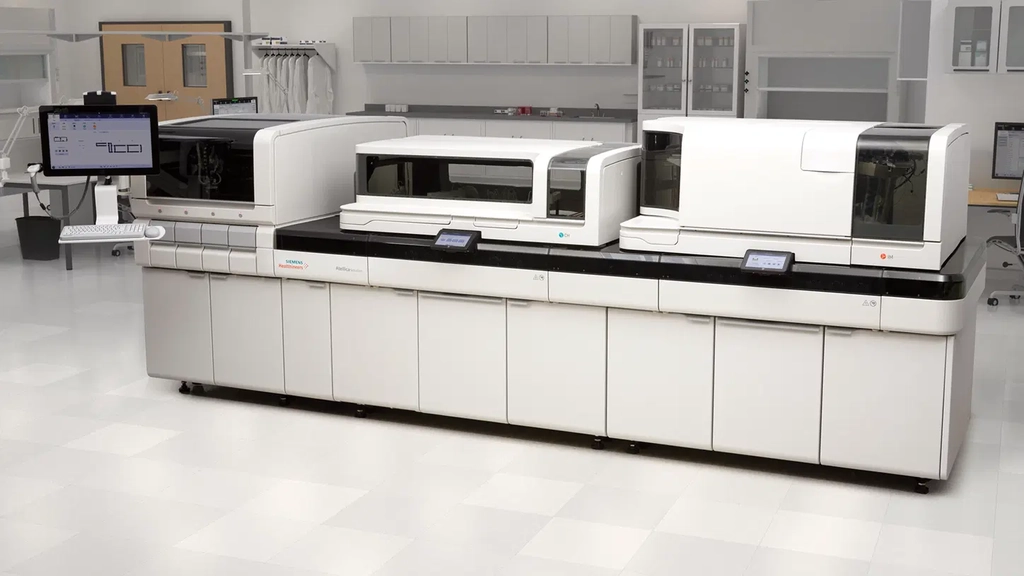
Primary Category: High-throughput central laboratory The Siemens Atellica IM 1600 is engineered for the specific purpose of rapid sample processing. The core innovation here is the Atellica Magline Transport, a bi-directional magnetic transport system that is significantly faster than conventional conveyors. This allows for independent control over every sample, enabling STAT samples to bypass routine queues instantly. For large labs processing thousands of samples daily, the logistical speed of the Atellica system supports high-volume workflows. Key Specs Throughput: Up to 440 tests per hour. Reagent Capacity: Onboard capacity for varying assay configurations. Sample Management: Magline Transport for rapid sorting and prioritizing. Connectivity: Scalable to connect with clinical chemistry modules. Performance & Applications
This model serves as a central analyzer for large reference laboratories and university hospital networks. Its operational strength lies in managing peak workloads without creating bottlenecks. The system supports a broad menu of assays, including complex infectious disease panels and reproductive health markers. By decoupling sample processing from assay timing, the IM 1600 ensures that urgent emergency room samples are prioritized automatically, a critical feature for trauma centers and acute care facilities. Price Range: $80,000 – $120,000 (Estimated New)
Best For: Most Versatile
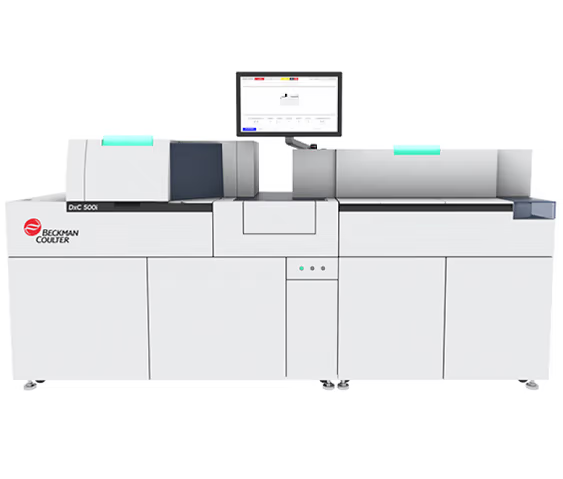
Primary Category: Integrated clinical chemistry and immunoassay Freshly cleared by the FDA in March 2025, the DxC 500i is one of the newest entries on this list. It addresses a growing trend in laboratory medicine: the decentralization of testing. Designed specifically for satellite laboratories and independent clinics, the DxC 500i integrates clinical chemistry and immunoassay testing into a single, compact footprint. This versatility allows smaller facilities to perform a comprehensive diagnostic panel—from glucose and electrolytes to TSH and cardiac markers—on one machine. Key Specs Throughput: 100 immunoassay tests/hr (plus 800 chemistry tests/hr). Footprint: Compact integrated design (~20% smaller than comparable standalone pairs). Reliability: Built on the proven performance of the DxC and Access lines. User Interface: Unified screen for both testing disciplines. Performance & Applications
The DxC 500i is a viable solution for community hospitals and freestanding emergency departments that need full-service capabilities in a limited space. By consolidating two instruments into one, labs reduce reagent waste, service contract costs, and training requirements. Its scientific relevance lies in ensuring data consistency; results from a satellite lab using the DxC 500i correlate with central labs using larger Beckman systems, ensuring consistent patient records across a health network. Price Range: $60,000 – $100,000 (Refurbished Module) / System dependent
Best For: High-End Option
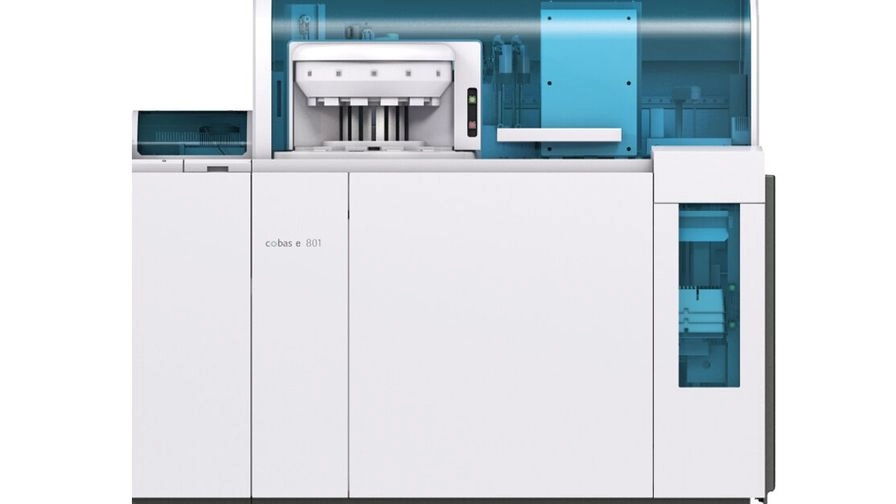
Primary Category: Premium modular automation The Roche cobas e 801 module is a key component of the "cobas pro" integrated solutions, representing the high-end tier of immunochemistry. While the platform has been evolving, recent updates have increased its efficiency for 2026 standards. It offers the industry's highest reagent capacity on a single module and features intelligent continuous loading. This system is designed for labs where budget is secondary to absolute performance, reliability, and assay menu breadth. Key Specs Throughput: 300 tests per hour (per module). Reagent Positions: 48 cooled positions per module. Turnaround Time: 18 minutes routine, 9 minutes for STAT assays. Sample Loading: Continuous, on-the-fly loading of samples and reagents. Performance & Applications
The cobas e 801 is noted for its "electrochemiluminescence" (ECL) technology, which offers wide measuring ranges and high low-end sensitivity. It is a preferred choice for high-stakes testing areas such as thyroid function, tumor markers, and cardiac diagnostics. The 9-minute STAT capability is a critical feature for chest pain protocols, allowing physicians to rule out myocardial infarction quickly. This system serves high-budget academic medical centers that demand an extensive assay menu and rapid, reliable results for complex patient cases. Model Best For Key Features Typical Price Range Beckman Coulter DxI 9000 Best Overall ZeroDaily maintenance, PrecisionVision, 450 tests/hr $150k+ (New) / Ltd. Secondary Bio-Techne Ella Best On A Budget Benchtop size, 90-min results, cartridge-based $15k – $35k Siemens Atellica IM 1600 Speed / Throughput Magline magnetic transport, 440 tests/hr, bi-directional $40k – $75k (Refurb) Beckman Coulter DxC 500i Most Versatile Integrated chemistry & immunoassay, compact footprint $80k – $120k (Est.) Roche cobas e 801 High-End Option 9-min STAT assays, 48 reagent slots, continuous loading $60k – $100k (Refurb Module) The landscape of ELISA kits and immunoassay systems in 2026 is defined by a shift away from manual maintenance and toward intelligent, integrated workflows. Whether upgrading a high-volume central lab with the speed of the Siemens Atellica or equipping a satellite clinic with the versatile new Beckman Coulter DxC 500i, facility managers have multiple options to enhance diagnostic precision. By carefully weighing throughput needs against capital expenditure, laboratories can secure equipment that not only fits their current budget but also scales with future patient demands. This article was created with the assistance of Generative AI and has undergone editorial review before publishing.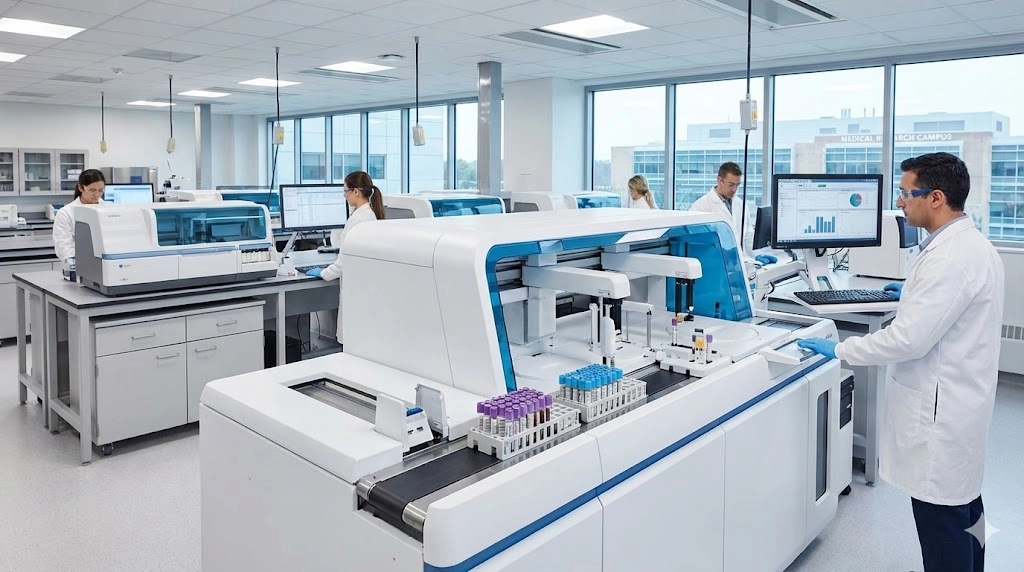
Beckman Coulter DxI 9000 Access Immunoassay Analyzer
Bio-Techne Ella Automated Immunoassay System
Siemens Atellica IM 1600 Analyzer
Beckman Coulter DxC 500i Clinical Analyzer
Roche cobas e 801
Comparison of Top Immunoassay Systems
Conclusion: Choosing the Right ELISA Kits and Immunoassay Systems
Jan 09, 2026
Product News
BRANDTECH Scientific Introduces the Transferpette® pro Micropipette: A New Twist on Comfort and Control
The latest addition to its trusted line of precision liquid handling instruments, engineered for comfort, control, and repeatable accuracy.
Jan 06, 2026
Featured, Technical Insight
New Research Frontiers Unlocked by Next-Generation Flow Cytometry
Next-generation flow cytometry systems using acoustic focusing are opening entirely new areas of research that were previously impractical or inaccessible with conventional flow cytometers.
Jan 05, 2026
Buying Guides
The Bottom Line: How Smart Microcentrifuge Tube Choices Impact Lab Efficiency and Cost
Innovative microcentrifuge tube solutions are more than just lab consumables—they’re strategic tools that can reduce costs, improve outcomes, and support long-term sustainability goals.
Jan 05, 2026
Buying Guides
Future-Proofing Your Lab with Innovative Microcentrifuge Tube Solutions
As laboratories evolve to meet the growing demands of modern science, even the most basic tools—like microcentrifuge tubes—are being reimagined.
Jan 05, 2026
Buying Guides
Microcentrifuge Tube Innovations: Driving Sustainable Change
Integrating next-generation consumables into standard workflows can lead to a more sustainable and responsible research environment.
Jan 05, 2026
Buying Guides
Single Use Plastics: How to Manage these Major Contributors to Lab Waste
Reducing lab waste isn’t just a sustainability issue—it’s a financial and operational one, too.
Jan 05, 2026
Buying Guides
Common Microcentrifuge Tube Challenges in Sensitive Molecular Workflows
Key factors that can impact the performance of microcentrifuge tubes for PCR, qPCR, and NGS and other sensitive applications
Jan 05, 2026
Buying Guides
How to Research the Right Microcentrifuge Tubes for Your Application
Selecting the right microcentrifuge tubes starts with understanding the specific demands of your application.
Jan 05, 2026
Technical Insight
The Best Confocal Microscopes of 2026
Discover the best confocal microscopes of 2026 for advanced imaging. Compare top models from Zeiss, Evident, and Nikon for speed, resolution, and budget.
Dec 24, 2025
Featured, Popular Products, Technical Insight
Emerging Mass Spectrometry Technologies to Improve Intraoperative Diagnostics
Advances in mass spectrometry may soon reshape surgery, improving diagnostic accuracy and impacting post-operative outcomes