
The Best Flow Cytometers of 2026: A Buyer's Review of Price and Features

Written By: Craig Bradley
May 28, 2024
As the demand for high-dimensional cell analysis accelerates in immunology, oncology, and drug discovery, the flow cytometers of 2026 offer unprecedented resolution and throughput. Laboratory professionals now prioritize platforms that integrate spectral analysis with real-time imaging, reducing the need for separate microscopy workflows. This article evaluates five industry-leading models, focusing on data quality, speed, and operational flexibility to help facility managers select the optimal instrument for their specific research or clinical requirements. Best High-End Option: BD FACSDiscover S8 Cell Sorter — Integrates real-time imaging with spectral sorting for novel biological insights. Best For Speed / Throughput: Thermo Fisher Invitrogen Attune Xenith — Utilizes acoustic focusing for rapid sample acquisition without clogging. Best For Deep Immunophenotyping: Cytek Aurora — The industry standard for high-parameter spectral analysis. Best Benchtop Sorter: Beckman Coulter CytoFLEX SRT — brings advanced sorting capabilities to individual lab benches. Best Value / Workhorse: Agilent NovoCyte Penteon — Reliable, automated multi-color analysis for routine workflows. Price Range: $500,000 – $750,000+ (Estimate)
Best For: High-End Innovation & Spatial Profiling
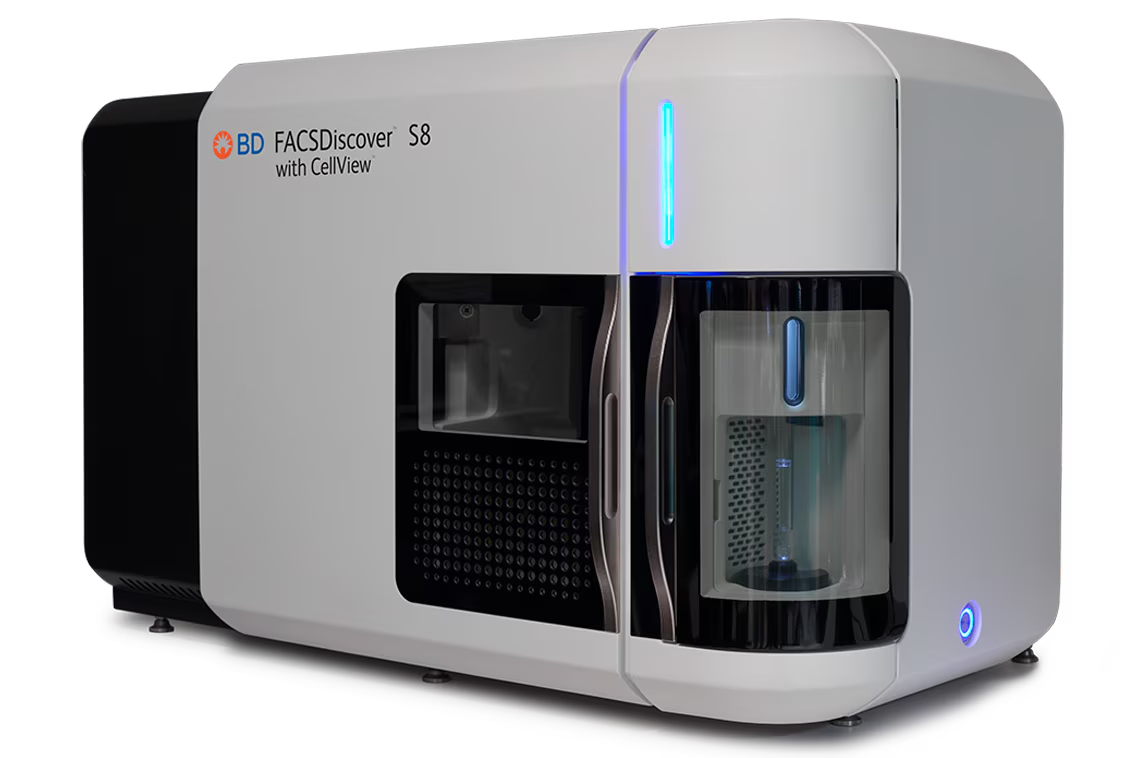
Primary Category: High-End Option Key Specs Technology: Spectral Flow Cytometry + BD CellView Image Technology Lasers/Detectors: 5 lasers / 78 fluorescence detectors Sorting Speed: High-speed sorting based on image features Resolution: Spatial and morphological insights in real-time Performance & Applications
Released in mid-2023, the BD FACSDiscover S8 represents a paradigm shift by combining spectral flow cytometry with high-speed imaging. This instrument allows researchers to sort cells not just by fluorescence intensity but by spatial characteristics, such as the location of a protein within the cell or the interaction between two cells. This capability is revolutionary for cell biology and immunology, as it permits the isolation of specific phenotypes that traditional PMT-based cytometers cannot distinguish. It is ideally suited for core facilities requiring the absolute pinnacle of analysis power for complex applications like cell therapy development and intracellular signaling studies. Price Range: $250,000 – $375,000 (Estimate)
Best For: High-Throughput Screening & Difficult Samples
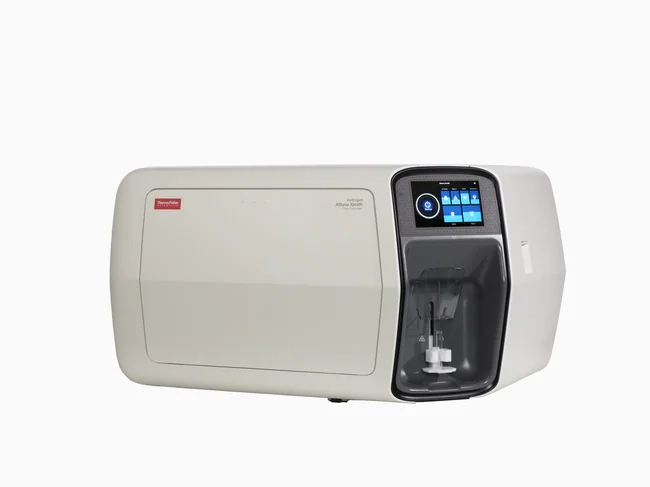
Primary Category: Speed / Throughput Key Specs Technology: Acoustic Focusing + Spectral Analysis Sample Rate: Up to 10x faster than traditional hydrodynamic focusing Lasers/Detectors: Up to 6 lasers / 51 fluorescence detectors Clog Resistance: Designed for large or sticky cells (tumors, cardiomyocytes) Performance & Applications
Released in mid-2025, the Attune Xenith builds upon the legacy of the Attune NxT by incorporating full spectral capabilities with a massive optical upgrade. Its defining feature remains acoustic focusing technology, which aligns cells using sound waves rather than sheath fluid pressure alone. This allows for incredibly high sample input rates without compromising data variance, making it the superior choice for rare event detection and large-volume screening. The system is particularly relevant for cancer research involving dissociated tumor tissue or other "sticky" samples that frequently clog standard fluidics systems, ensuring uninterrupted data acquisition during critical high-throughput runs. Price Range: $250,000 – $450,000 (Estimate)
Best For: High-Parameter Research
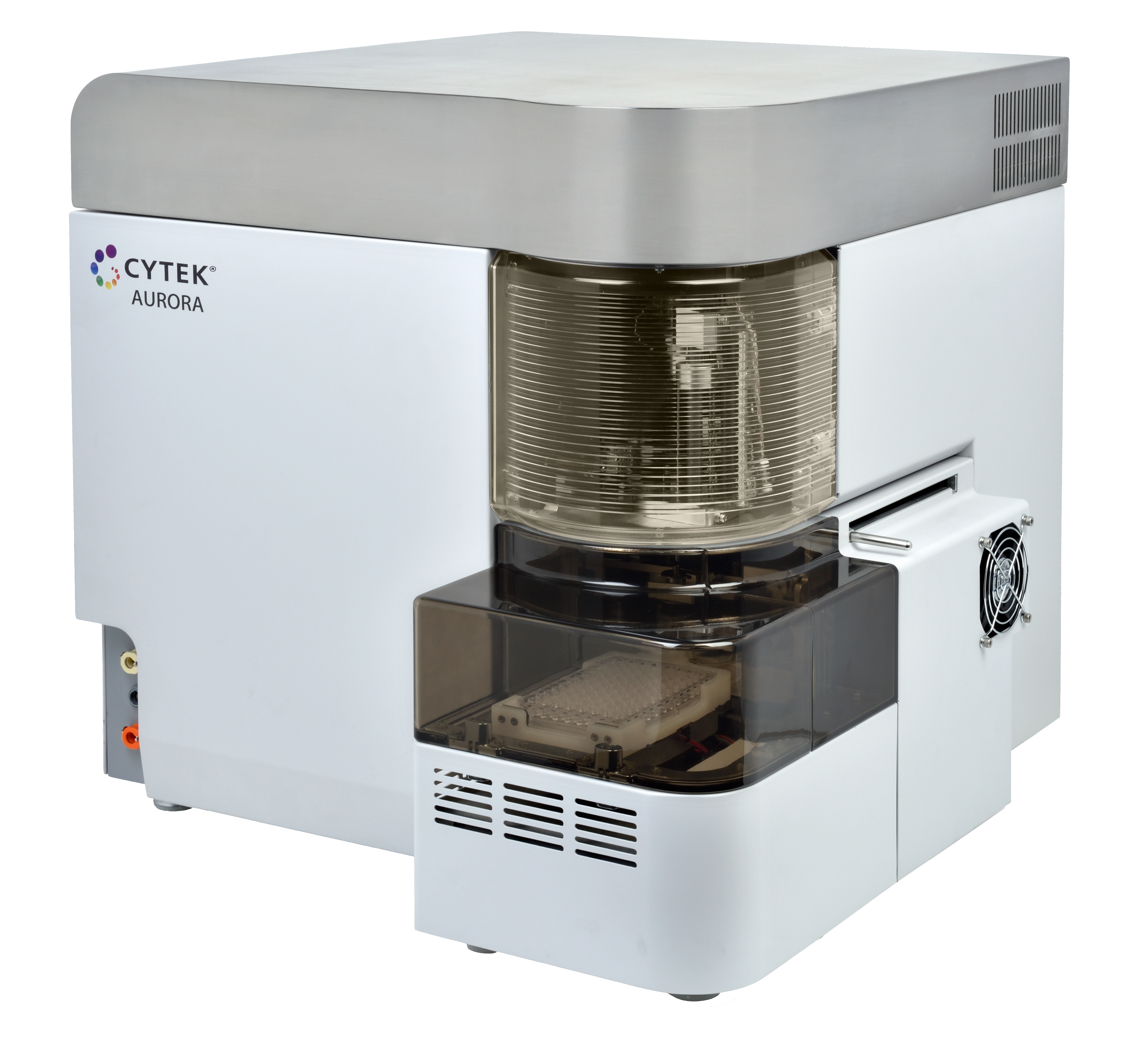
Primary Category: Most Versatile Key Specs Technology: Full Spectrum Profiling (FSP) Detectors: 64 fluorescence channels Lasers: 5 lasers (UV, Violet, Blue, Yellow-Green, Red) Sensitivity: High sensitivity due to APD (Avalanche Photodiode) technology Performance & Applications
The Cytek Aurora remains the gold standard for labs conducting deep immunophenotyping. By collecting the entire emission spectrum of every fluorochrome, the Aurora enables the use of highly overlapping dyes that would be impossible to resolve on conventional compensation-based instruments. This flexibility allows scientists to design massive 40+ color panels to characterize immune subsets with granular detail. It is a critical tool for systems biology and infectious disease research, where maximizing the information extracted from limited patient samples is paramount. Shop Cytek Biosciences on LabX Price Range: $150,000 – $250,000 (Estimate)
Best For: Individual Labs & New Users
Primary Category: Best On A Budget (Sorter) Key Specs Configuration: Benchtop Cell Sorter Lasers/Colors: Up to 4 lasers / 15 colors Setup: Automated stream setup and drop delay Format: Sorts into tubes, slides, or microplates Performance & Applications
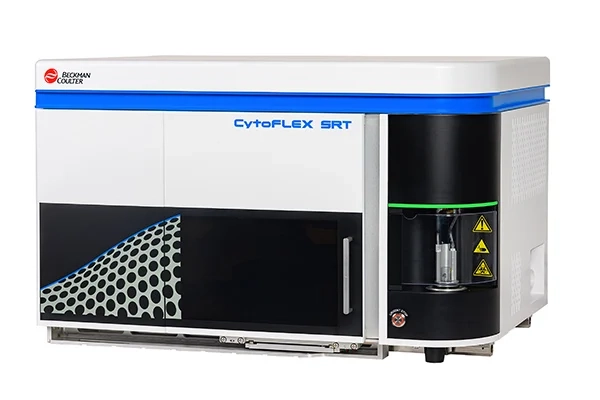
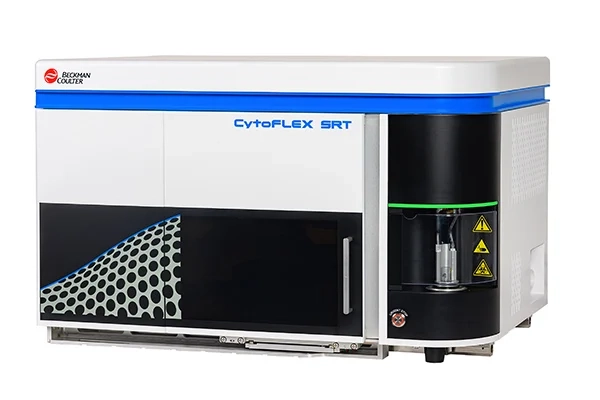
The CytoFLEX SRT democratizes cell sorting by packaging advanced capability into a compact, approachable benchtop unit. Unlike large facility sorters that require dedicated operators, the SRT is designed for walk-up use by individual researchers. Its automated setup and stability controls reduce the technical barrier to entry, allowing scientists to sort their own transfected cells or CRISPR-edited lines directly in their own lab. This model is essential for gene editing workflows and cell line development where immediate, convenient access to sorting accelerates experimental timelines. Price Range: $120,000 – $180,000 (Estimate)
Best For: Routine Multi-Color Analysis
Primary Category: Best For Reliability Key Specs Detectors: 30 fluorescence channels Dynamic Range: 7.2-log dynamic range (eliminates need for voltage adjustments) Automation: Integrated autosampler for FACS tubes and plates (96/384 well) Software: Intuitive NovoExpress software Performance & Applications
The Agilent NovoCyte Penteon serves as an exceptional workhorse for labs processing high volumes of routine samples. Its silicon photomultiplier (SiPM) detectors provide excellent linearity and a massive 7.2-log dynamic range, effectively removing the need for users to manually adjust PMT voltages—a common source of error in multi-user environments. With its reliable walk-away autosampler, the Penteon is highly effective for QC workflows, apoptosis assays, and standard immunophenotyping in pharmaceutical development and CRO settings where consistency and ease of use are critical. Model Best For Key Features Typical Price Range BD FACSDiscover S8 Innovation / Imaging Real-time cell imaging, Spectral sorting, 78 detectors $500k – $750k+ Attune Xenith Speed / Sticky Samples Acoustic focusing, 6 lasers, 51 detectors $250k – $375k Cytek Aurora Deep Phenotyping Full Spectrum Profiling, 40+ colors, High sensitivity $250k – $450k CytoFLEX SRT Benchtop Sorting Compact footprint, Automated setup, User-friendly $150k – $250k NovoCyte Penteon Routine Analysis 7.2-log dynamic range, Walk-away automation $120k – $180k Selecting the best flow cytometer of 2026 requires balancing parameter depth with operational practicality. While the BD FACSDiscover S8 and Cytek Aurora offer unmatched analytical power for complex discovery work, platforms like the Thermo Fisher Attune Xenith and CytoFLEX SRT provide vital solutions for throughput and accessibility. Laboratory decision-makers must assess their specific application needs—whether it be spatial resolution, sorting autonomy, or sheer processing speed—to invest in the technology that will drive their research forward. This article was created with the assistance of Generative AI and has undergone editorial review before publishing.
Quick Summary Box
BD FACSDiscover S8 Cell Sorter – BD Biosciences
Invitrogen Attune Xenith – Thermo Fisher Scientific
Cytek Aurora – Cytek Biosciences
CytoFLEX SRT – Beckman Coulter
NovoCyte Penteon – Agilent Technologies
Comparison Table
Conclusion: Choosing the Best Flow Cytometer for 2026
Jan 09, 2026
Product News
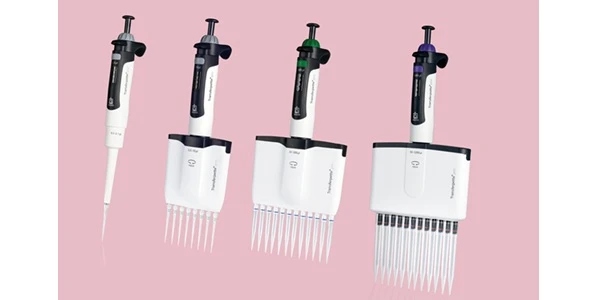
BRANDTECH Scientific Introduces the Transferpette® pro Micropipette: A New Twist on Comfort and Control
The latest addition to its trusted line of precision liquid handling instruments, engineered for comfort, control, and repeatable accuracy.
Jan 06, 2026
Featured, Technical Insight
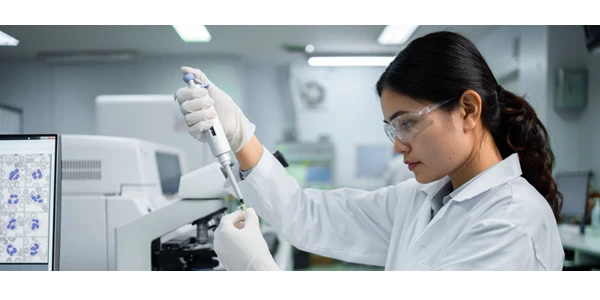
New Research Frontiers Unlocked by Next-Generation Flow Cytometry
Next-generation flow cytometry systems using acoustic focusing are opening entirely new areas of research that were previously impractical or inaccessible with conventional flow cytometers.
Jan 05, 2026
Buying Guides
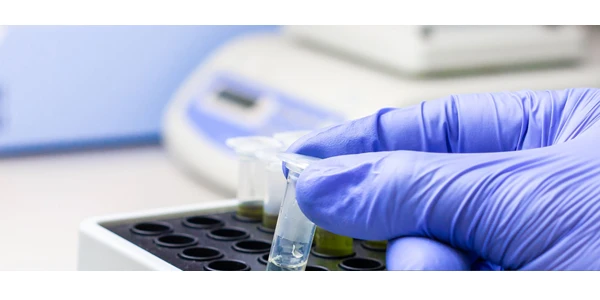
The Bottom Line: How Smart Microcentrifuge Tube Choices Impact Lab Efficiency and Cost
Innovative microcentrifuge tube solutions are more than just lab consumables—they’re strategic tools that can reduce costs, improve outcomes, and support long-term sustainability goals.
Jan 05, 2026
Buying Guides
Future-Proofing Your Lab with Innovative Microcentrifuge Tube Solutions
As laboratories evolve to meet the growing demands of modern science, even the most basic tools—like microcentrifuge tubes—are being reimagined.
Jan 05, 2026
Buying Guides
Microcentrifuge Tube Innovations: Driving Sustainable Change
Integrating next-generation consumables into standard workflows can lead to a more sustainable and responsible research environment.
Jan 05, 2026
Buying Guides
Single Use Plastics: How to Manage these Major Contributors to Lab Waste
Reducing lab waste isn’t just a sustainability issue—it’s a financial and operational one, too.
Jan 05, 2026
Buying Guides
Common Microcentrifuge Tube Challenges in Sensitive Molecular Workflows
Key factors that can impact the performance of microcentrifuge tubes for PCR, qPCR, and NGS and other sensitive applications
Jan 05, 2026
Buying Guides
How to Research the Right Microcentrifuge Tubes for Your Application
Selecting the right microcentrifuge tubes starts with understanding the specific demands of your application.
Jan 05, 2026
Technical Insight
The Best Confocal Microscopes of 2026
Discover the best confocal microscopes of 2026 for advanced imaging. Compare top models from Zeiss, Evident, and Nikon for speed, resolution, and budget.
Dec 24, 2025
Featured, Popular Products, Technical Insight
Emerging Mass Spectrometry Technologies to Improve Intraoperative Diagnostics
Advances in mass spectrometry may soon reshape surgery, improving diagnostic accuracy and impacting post-operative outcomes