
The Best Gas Chromatography (GC) Systems of 2026: A Buyer's Review of Price and Features

Written By: Craig Bradley
May 28, 2024
Selecting the right analytical instrumentation is a critical decision for laboratory professionals aiming to maximize throughput and data accuracy in 2026. The best gas chromatography (GC) systems of 2026 prioritize intelligent self-diagnostics, compact footprints, and energy efficiency without sacrificing sensitivity. As laboratories face increasing demands for sustainability and remote connectivity, manufacturers like Agilent, Shimadzu, and PerkinElmer have responded with models that redefine operational workflows. This article evaluates five leading platforms, analyzing their specifications, ideal applications, and value to help lab managers make informed procurement decisions. Best Overall: Agilent 8890 GC System — The industry standard for intelligence, featuring robust built-in diagnostics and remote connectivity. Best For Sustainability: Shimadzu Brevis GC-2050 — A compact "Green Transformation" model with unique CO2 monitoring and low power consumption. Best For Speed / Throughput: Agilent 8850 GC System — Offers the performance of a flagship model in a footprint half the size, ideal for fast-paced labs. Most Versatile: Thermo Scientific TRACE 1610 — Features modular iConnect injectors and detectors that can be swapped by users in minutes. Best High-End Option: PerkinElmer GC 2400 — Distinguishes itself with a detachable touchscreen tablet and intuitive smart connectivity. Price Range: $45,000 – $75,000 (New)
Best For: High-volume commercial and research laboratories requiring maximum uptime.
Primary Category: Best Overall Key Specs Oven Temperature Range: Ambient +4 °C to 450 °C Ramp Rate: Up to 120 °C/min Detectors: Supports up to 4 detectors simultaneously Interface: Full-color touch screen with browser-based access Performance & Applications
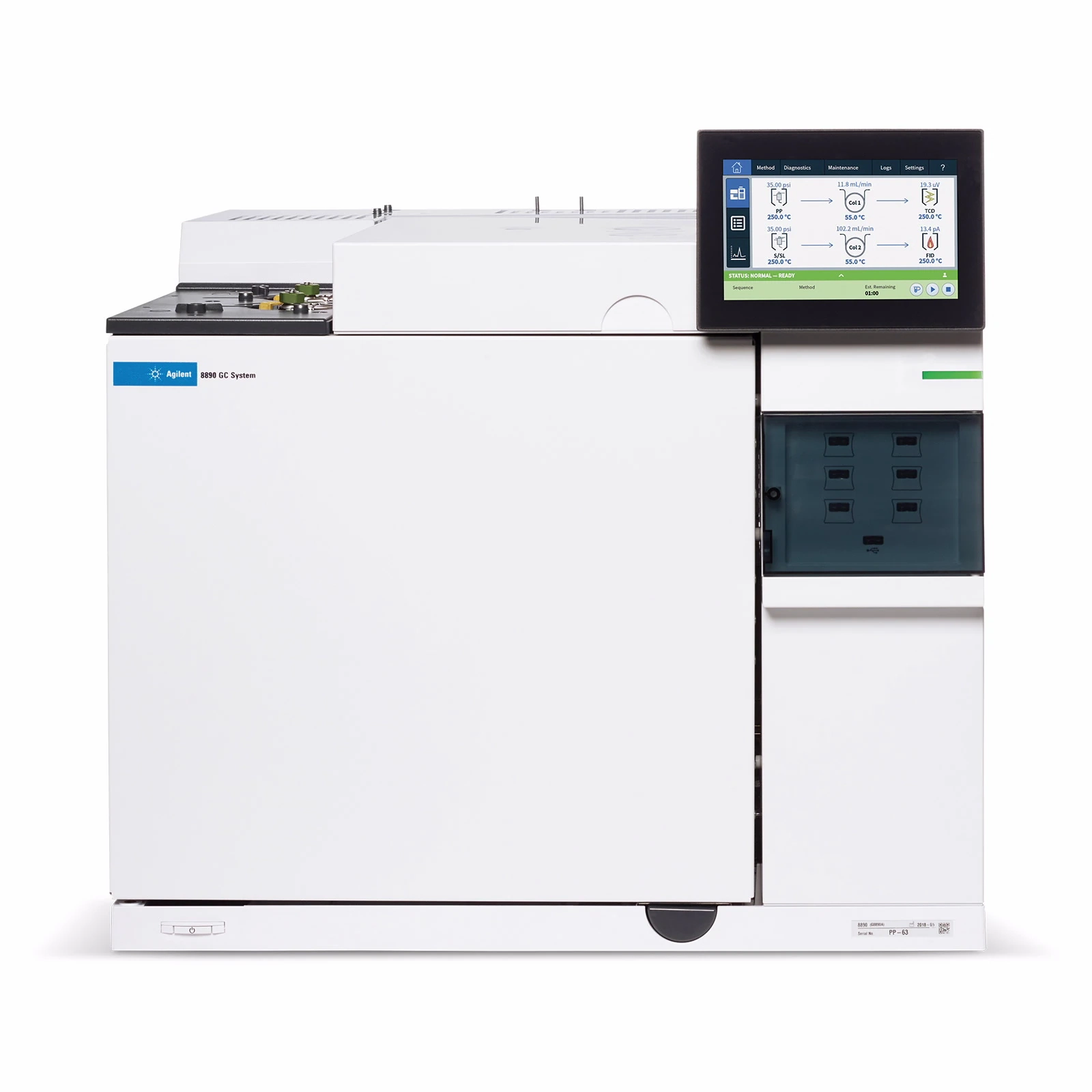
The Agilent 8890 remains the flagship workhorse for modern chromatography, distinguished by its "intelligent" architecture. The system monitors its own health, tracking autonomous leak checks and diagnostic tests to prevent unplanned downtime. Its ability to accommodate four detectors and specialized valves makes it indispensable for complex hydrocarbon analysis and petrochemical applications. Research facilities and high-throughput commercial labs rely on the 8890 for its exceptional retention time locking (RTL) capabilities, ensuring data consistency across different instruments and locations. Price Range: $25,000 – $45,000 (New)
Best For: Laboratories with limited bench space and strict sustainability goals.
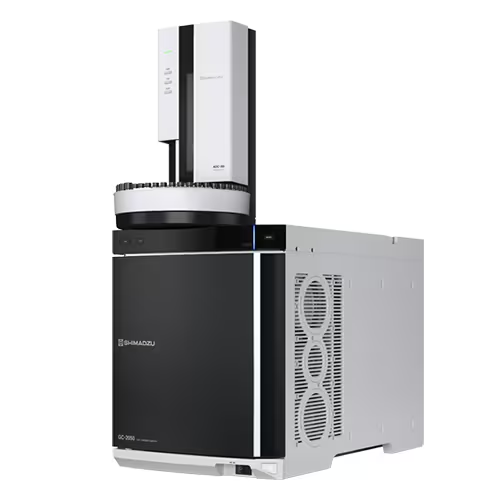
Primary Category: Best For Sustainability Key Specs Width: 350 mm (approx. 30% narrower than standard GCs) Power Consumption: ~30% reduction compared to previous models Carrier Gas: Optimized for Helium, Hydrogen, and Nitrogen Display: Visualizes CO2 reduction and gas savings Performance & Applications
Updated significantly in 2025 to support "Green Transformation" (GX), the Shimadzu Brevis GC-2050 combines a compact design with uncompromised analytical power. It is the first GC system to visualize CO2 reduction, helping labs track their environmental impact directly from the instrument panel. Despite its small size, it supports a full range of standard injectors and detectors, making it suitable for pharmaceutical quality control and environmental testing where bench space is at a premium. The "Eco-idling" feature automatically reduces gas and electricity usage during standby, addressing operational costs directly. Price Range: $35,000 – $55,000 (New)
Best For: Fast-paced production labs needing high throughput in a small footprint.
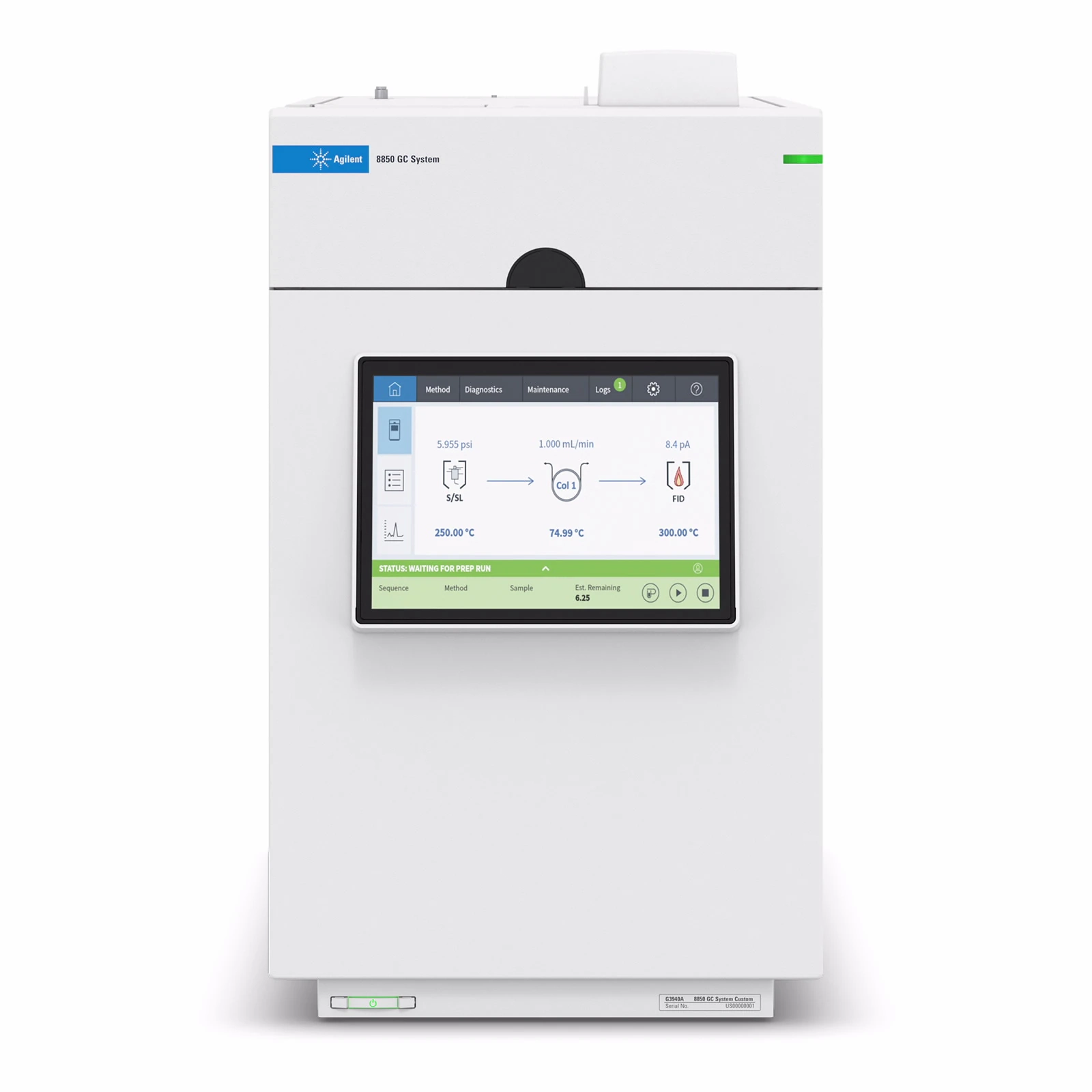
Primary Category: Best For Speed / Throughput Key Specs Footprint: 50% smaller than the 8890 Ramp Rate: Up to 300 °C/min (using compact air-bath oven) Compatibility: Uses same inlets/detectors as the 8890 Power: Uses up to 45% less power than traditional GC systems Performance & Applications
The Agilent 8850 is engineered for laboratories that need to run simple, routine methods very quickly. Its compact, single-channel design allows two units to fit in the space of one traditional GC, effectively doubling throughput per linear foot of bench space. It excels in routine QA/QC environments, such as distillation testing in the energy sector or residual solvent analysis in cannabis and pharmaceuticals. The system leverages the same core pneumatic control and detector technology as the larger 8890, ensuring that scaling down in size does not mean scaling down in data quality. Price Range: $30,000 – $60,000 (New)
Best For: Multi-purpose labs that frequently change analytical methods.
Primary Category: Most Versatile Key Specs Injectors/Detectors: iConnect modular cartridges Ramp Rate: Up to 125 °C/min Maintenance: Tool-free module replacement Health Monitoring: Automated system health checks Performance & Applications
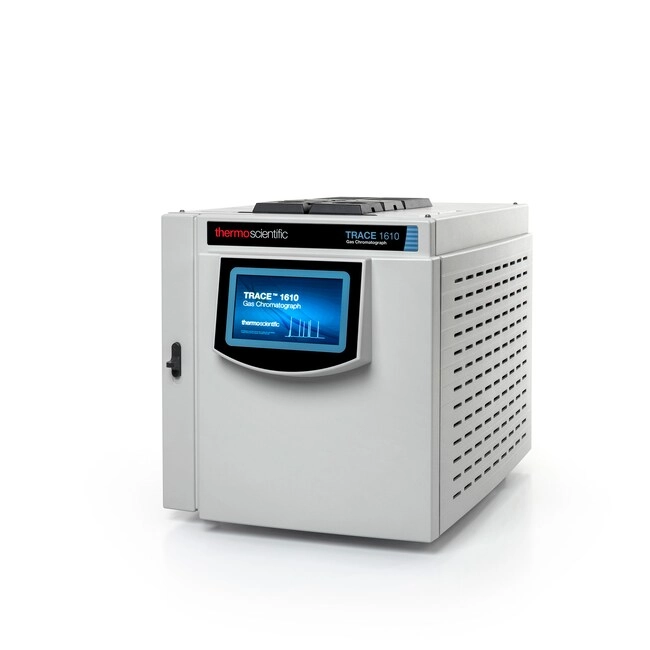
The Thermo Scientific TRACE 1610 stands out for its unique modularity. Unlike traditional systems where detectors are hard-wired, the TRACE 1600 series uses "iConnect" modules that user can swap in minutes without service tools. This flexibility allows a single instrument to pivot from Flame Ionization Detection (FID) to Electron Capture Detection (ECD) rapidly, optimizing asset utilization in contract research organizations (CROs) and food safety labs. The 1610 also features a durable touchscreen interface that provides video maintenance guides directly on the instrument, simplifying training for new technicians. Price Range: $40,000 – $65,000 (New)
Best For: Labs prioritizing remote management and modern user experience.
Primary Category: Best High-End Option Key Specs Interface: Detachable touchscreen tablet Ramp Rate: Up to 115 °C/min Software: SimplicityChrom Chromatography Data System (CDS) Sensors: Smart accessory monitoring Performance & Applications
The PerkinElmer GC 2400 platform brings consumer-grade technology into the laboratory environment. Its most visible innovation is the detachable touchscreen tablet, which allows analysts to monitor runs and control the instrument from anywhere in the lab. Inside, the system features a unique smart sampling architecture and live status lights that give instant visual feedback on instrument readiness. Ideally suited for high-compliance pharmaceutical and industrial environments, the GC 2400 integrates seamlessly with SimplicityChrom software to streamline data workflows and audit trails. Model Best For Key Features Typical Price Range Agilent 8890 Reliability & Intelligence Integrated intelligence, 4-detector capacity, autonomous diagnostics $45,000 – $75,000 Shimadzu Brevis GC-2050 Sustainability & Space CO2 monitoring, 350mm width, Eco-idling functions $25,000 – $45,000 Agilent 8850 Speed & Throughput 50% smaller footprint, 300°C/min ramping, high-density setup $35,000 – $55,000 Thermo TRACE 1610 Versatility Modular iConnect injectors/detectors, video maintenance guides $30,000 – $60,000 PerkinElmer GC 2400 User Experience Detachable tablet, internal oven lighting, smart connectivity $40,000 – $65,000 The best gas chromatography (GC) systems of 2026 demonstrate a clear shift toward smarter, smaller, and more sustainable instrumentation. Laboratories no longer need to choose between high performance and energy efficiency, as models like the Shimadzu Brevis GC-2050 and Agilent 8850 prove that compact designs can deliver flagship-level results. Whether the priority is maximum versatility through modular components or robust throughput for routine QA/QC, the current market offers tailored solutions to meet diverse analytical needs. Investing in these modern platforms ensures compliance with evolving environmental standards while securing the data integrity required for critical scientific breakthroughs. This article was created with the assistance of Generative AI and has undergone editorial review before publishing.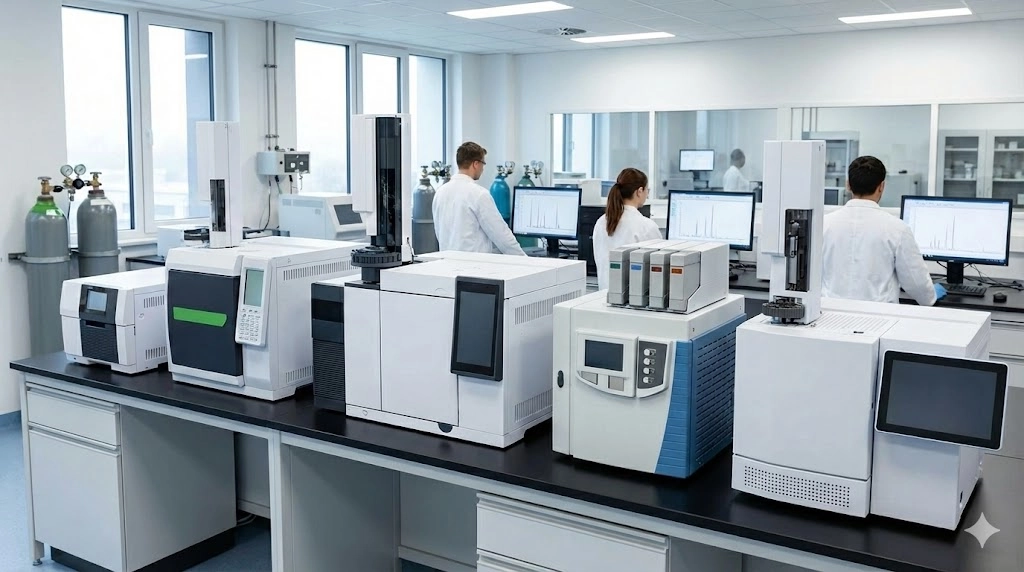
Quick Summary
Agilent 8890 GC System
Shimadzu Brevis GC-2050
Agilent 8850 GC System
Thermo Scientific TRACE 1610
PerkinElmer GC 2400

Comparison Table
Conclusion: Selecting the Best Gas Chromatography System for 2026
Jan 09, 2026
Product News
BRANDTECH Scientific Introduces the Transferpette® pro Micropipette: A New Twist on Comfort and Control
The latest addition to its trusted line of precision liquid handling instruments, engineered for comfort, control, and repeatable accuracy.

Jan 06, 2026
Featured, Technical Insight
New Research Frontiers Unlocked by Next-Generation Flow Cytometry
Next-generation flow cytometry systems using acoustic focusing are opening entirely new areas of research that were previously impractical or inaccessible with conventional flow cytometers.
Jan 05, 2026
Buying Guides
The Bottom Line: How Smart Microcentrifuge Tube Choices Impact Lab Efficiency and Cost
Innovative microcentrifuge tube solutions are more than just lab consumables—they’re strategic tools that can reduce costs, improve outcomes, and support long-term sustainability goals.
Jan 05, 2026
Buying Guides
Future-Proofing Your Lab with Innovative Microcentrifuge Tube Solutions
As laboratories evolve to meet the growing demands of modern science, even the most basic tools—like microcentrifuge tubes—are being reimagined.
Jan 05, 2026
Buying Guides
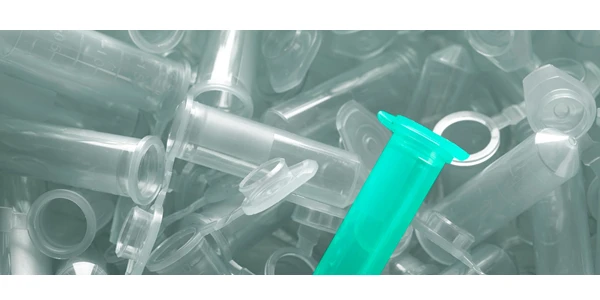
Microcentrifuge Tube Innovations: Driving Sustainable Change
Integrating next-generation consumables into standard workflows can lead to a more sustainable and responsible research environment.
Jan 05, 2026
Buying Guides
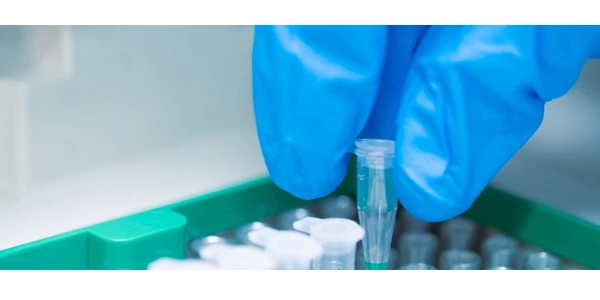
Single Use Plastics: How to Manage these Major Contributors to Lab Waste
Reducing lab waste isn’t just a sustainability issue—it’s a financial and operational one, too.
Jan 05, 2026
Buying Guides
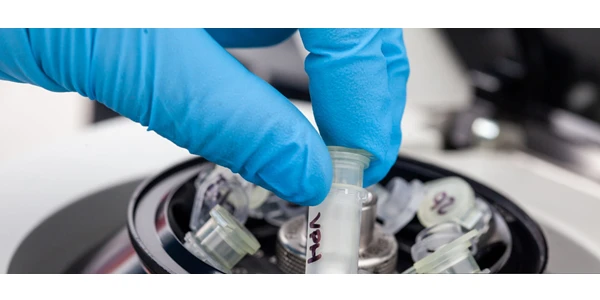
Common Microcentrifuge Tube Challenges in Sensitive Molecular Workflows
Key factors that can impact the performance of microcentrifuge tubes for PCR, qPCR, and NGS and other sensitive applications
Jan 05, 2026
Buying Guides
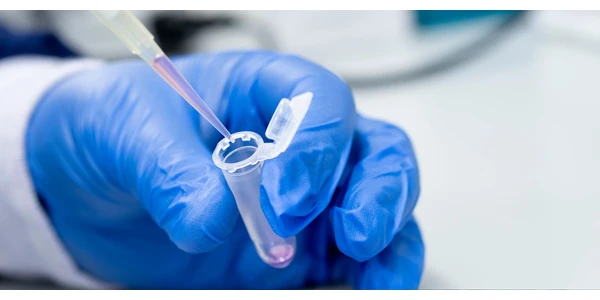
How to Research the Right Microcentrifuge Tubes for Your Application
Selecting the right microcentrifuge tubes starts with understanding the specific demands of your application.
Jan 05, 2026
Technical Insight
The Best Confocal Microscopes of 2026
Discover the best confocal microscopes of 2026 for advanced imaging. Compare top models from Zeiss, Evident, and Nikon for speed, resolution, and budget.
Dec 24, 2025
Featured, Popular Products, Technical Insight
Emerging Mass Spectrometry Technologies to Improve Intraoperative Diagnostics
Advances in mass spectrometry may soon reshape surgery, improving diagnostic accuracy and impacting post-operative outcomes