
The Best Lab Water Purification Systems of 2026: A Buyer's Guide to Price and Features

Written By: Craig Bradley
Aug 23, 2024
Selecting the correct lab water purification systems is critical for maintaining experimental integrity and minimizing downtime in modern research facilities. These units ensure the consistent delivery of Type 1, Type 2, and Type 3 water required for sensitive applications ranging from HPLC to general glassware rinsing. The market in 2026 offers solutions featuring sustainable designs, compact footprints, and smart monitoring technologies. This guide analyzes five notable models to help laboratory professionals identify the ideal equipment for their specific purity and throughput requirements. Best Overall: Milli-Q® EQ 7000 — MilliporeSigma
Produces Type 1 ultrapure water with advanced TOC monitoring and intuitive touchscreen controls. Best Sustainable Innovation: Solo™ S — Avidity Science
Uses reusable cartridges and mercury-free LED UV technology for eco-conscious labs. Best For Speed / Throughput: Barnstead™ Smart2Pure™ Pro — Thermo Scientific
Produces up to 16 liters per hour with integrated 30L or 60L storage options for high-volume needs. Most Versatile: PURELAB® Quest — ELGA LabWater
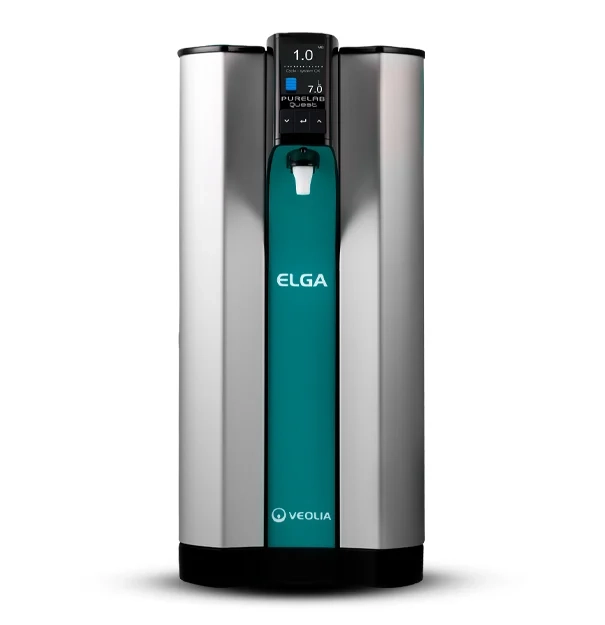
A compact unit dispensing Type 1, Type 2, and Type 3 water from a single system. Best Compact Option: Arium® Mini Extend — Sartorius
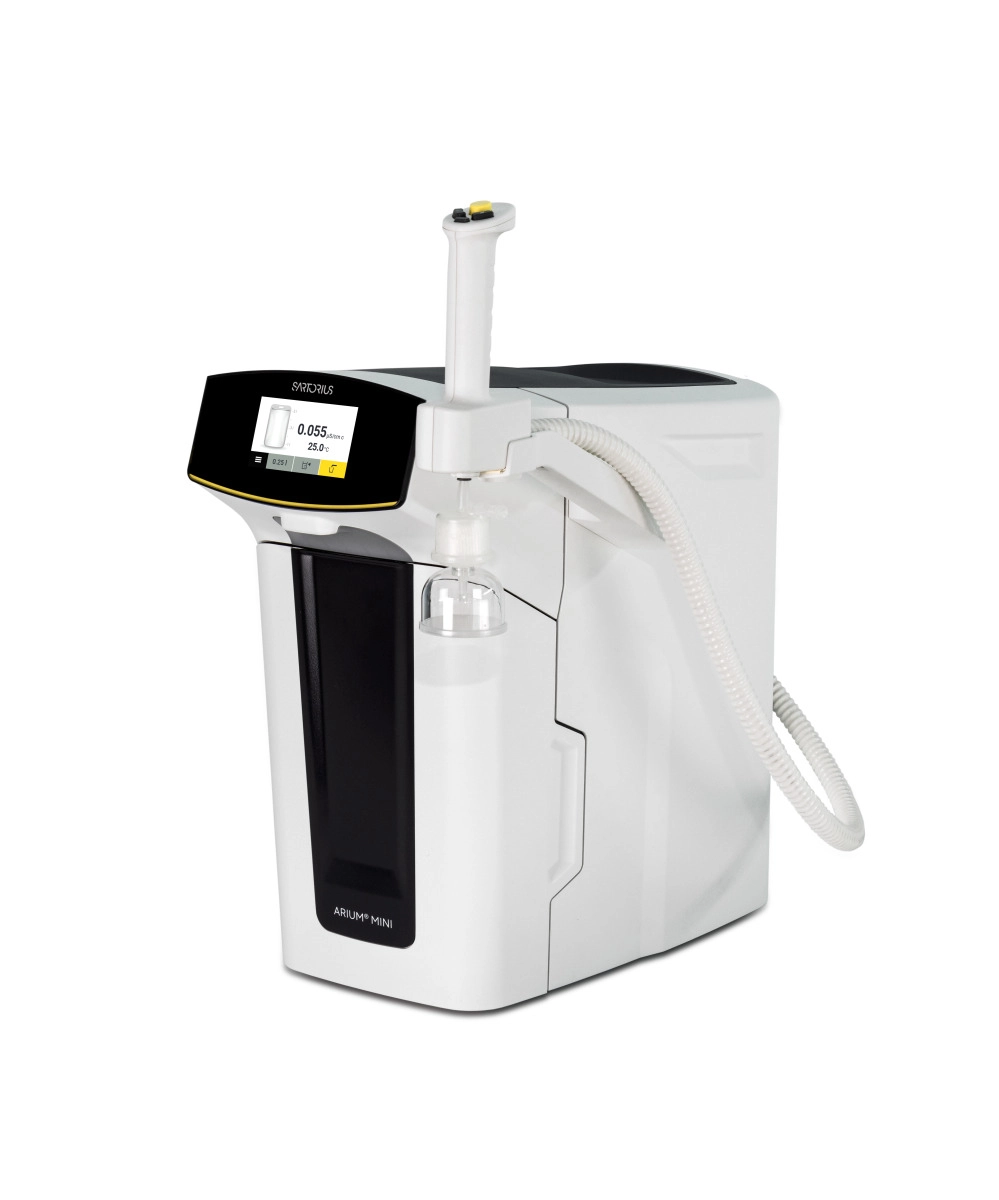
A space-saving design with a flexible dispensing arm, designed for critical applications in tight workspaces. Price Range: $13,500 – $16,500 USD (Approximate)
Best For: High-sensitivity analytical applications (HPLC, LC-MS) requiring strict TOC control.
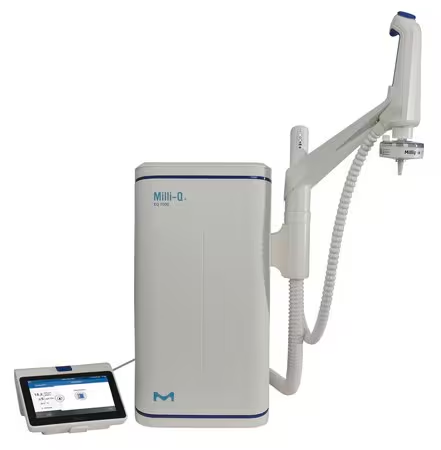
Primary Category: Best Overall / High-End Option Key Specs: Water Type: Type 1 (Ultrapure) Resistivity: 18.2 MΩ·cm @ 25°C TOC Levels: ≤ 5 ppb Dispensing Rate: Up to 2 L/min Interface: 7-inch touchscreen with "Check & Dispense" functionality Performance & Applications
The Milli-Q® EQ 7000 is a high-specification system designed for critical laboratory applications where water purity directly impacts data reproducibility. Its proprietary inline TOC (Total Organic Carbon) indicator provides real-time monitoring at the point of dispense, ensuring that organic contaminants remain below 5 ppb. The system’s Q-POD dispenser offers agile handling and precise volumetric dispensing, making it suitable for preparing mobile phases for chromatography, buffers for molecular biology, and solutions for tissue culture. Its data tracking capabilities also support laboratories requiring strict compliance with GLP/GMP standards. Price Range: $5,000 – $6,500 USD (Approximate)
Best For: Eco-conscious laboratories seeking sustainability without compromising purity.
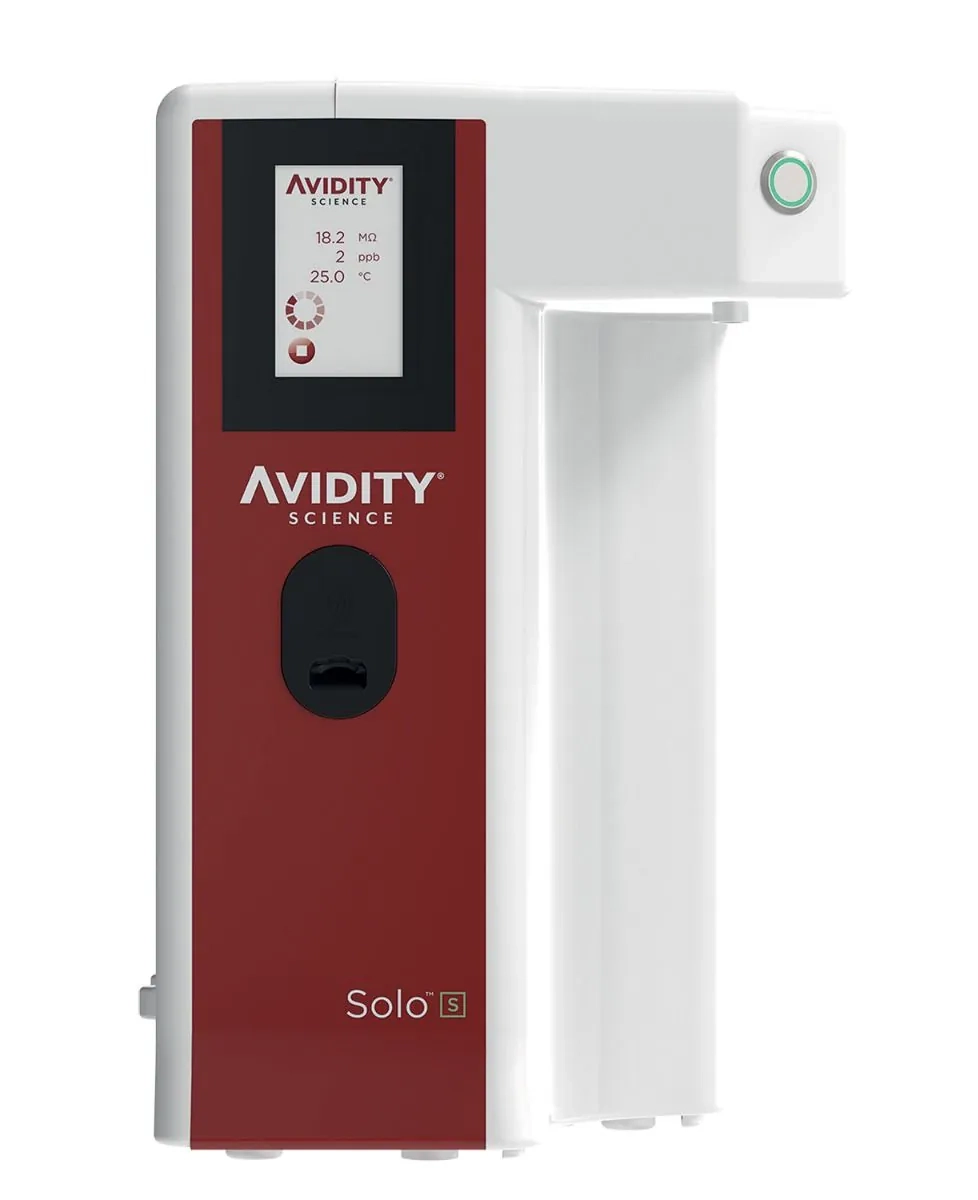
Primary Category: Sustainability / Best Recent Release (Re-launched late 2025) Key Specs: Water Type: Type 1 (Ultrapure) Daily Capacity: Up to 20 liters/day UV Technology: Mercury-free LED UV Cartridges: Reusable Avidity Solo™ cartridges Certification: My Green Lab ACT® Ecolabel Performance & Applications
Re-launched with updated capabilities in late 2025, the Solo™ S by Avidity Science addresses the demand for sustainable lab equipment. It features a Type 1 water purification system using reusable plastic cartridges, reducing plastic waste associated with consumables. The integration of mercury-free LED UV technology for bacteria control minimizes the environmental footprint while ensuring the delivery of DNA/RNA-free water. This model is suitable for genomics and molecular biology labs that prioritize environmental stewardship alongside high-purity performance. Price Range: $12,000 – $15,000 USD (Approximate)
Best For: Labs with high daily water consumption and limited bench space.
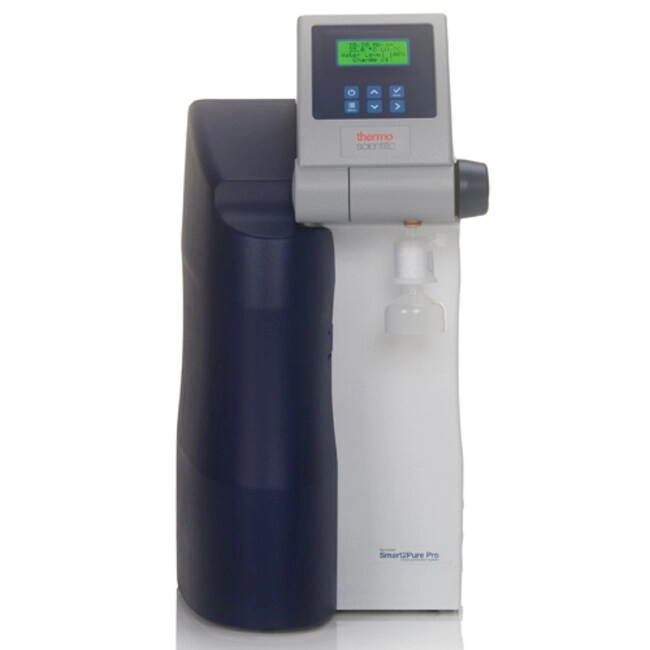
Primary Category: Best For Speed / Throughput Key Specs: Water Type: Type 1 (Ultrapure) and Type 2 (Pure) Production Rate: 16 L/hr Storage: Integrated 30L or 60L reservoir Technology: UV oxidation and Ultrafiltration (UV/UF) Placement: Benchtop or Wall-mountable Performance & Applications
The Smart2Pure™ Pro is engineered for facilities requiring significant volumes of purified water, such as shared laboratory spaces or industrial QA/QC departments. Capable of producing 16 liters per hour, it converts tap water directly into ASTM Type 1 and Type 2 water, eliminating the need for separate pre-treatment units. The system’s integrated tank recirculates water through the purification loop to prevent bacterial growth and stagnation. Its throughput makes it a viable choice for feeding autoclaves and washing machines (Type 2) while simultaneously providing ultrapure water for analytical instruments (Type 1). Price Range: $5,000 – $8,500 USD (Approximate)
Best For: Multi-disciplinary labs needing various water grades from a single footprint.
Primary Category: Most Versatile Key Specs: Water Type: Type 1, Type 2, and Type 3 Flow Rate: 1.2 L/min (Type 1 dispense) TOC: < 5 ppb Connectivity: AQUAVISTA™ remote monitoring Dimensions: Compact, wall-mountable design Performance & Applications
The PURELAB® Quest is notable for its ability to dispense three distinct grades of water from a single compact unit connected directly to a potable tap supply. This utility allows researchers to switch between tasks: Type 1 water for HPLC or PCR, Type 2 for buffer preparation, and Type 3 for glassware rinsing or autoclave feed. By consolidating multiple systems into one, it saves bench space and capital expenditure. The unit is beneficial for academic research labs and startups where diverse applications occur within the same workspace. Price Range: $6,000 – $8,200 USD (Approximate)
Best For: Critical life science applications in space-restricted environments.
Primary Category: Best Compact Option / Recent Release (2024) Key Specs: Water Type: Type 1 (Ultrapure) Daily Output: < 10 Liters/day Dispensing: Flexible arm with extended range Storage: Integrated 5-liter Bagtank technology Footprint: Only 28 cm wide Performance & Applications
Launched in mid-2024, the Arium® Mini Extend adds a flexible dispensing arm to the Arium Mini series, improving usability in crowded lab environments. The system utilizes Sartorius's Bagtank technology, which stores pre-treated water in a disposable bag to eliminate the risk of cross-contamination and biofilm formation common in rigid tanks. This design supports the integrity required for cell culture and chromatography applications. The extended arm allows users to dispense water directly into varied vessel sizes or equipment located adjacent to the main unit, facilitating workflow efficiency. Model Manufacturer Best For Key Features Typical Price Range (USD) Milli-Q® EQ 7000 MilliporeSigma High-end Analytical Inline TOC monitor, Touchscreen, Q-POD dispenser $13,500 – $16,500 Solo™ S Avidity Science Sustainability Reusable cartridges, LED UV, Green Lab Certified $5,000 – $6,500 Smart2Pure™ Pro Thermo Scientific High Throughput 16 L/hr production, Integrated 30/60L tank $12,000 – $15,000 PURELAB® Quest ELGA LabWater Versatility Type 1, 2, & 3 from one unit, Compact $5,000 – $8,500 Arium® Mini Extend Sartorius Compact / Low Volume Bagtank storage, Flexible dispensing arm $6,000 – $8,200 Investing in appropriate lab water purification systems supports data reliability and operational efficiency. The equipment highlighted for 2026 reflects an industry trend toward sustainability, as seen in the Avidity Solo™ S, and versatility, exemplified by the ELGA PURELAB® Quest. Laboratories handling high volumes should consider the capacity of the Thermo Scientific Smart2Pure™ Pro, while those prioritizing strict purity parameters for sensitive analysis will find the MilliporeSigma Milli-Q® EQ 7000 to be a suitable option. Matching technical specifications to daily application needs ensures consistent performance and cost management. This article was created with the assistance of Generative AI and has undergone editorial review before publishing.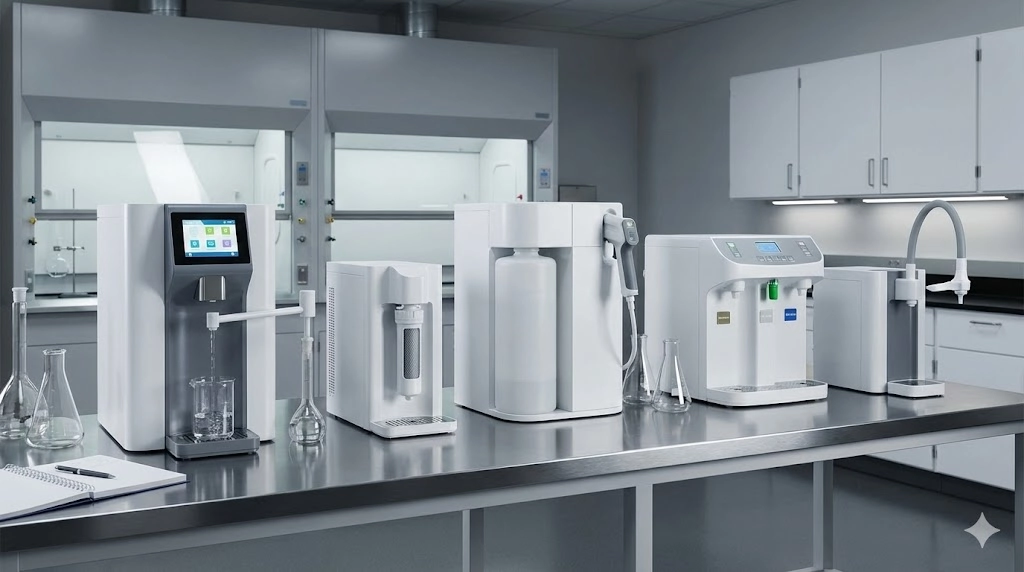
Quick Summary: Top Picks for 2026
Milli-Q® EQ 7000 – MilliporeSigma
Solo™ S – Avidity Science
Barnstead™ Smart2Pure™ Pro – Thermo Scientific
PURELAB® Quest – ELGA LabWater
Arium® Mini Extend – Sartorius
Comparison of Top Lab Water Purification Systems
Conclusion: Selecting the Right Lab Water Purification System
Jan 09, 2026
Product News
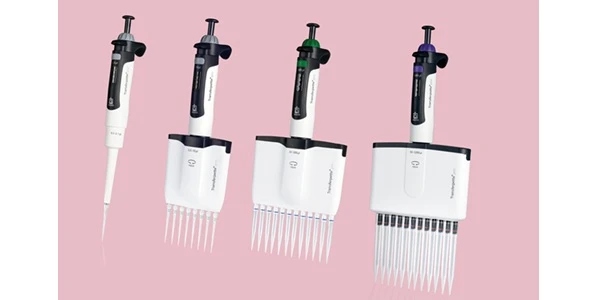
BRANDTECH Scientific Introduces the Transferpette® pro Micropipette: A New Twist on Comfort and Control
The latest addition to its trusted line of precision liquid handling instruments, engineered for comfort, control, and repeatable accuracy.
Jan 06, 2026
Featured, Technical Insight
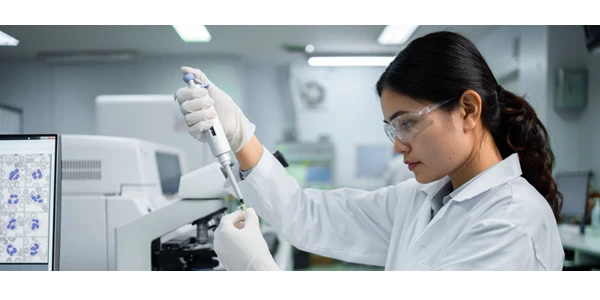
New Research Frontiers Unlocked by Next-Generation Flow Cytometry
Next-generation flow cytometry systems using acoustic focusing are opening entirely new areas of research that were previously impractical or inaccessible with conventional flow cytometers.
Jan 05, 2026
Buying Guides
The Bottom Line: How Smart Microcentrifuge Tube Choices Impact Lab Efficiency and Cost
Innovative microcentrifuge tube solutions are more than just lab consumables—they’re strategic tools that can reduce costs, improve outcomes, and support long-term sustainability goals.
Jan 05, 2026
Buying Guides
Future-Proofing Your Lab with Innovative Microcentrifuge Tube Solutions
As laboratories evolve to meet the growing demands of modern science, even the most basic tools—like microcentrifuge tubes—are being reimagined.
Jan 05, 2026
Buying Guides
Microcentrifuge Tube Innovations: Driving Sustainable Change
Integrating next-generation consumables into standard workflows can lead to a more sustainable and responsible research environment.
Jan 05, 2026
Buying Guides
Single Use Plastics: How to Manage these Major Contributors to Lab Waste
Reducing lab waste isn’t just a sustainability issue—it’s a financial and operational one, too.
Jan 05, 2026
Buying Guides
Common Microcentrifuge Tube Challenges in Sensitive Molecular Workflows
Key factors that can impact the performance of microcentrifuge tubes for PCR, qPCR, and NGS and other sensitive applications
Jan 05, 2026
Buying Guides
How to Research the Right Microcentrifuge Tubes for Your Application
Selecting the right microcentrifuge tubes starts with understanding the specific demands of your application.
Jan 05, 2026
Technical Insight
The Best Confocal Microscopes of 2026
Discover the best confocal microscopes of 2026 for advanced imaging. Compare top models from Zeiss, Evident, and Nikon for speed, resolution, and budget.
Dec 24, 2025
Featured, Popular Products, Technical Insight
Emerging Mass Spectrometry Technologies to Improve Intraoperative Diagnostics
Advances in mass spectrometry may soon reshape surgery, improving diagnostic accuracy and impacting post-operative outcomes