
The Best Raman Spectroscopy Systems of 2026: A Buyer's Guide to Price and Features

Written By: Craig Bradley
Aug 23, 2024
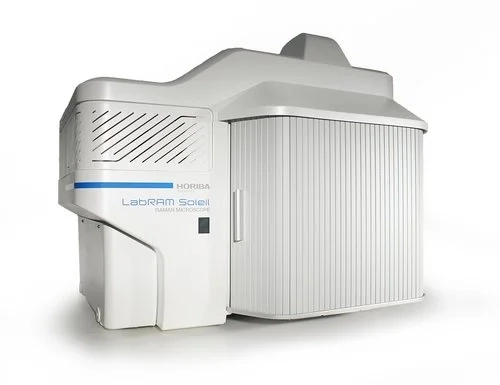
Laboratory professionals seeking precise chemical identification and structural analysis face a rapidly evolving market of Raman spectroscopy systems in 2026. This year's top instruments prioritize automation, multimodal integration, and fluorescence mitigation to streamline workflows in pharmaceutical, materials science, and forensic applications. Selecting the right equipment requires balancing spectral resolution and speed with budget constraints and specific application needs. The following analysis details five industry-leading models that define the current standard for analytical performance. Best Overall: Horiba LabRAM Soleil — Combines AI-driven automation with ultrafast imaging for high-speed lab productivity. Best On A Budget: Wasatch Photonics WP Raman X Series — Delivers high-sensitivity f/1.3 optics in a compact, modular format. Best For Speed / Throughput: Thermo Scientific DXR3 — "SmartRaman" features enable rapid, walk-up data collection for busy labs. Most Versatile: Rigaku CQL Max-ID — A handheld 1064 nm system offering lab-quality analysis for narcotics and chemical threats. Best High-End Option: Renishaw inVia Qontor — A research-grade system with LiveTrack™ focus technology for complex samples. Price Range: $150,000 – $250,000 Best For: Best Overall The LabRAM Soleil is an advanced multimodal Raman microscopy system, continuing to maintain a strong market presence in 2026 due to its "intelligent automation" approach. Horiba engineers designed this system to address the bottleneck of complex sample imaging. Its standout feature, SmartSampling™, utilizes machine learning to map samples up to 100 times faster than conventional systems by focusing only on areas of interest. The system’s modularity allows for easy switching between lasers and gratings, making it a versatile system for multi-user facilities. Key Specs Spectral Range: UV to NIR (up to 4 integrated lasers). Automation: SmartSampling™ AI image compression and QScan™ laser scanning. Resolution: High-resolution confocal imaging with < 1 µm spatial resolution. Detectors: Front-illuminated and back-illuminated CCD options. Performance & Applications
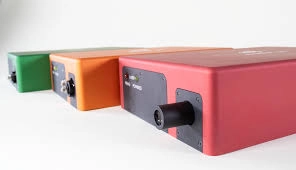
The LabRAM Soleil is utilized in pharmaceutical quality control and advanced materials research where speed is critical. Its QScan technology allows laser scanning across the field of view without moving the sample, ensuring high stability for delicate biological specimens. Researchers utilizing this platform can generate detailed chemical maps of tablets or 2D materials in minutes rather than hours, significantly increasing laboratory throughput. Price Range: $20,000 – $35,000 Best For: Best On A Budget Released in January 2024, the WP Raman X Series offers high performance in a compact, modular form factor. Wasatch Photonics leverages proprietary VPH (Volume Phase Holographic) gratings to achieve high throughput. This series offers f/1.3 optics, which collect significantly more signal than typical f/4 benchtop spectrometers, allowing for faster integration times and lower limits of detection. The modular design enables laboratories to construct a custom setup without the capital expense of a fully integrated microscope. Key Specs f-Number: f/1.3 (high throughput). Configuration: Modular (spectrometer + probe + laser). Wavelengths: Available in 532, 638, 785, 830, and 1064 nm. Software: ENLIGHTEN™ spectroscopy software included. Performance & Applications
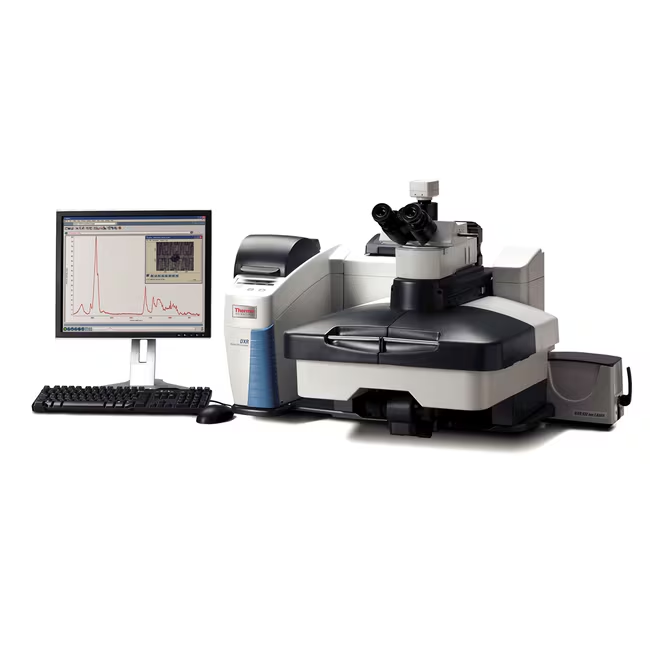
This model is suitable for academic labs, teaching environments, and industrial process monitoring where budget and footprint are primary concerns. The high sensitivity makes it capable of analyzing weak scatterers, and its robust design suits continuous process monitoring. Users in the food safety and agriculture sectors find the X Series effective for rapid screening applications where bulky microscopy systems are impractical. Price Range: $70,000 – $95,000 Best For: Best For Speed / Throughput The Thermo Scientific DXR3 serves as a highly automated "walk-up" instrument for shared laboratories. It features "Smart" accessories that automatically recognize and optimize system parameters when components are swapped, reducing operator error and downtime. The system employs auto-alignment and auto-calibration routines that run in the background, ensuring data consistency across shift changes and different operators. Key Specs Laser Power Regulator: Active power monitoring for reproducibility. Focus: Auto-focus and auto-exposure capabilities. Safety: Class 1 laser safety enclosure (standard configuration). Lasers: Multiple excitation wavelengths (455 nm, 532 nm, 785 nm). Performance & Applications
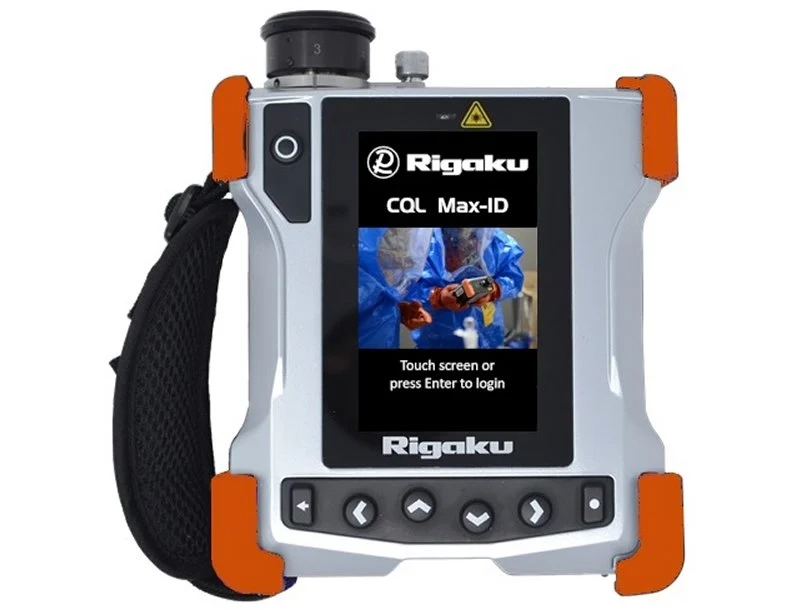
Pharmaceutical and polymer labs utilize the DXR3 for its ability to handle high sample volumes with minimal user training. The system effectively mitigates fluorescence in organic samples through its polymorph screening capabilities and 785 nm excitation options. Its operational strength lies in routine identification and validation workflows, where consistency and throughput speed outweigh the need for sub-micron spatial resolution. Price Range: $45,000 – $65,000 Best For: Most Versatile Launched in mid-2023 and expanded with new platform features in 2024, the Rigaku CQL Max-ID brings 1064 nm excitation—traditionally reserved for bulky benchtop units—into a rugged, handheld form factor. The 1064 nm wavelength is crucial for analyzing dirty, colored, or impure samples because it largely avoids fluorescence interference that blinds 785 nm systems. While primarily marketed for safety and security, its spectral library and open architecture make it a versatile tool for incoming raw material verification in chemical plants. Key Specs Excitation Wavelength: 1064 nm (Fluorescence reduction). Battery Life: Hot-swappable CR123A batteries. Durability: IP68 rated (submersible) and MIL-STD-810G certified. Camera: Onboard camera for sample documentation. Performance & Applications
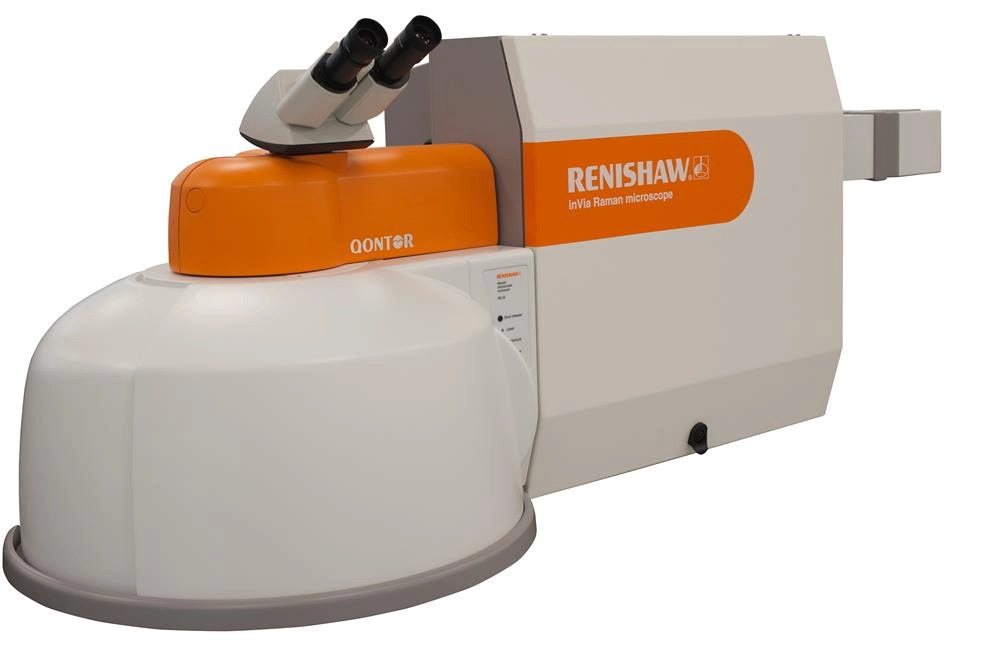
The CQL Max-ID bridges the gap between field operations and the laboratory. Its ability to scan through translucent packaging (glass, plastic) without opening containers preserves sample integrity and protects the user. This versatility makes it highly suitable for hazmat teams, narcotics identification, and pharmaceutical manufacturers requiring rapid, non-destructive verification of raw materials at the loading dock before they ever reach the main lab. Price Range: $200,000+ Best For: Best High-End Option Renishaw’s inVia Qontor remains an established choice for research-grade confocal Raman microscopy. Its defining technology, LiveTrack™, enables continuous focus tracking on uneven surfaces in real-time. This allows researchers to analyze samples with complex topographies—such as rough geological rocks or curved medical implants—without time-consuming manual focusing or sample preparation. The system is highly customizable, supporting a vast array of lasers, detectors, and hyphenated techniques (e.g., Raman-AFM). Key Specs Focus Tech: LiveTrack™ real-time focus tracking. Spectral Resolution: < 0.3 cm⁻¹ (configuration dependent). Configurability: Supports multiple lasers and detectors automatically. Microscopy: Leica research-grade microscope base. Performance & Applications
The inVia Qontor is frequently selected for advanced academic research and nanotechnology. Its high spectral resolution allows for the analysis of stress and strain in semiconductor materials and the differentiation of polymorphs in drug discovery. The system's ability to maintain focus during long mapping experiments ensures data quality is maintained despite thermal drift or sample irregularity. Model Best For Key Features Typical Price Range Horiba LabRAM Soleil Best Overall AI SmartSampling™, QScan™, Ultrafast Imaging $150k – $250k Wasatch WP Raman X Best On A Budget f/1.3 High-Throughput Optics, Compact, Modular $20k – $35k Thermo Scientific DXR3 Speed / Throughput Auto-alignment, Walk-up Usability, Smart Accessories $70k – $95k Rigaku CQL Max-ID Most Versatile 1064 nm Laser, IP68 Rugged, Through-barrier Scan $45k – $65k Renishaw inVia Qontor Best High-End LiveTrack™ Focus, Confocal Excellence, High Config $200k+ The landscape of Raman spectroscopy systems in 2026 offers distinct solutions for every level of laboratory need, from rugged handheld units to research microscopes. While the Horiba LabRAM Soleil stands out as the best overall choice for its integration of AI and speed, the recently released Wasatch Photonics WP Raman X Series and Rigaku CQL Max-ID demonstrate that high performance is available in smaller footprints. Laboratories must carefully evaluate their specific requirements—whether that is fluorescence suppression, high throughput, or budget efficiency—to select the instrument that will drive their scientific capabilities forward. This article was created with the assistance of Generative AI and has undergone editorial review before publishing.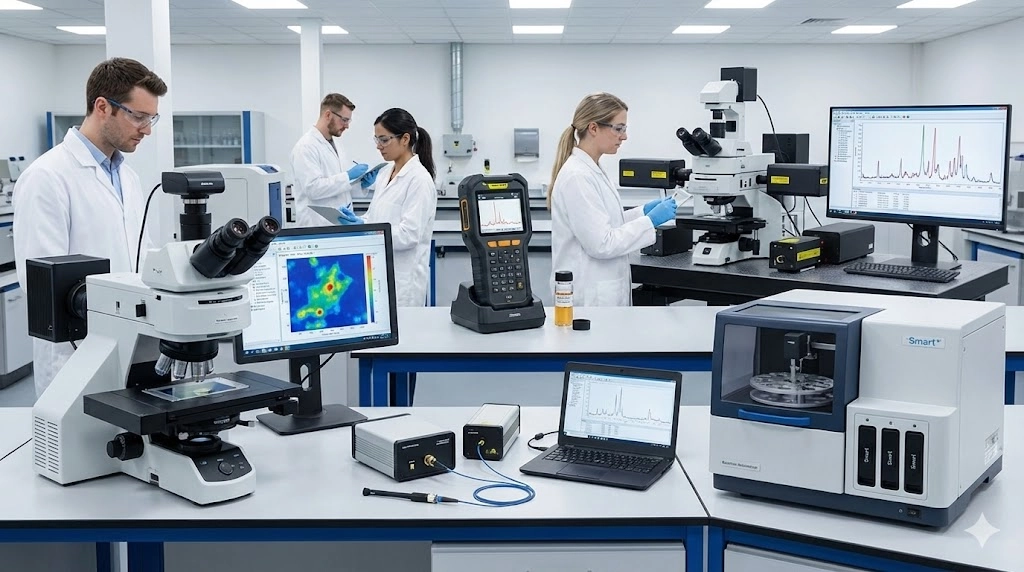
Quick Summary: Top Raman Systems at a Glance
LabRAM Soleil – Horiba
WP Raman X Series – Wasatch Photonics
DXR3 SmartRaman – Thermo Fisher Scientific
CQL Max-ID – Rigaku
inVia Qontor – Renishaw
Comparison of Top Raman Systems
Conclusion: Summary of 2026 Raman Spectroscopy Systems
Jan 09, 2026
Product News
BRANDTECH Scientific Introduces the Transferpette® pro Micropipette: A New Twist on Comfort and Control
The latest addition to its trusted line of precision liquid handling instruments, engineered for comfort, control, and repeatable accuracy.

Jan 06, 2026
Featured, Technical Insight
New Research Frontiers Unlocked by Next-Generation Flow Cytometry
Next-generation flow cytometry systems using acoustic focusing are opening entirely new areas of research that were previously impractical or inaccessible with conventional flow cytometers.
Jan 05, 2026
Buying Guides
The Bottom Line: How Smart Microcentrifuge Tube Choices Impact Lab Efficiency and Cost
Innovative microcentrifuge tube solutions are more than just lab consumables—they’re strategic tools that can reduce costs, improve outcomes, and support long-term sustainability goals.
Jan 05, 2026
Buying Guides
Future-Proofing Your Lab with Innovative Microcentrifuge Tube Solutions
As laboratories evolve to meet the growing demands of modern science, even the most basic tools—like microcentrifuge tubes—are being reimagined.
Jan 05, 2026
Buying Guides
Microcentrifuge Tube Innovations: Driving Sustainable Change
Integrating next-generation consumables into standard workflows can lead to a more sustainable and responsible research environment.
Jan 05, 2026
Buying Guides
Single Use Plastics: How to Manage these Major Contributors to Lab Waste
Reducing lab waste isn’t just a sustainability issue—it’s a financial and operational one, too.
Jan 05, 2026
Buying Guides
Common Microcentrifuge Tube Challenges in Sensitive Molecular Workflows
Key factors that can impact the performance of microcentrifuge tubes for PCR, qPCR, and NGS and other sensitive applications
Jan 05, 2026
Buying Guides
How to Research the Right Microcentrifuge Tubes for Your Application
Selecting the right microcentrifuge tubes starts with understanding the specific demands of your application.
Jan 05, 2026
Technical Insight
The Best Confocal Microscopes of 2026
Discover the best confocal microscopes of 2026 for advanced imaging. Compare top models from Zeiss, Evident, and Nikon for speed, resolution, and budget.

Dec 24, 2025
Featured, Popular Products, Technical Insight
Emerging Mass Spectrometry Technologies to Improve Intraoperative Diagnostics
Advances in mass spectrometry may soon reshape surgery, improving diagnostic accuracy and impacting post-operative outcomes