
The Best Spectrophotometers: A Buyer's Review of Price and Features

Written By: Craig Bradley
May 29, 2024
Precise quantitative analysis remains the cornerstone of modern life science and chemical research, making reliable spectrophotometers a critical investment for any facility. Laboratory professionals selecting equipment in 2026 must balance sensitivity, throughput requirements, and data compliance features to ensure long-term operational efficiency. This guide evaluates five industry-leading models, including recent market entries that offer advanced optics, automated workflows, and robust connectivity for regulated environments. Best Overall / Workhorse: Shimadzu UV-1900i Plus — Delivers ultra-fast scanning speeds with advanced compliance features for regulated industries. Best Budget Microvolume: DeNovix DS-7 — Provides maintenance-free 1 µL quantification and contamination alerts at an accessible price point. Best For Speed / Kinetics: Agilent Cary 3500 Multicell — Features simultaneous eight-channel scanning with zero moving parts for instant data collection. Best High-Throughput Microvolume: Thermo Scientific NanoDrop Eight — Analyzes eight samples in under 20 seconds with built-in contaminant identification. Best For Routine Analysis: Thermo Scientific GENESYS 50 — Offers a rugged, single-beam design ideal for QA/QC and educational laboratories. Price Range: $15,000 – $20,000 USD (New)
Best For: Regulated environments (Pharma/QC) requiring high-speed scanning.
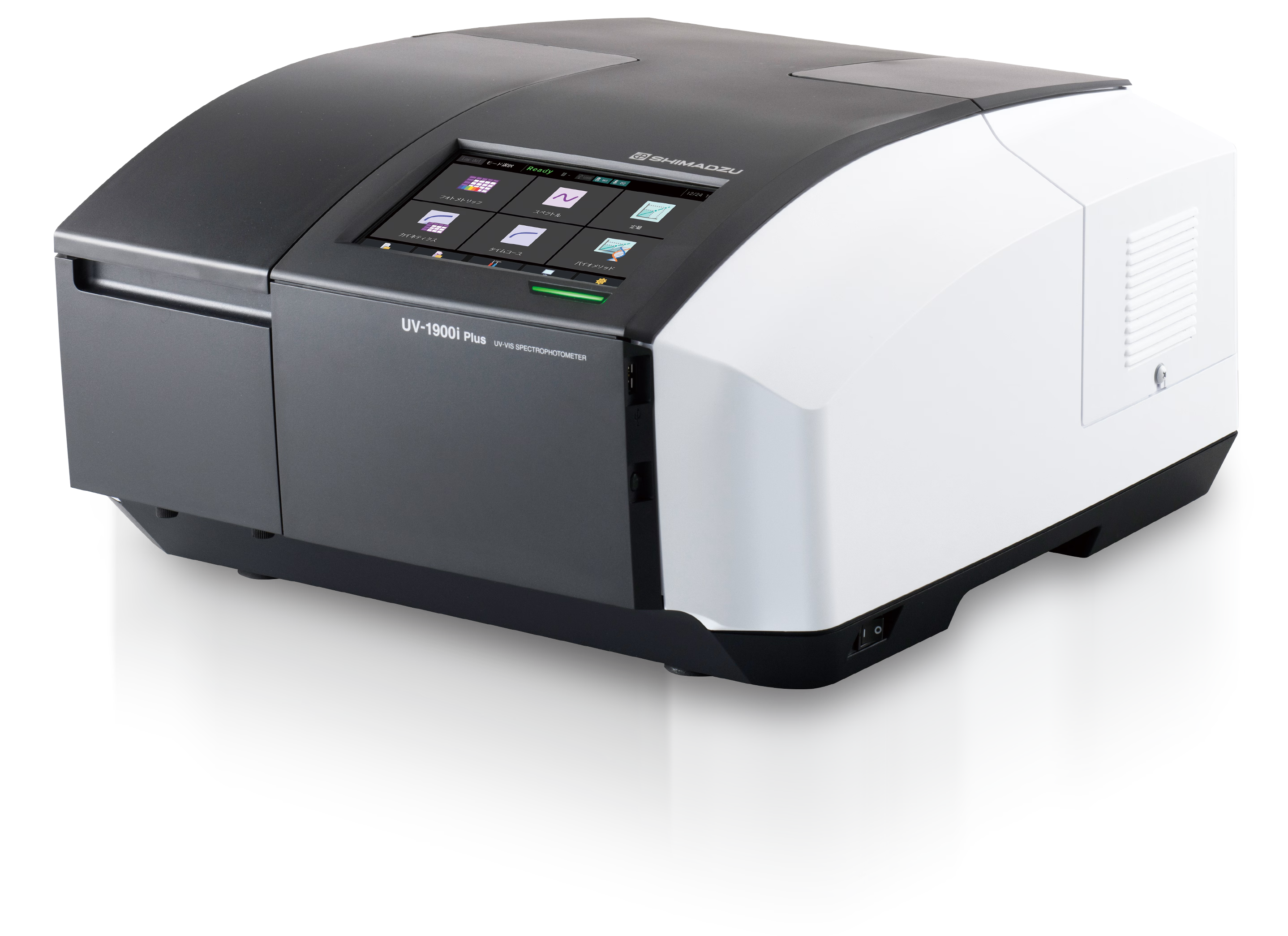
Category: Best Overall / Workhorse The UV-1900i Plus, released in early 2025, builds upon Shimadzu's legacy of double-beam optics by integrating proprietary LO-RAY-LIGH diffraction grating technology. This innovation significantly reduces stray light, enabling high-accuracy measurements even at high absorbance levels. The instrument stands out for its standalone operability via a color touchscreen, while also offering full network connectivity for remote data management—a crucial feature for laboratories adhering to FDA 21 CFR Part 11 or other strict data integrity standards. Key Specs Wavelength Range: 190 – 1100 nm Scan Speed: Up to 29,000 nm/min Resolution: 1 nm Stray Light: 0.5% max (198 nm) Interface: Color touchscreen with ergonomic UI Performance & Applications
This model excels in pharmaceutical and chemical quality control where speed and compliance are non-negotiable. The ultra-fast scanning capability allows researchers to track chemical reactions in real-time with exceptional temporal resolution. Its validation functions are automated to meet Japanese, US, and European Pharmacopoeia standards, making it a turnkey solution for regulated testing. The broad dynamic range supports both low-concentration bio-analysis and high-absorbance material characterization without requiring extensive sample dilution. Price Range: $8,900 – $10,800 USD
Best For: Budget-conscious labs needing precise nucleic acid and protein quantification.
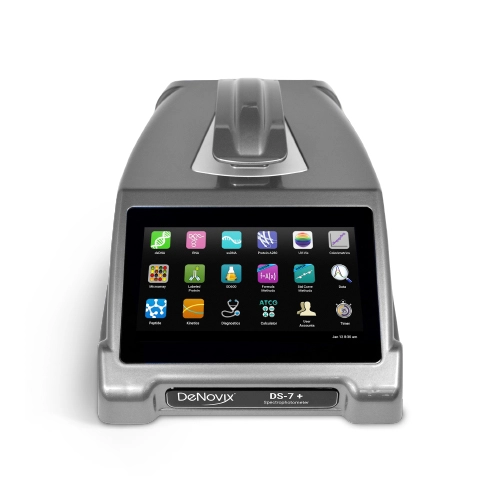
Category: Best Budget Microvolume Released in mid-2024, the DeNovix DS-7 brings the robust performance of the award-winning DS-11 series to a more accessible price point. It retains the core SmartPath technology, which automatically adjusts pathlengths to ensure accurate measurements across a wide dynamic range. Unlike competitors that require regular calibration or maintenance of the pedestal surface, the DS-7 is designed to be maintenance-free, reducing long-term ownership costs. It bridges the gap for smaller research labs that require high-end microvolume specs without the premium price tag. Key Specs Sample Volume: 1 µL Dynamic Range: 2 – 15,000 ng/µL (dsDNA) Wavelength Range: 190 – 840 nm Detection: Absorbance (UV-Vis) Measurement Time: 8 seconds Performance & Applications
The DS-7 is engineered specifically for life science applications such as plasmid purification, genomic sequencing preparation, and protein quantification. Its Bridge Testing™ verification technology actively detects broken sample columns—a common source of error in microvolume quantification—ensuring data reliability. The integrated EasyApps software provides a streamlined interface for rapid quantification of DNA, RNA, and proteins, making it an ideal choice for academic research labs and startups focused on molecular biology. Price Range: $20,000 – $26,000 USD
Best For: Complex kinetics and temperature-sensitive experiments.
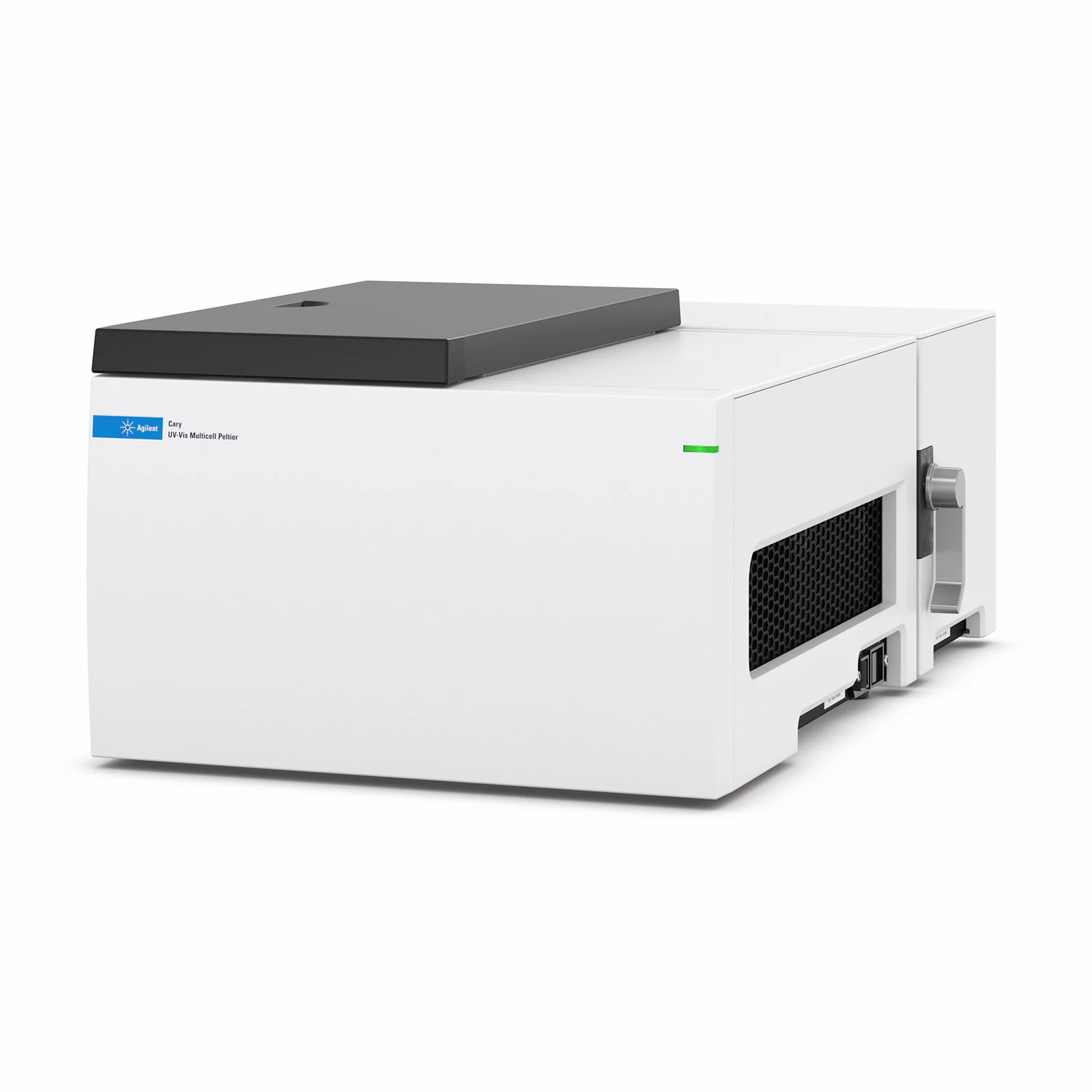
Category: Best For Speed / Kinetics The Agilent Cary 3500 continues to represent a paradigm shift in optical design by utilizing a xenon flash lamp and a unique simultaneous scanning architecture. Instead of moving a single beam sequentially across samples, the Cary 3500 measures all eight cell positions (7 samples + 1 reference) at the exact same moment. This design eliminates time-lag errors in kinetic studies and dramatically increases laboratory throughput. The system has no moving parts in the optical train, which enhances stability and minimizes maintenance requirements over the instrument's lifespan. Key Specs Throughput: 8 channels simultaneous measurement Data Collection Rate: Up to 250 points/second Lamp Life: 10-year warranty (Xenon flash) Photometric Range: Up to 4 Abs Temp Control: Air-cooled Peltier (0–110°C) Performance & Applications
This instrument is particularly suited for enzymology, biochemistry, and material science labs where reaction rates must be monitored under strictly controlled thermal conditions. The integrated air-cooled Peltier system allows for rapid and precise temperature ramping without the need for external water circulators, reducing bench clutter. Researchers conducting denaturation/renaturation studies or competing reaction analysis benefit from the ability to run multiple variables simultaneously under identical conditions, ensuring high experimental reproducibility. Price Range: $19,000 – $29,000 USD
Best For: High-volume bio-banking and genomic workflows.
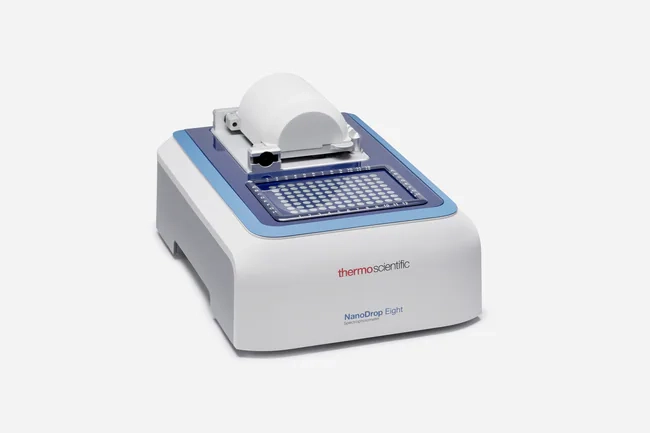
Category: Best High-Throughput Microvolume The NanoDrop Eight remains the gold standard for high-throughput microvolume analysis, capable of measuring eight samples simultaneously in under 20 seconds. It incorporates Acclaro Sample Intelligence technology, which uses full-spectral analysis to identify contaminants such as phenol, guanidine salts, or protein in nucleic acid samples. This feature allows technicians to correct calculated concentrations rather than discarding valuable samples. The ergonomic pipette guide and auto-measure features streamline the workflow for users processing full 96-well plates. Key Specs Throughput: 8 samples per measurement cycle Sample Volume: 1 – 2 µL Wavelength Range: 190 – 850 nm Detection Limit: 2.0 ng/µL (dsDNA) Connectivity: PC control with optional FDA 21 CFR Part 11 software Performance & Applications
Designed for high-demand environments like bio-banks, core facilities, and pharmaceutical discovery units, the NanoDrop Eight maximizes efficiency. Its ability to help assess sample purity and identify contaminants helps prevent downstream failures in sensitive applications like qPCR or Next-Generation Sequencing (NGS). The software seamlessly exports data for LIMS integration, supporting large-scale tracking and quality assurance protocols essential for clinical and industrial genomics. Price Range: $7,000 – $9,000 USD
Best For: Routine QA/QC, water testing, and university teaching labs.
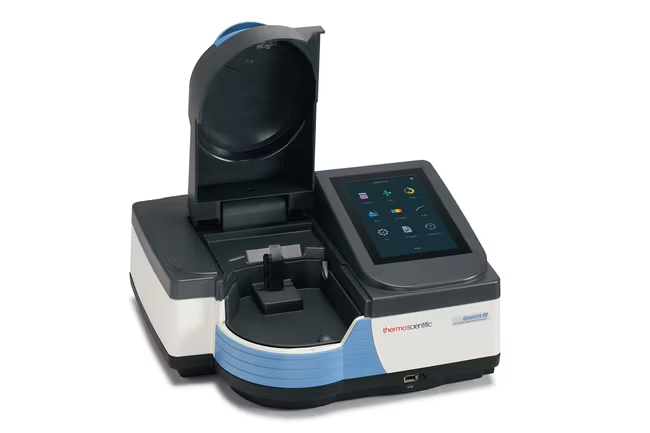
Category: Best For Routine Analysis The GENESYS 50 is a single-cell, single-beam UV-Vis spectrophotometer built for durability and ease of access. It features a sloping surface design to shed spills and a removable, washable sample compartment liner, making it highly resilient in multi-user environments. The 7-inch high-resolution touchscreen allows users to perform fixed wavelength measurements, scanning, and kinetics without a separate PC. While it lacks the ultra-high speeds of the Cary 3500 or the microvolume ease of the NanoDrop, its reliability makes it a staple for general analytical tasks. Key Specs Optical Design: Single-beam Wavelength Range: 190 – 1100 nm Bandwidth: 2 nm Interface: 7-inch touchscreen, USB, Wi-Fi Detectors: Dual Silicon Photodiodes Performance & Applications
This model serves as a robust solution for industrial quality control, environmental water testing, and food and beverage analysis. The single-beam optics provide reliable performance for routine measurements. Its intuitive "local control" software is accessible to technicians with varying levels of expertise, reducing training time. The instrument supports a wide variety of accessories, including sippers and long-path cell holders, adding versatility for standard wet chemistry applications. Model Best For Key Features Typical Price Range Shimadzu UV-1900i Plus Regulated Pharma/QC Ultra-fast scan (29,000 nm/min), Compliance ready $15,000 – $20,000 DeNovix DS-7 Budget Bio-Research Maintenance-free, 1 µL microvolume, SmartPath $8,900 – $10,800 Agilent Cary 3500 Kinetics & Speed Simultaneous 8-channel scan, 10-year lamp warranty $20,000 – $26,000 NanoDrop Eight High-Throughput Genomics 8-channel microvolume, Contaminant identification $19,000 – $29,000 GENESYS 50 Routine/Education Washable liner, Single-beam stability, Standalone use $7,000 – $9,000 Selecting the right spectrophotometer in 2026 requires a clear assessment of throughput needs, sample volume constraints, and regulatory requirements. The Shimadzu UV-1900i Plus stands out for regulated environments requiring speed, while the DeNovix DS-7 offers a cost-effective entry point for modern microvolume quantification. For high-throughput applications, the Agilent Cary 3500 and NanoDrop Eight provide distinct advantages in kinetics and genomics, respectively. By matching these technical capabilities to specific laboratory workflows, facilities ensure data integrity and maximize their return on investment. This article was created with the assistance of Generative AI and has undergone editorial review before publishing.
Quick Summary
Shimadzu UV-1900i Plus
DeNovix DS-7
Agilent Cary 3500 Multicell UV-Vis
Thermo Scientific NanoDrop Eight
Thermo Scientific GENESYS 50
Comparison Table
Final Verdict: Choosing the Best Spectrophotometer of 2026
Jan 09, 2026
Product News
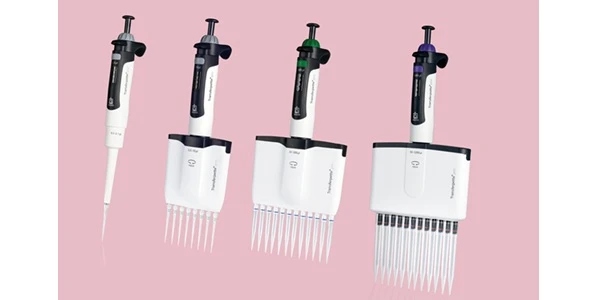
BRANDTECH Scientific Introduces the Transferpette® pro Micropipette: A New Twist on Comfort and Control
The latest addition to its trusted line of precision liquid handling instruments, engineered for comfort, control, and repeatable accuracy.
Jan 06, 2026
Featured, Technical Insight
New Research Frontiers Unlocked by Next-Generation Flow Cytometry
Next-generation flow cytometry systems using acoustic focusing are opening entirely new areas of research that were previously impractical or inaccessible with conventional flow cytometers.
Jan 05, 2026
Buying Guides
The Bottom Line: How Smart Microcentrifuge Tube Choices Impact Lab Efficiency and Cost
Innovative microcentrifuge tube solutions are more than just lab consumables—they’re strategic tools that can reduce costs, improve outcomes, and support long-term sustainability goals.
Jan 05, 2026
Buying Guides
Future-Proofing Your Lab with Innovative Microcentrifuge Tube Solutions
As laboratories evolve to meet the growing demands of modern science, even the most basic tools—like microcentrifuge tubes—are being reimagined.
Jan 05, 2026
Buying Guides
Microcentrifuge Tube Innovations: Driving Sustainable Change
Integrating next-generation consumables into standard workflows can lead to a more sustainable and responsible research environment.
Jan 05, 2026
Buying Guides
Single Use Plastics: How to Manage these Major Contributors to Lab Waste
Reducing lab waste isn’t just a sustainability issue—it’s a financial and operational one, too.
Jan 05, 2026
Buying Guides
Common Microcentrifuge Tube Challenges in Sensitive Molecular Workflows
Key factors that can impact the performance of microcentrifuge tubes for PCR, qPCR, and NGS and other sensitive applications
Jan 05, 2026
Buying Guides
How to Research the Right Microcentrifuge Tubes for Your Application
Selecting the right microcentrifuge tubes starts with understanding the specific demands of your application.
Jan 05, 2026
Technical Insight
The Best Confocal Microscopes of 2026
Discover the best confocal microscopes of 2026 for advanced imaging. Compare top models from Zeiss, Evident, and Nikon for speed, resolution, and budget.

Dec 24, 2025
Featured, Popular Products, Technical Insight
Emerging Mass Spectrometry Technologies to Improve Intraoperative Diagnostics
Advances in mass spectrometry may soon reshape surgery, improving diagnostic accuracy and impacting post-operative outcomes