
The Best Homogenizers of 2026

Written By: Craig Bradley
Dec 16, 2025
Selecting the right sample preparation equipment is a critical decision for any modern research facility, as the quality of downstream data relies heavily on effective cell lysis and tissue disruption. Laboratory homogenizers have evolved significantly, with 2026 market leaders offering enhanced automation, higher throughput, and intelligent feedback systems. Whether processing tough soil samples for environmental analysis or delicate tissues for RNA extraction, finding a model that balances power with precision is essential for operational efficiency. This guide examines five of the top-rated homogenizers available in 2026, categorized by their specific operational strengths. Best High-End Option: Precellys Evolution Touch (Bertin Technologies) — Offers unmatched versatility with 3D motion and vacuum tube locking. Best For Speed / Throughput: TissueLyser III (QIAGEN) — The newly released successor to the industry-standard II, optimized for high-volume molecular analysis. Best Overall (Rotor-Stator): T 25 Easy Clean Digital (IKA) — A reliable, general-purpose workhorse with advanced cleaning status indicators. Best For Tough Samples: Bead Ruptor Elite (OMNI International) — Delivers exceptional power for grinding bones, seeds, and hard tissues. Best On A Budget: BeadBug 6 (Benchmark Scientific) — A compact, cost-effective solution for low-throughput or personal benchtop use. Price Range: $15,000 – $17,000 USD
Best For: High-End Versatility
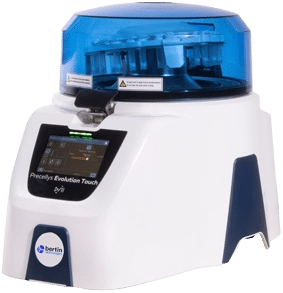
Category: High-End Option Launched in 2023, the Precellys Evolution Touch represents the pinnacle of bead mill technology, designed for laboratories requiring flexibility across varying sample types. This unit distinguishes itself with a unique multi-directional motion that ensures efficient grinding for both hard and soft samples. Its ability to handle varying tube sizes—from 0.3mL up to 50mL—without requiring a separate device makes it a comprehensive solution for core facilities. The interface is entirely touch-based, allowing for unlimited protocol storage and easy operation even while wearing gloves. Speed Range: 4,500 – 10,000 rpm Throughput: Up to 24 x 2mL tubes or 6 x 15mL/50mL tubes Motion: 3D multidirectional movement Cooling: Compatible with Cryolys Evolution cooling unit Locking System: Patented vacuum-based automatic tube locking The Precellys Evolution Touch is particularly suited for proteomics and genomics workflows where sample integrity is paramount. Its 3D motion creates a high-energy impact that disrupts cell walls more effectively than standard 2D shaking, reducing processing time and heat generation. This model excels in forensic analysis, pharmacology, and cancer research, where researchers must switch frequently between processing small biopsy samples and larger tissue volumes. The optional cooling unit further secures thermo-sensitive molecules like RNA during long or intense cycles. Price Range: $9,000 – $14,000 USD (Estimate; varies by configuration)
Best For: High-Throughput Molecular Analysis
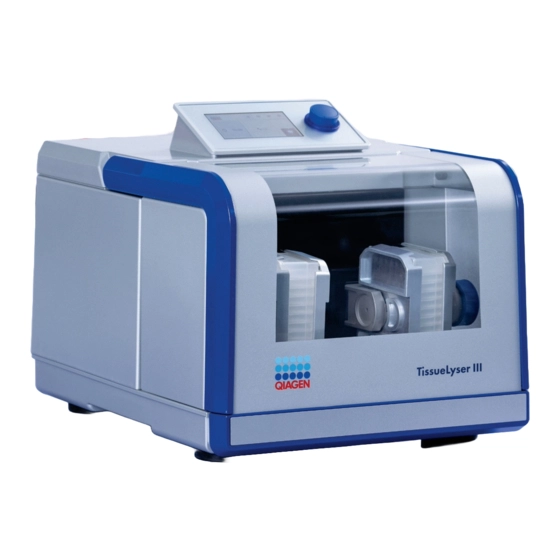
Category: Speed / Throughput Released in July 2023, the TissueLyser III is the modern successor to the widely adopted TissueLyser II, bringing updated connectivity and interface improvements to a classic design. It is engineered specifically for high-throughput disruption of biological samples prior to molecular analysis. The system operates using high-speed shaking of adapter sets, which can process up to 192 samples simultaneously when using 96-well plate adapters. This model integrates seamlessly into QIAGEN’s "Sample to Insight" workflow, ensuring compatibility with their purification kits. Frequency: 3 – 30 Hz (180 – 1800 oscillations/minute) Throughput: Up to 48 samples (2mL tubes) or 192 samples (96-well plates) Interface: New touchscreen for convenient protocol management Cycle Time: 1 second to 99 minutes Accessories: Extensive range of adapter sets for tubes and plates The TissueLyser III is the standard-bearer for molecular biology labs processing large batches of samples for DNA, RNA, and protein purification. Its primary strength lies in its ability to provide uniform disruption across every well of a 96-well plate, eliminating the variability often seen in manual or low-throughput methods. It is extensively used in agricultural research for leaf and seed grinding, as well as in biomedical research for processing bacteria and yeast. The updated digital interface simplifies protocol standardization across multiple users, ensuring reproducibility in large-scale studies. Price Range: $2,400 – $3,400 USD
Best For: General Purpose Dispersing
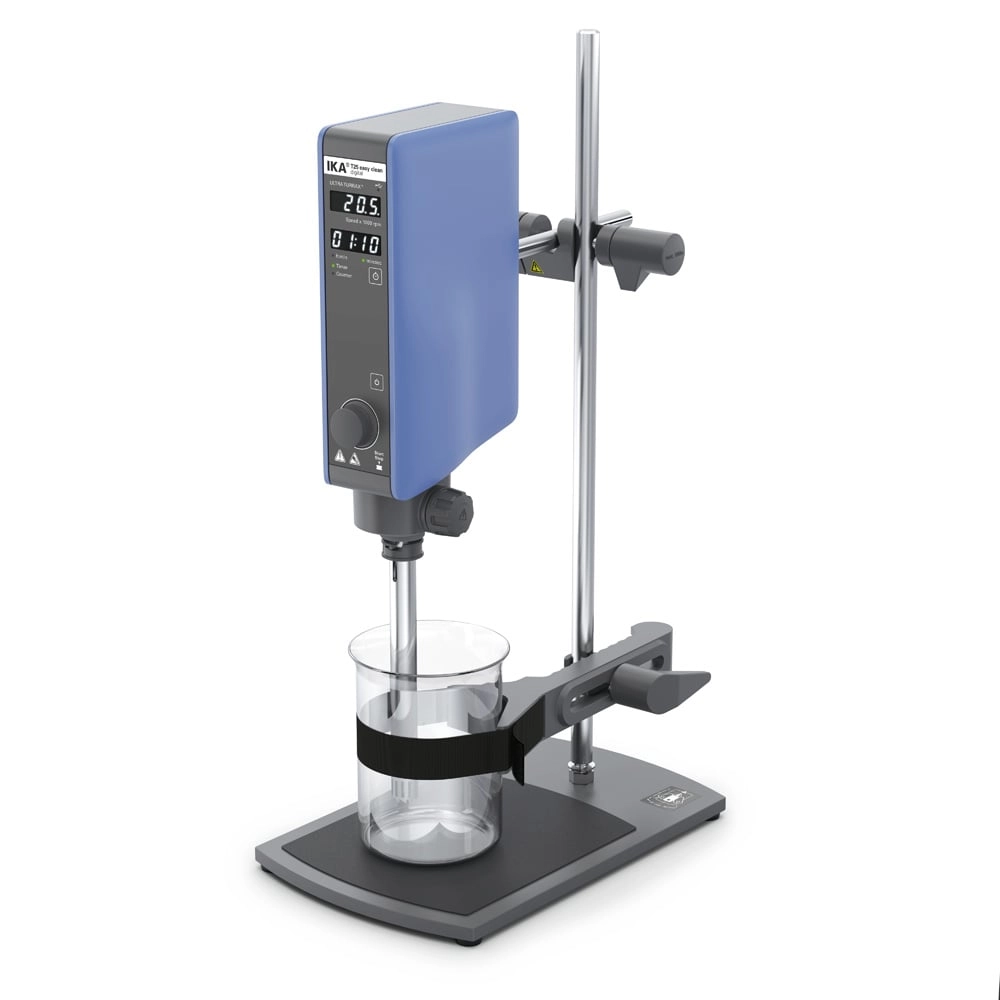
Category: Overall (Rotor-Stator) For laboratories that prefer rotor-stator homogenization over bead milling, the IKA T 25 Easy Clean Digital is a top-tier choice. This instrument modernizes the classic disperser design by incorporating an electronic speed control and a unique "Easy Clean" mechanism that allows the dispersing tool to be cleaned without disassembly. It is a quiet, dust-free unit due to its brushless motor, making it suitable for open benchtop use. The tool recognition system adds a layer of safety, preventing operation if the element is not correctly secured. Speed Range: 3,000 – 25,000 rpm Volume Range: 1 – 2,000 mL (H2O) Motor Type: Brushless DC motor Protection Class: IP 30 Interface: LED display with timer/counter function The T 25 is ideal for emulsifying, suspending, and general dispersing tasks in chemical, pharmaceutical, and cosmetic laboratories. Unlike bead mills, which are limited by tube size, this handheld or stand-mounted unit can process volumes in beakers ranging from milliliters to liters. It is particularly effective for wastewater analysis, sample preparation for medical diagnostics, and formulation testing in the food industry. The ability to quickly clean the rotor-stator element between runs significantly reduces downtime, making it an excellent "all-rounder" for shared laboratory spaces. Price Range: $11,500 – $12,500 USD
Best For: Hard / Tough Tissues
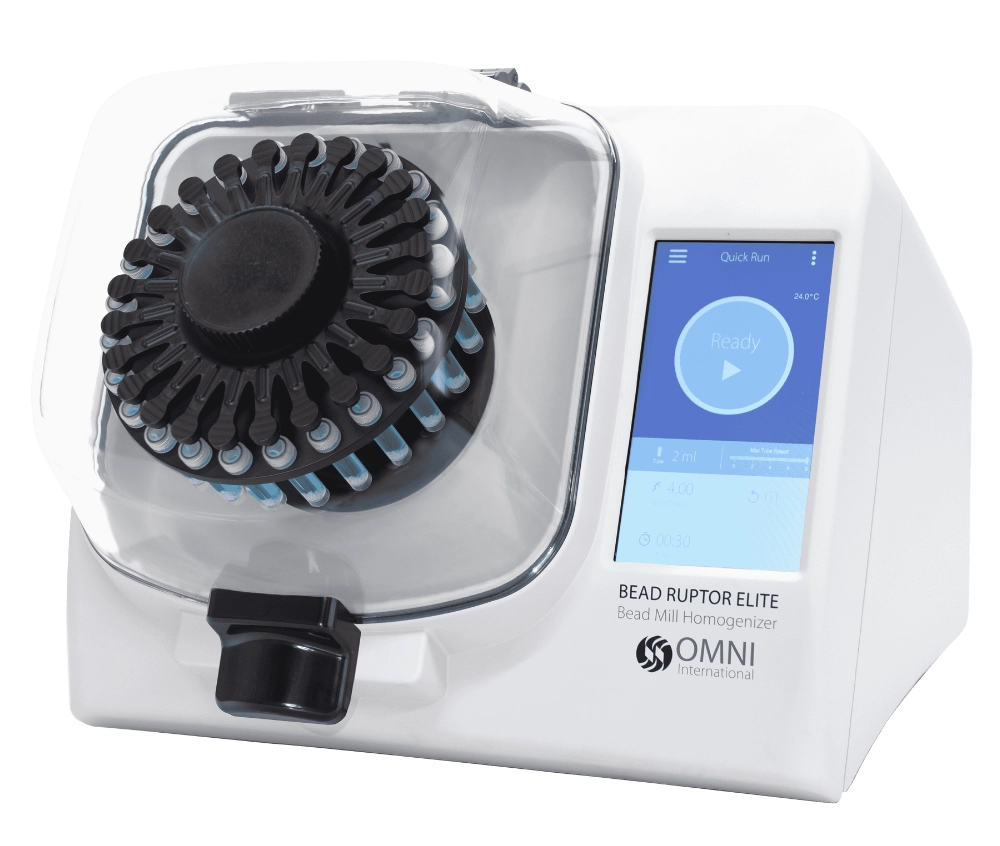
Category: Tough Samples The Bead Ruptor Elite is engineered with power as its primary focus. It is designed to grind the most difficult samples that other homogenizers might fail to disrupt, such as bone, hair, teeth, and seeds. The unit features a front-loading carriage design that ensures the bead movement is optimized for maximum impact force. It offers a wide range of accessories, including a cryo-cooling unit, and supports various tube sizes from 0.5 mL to 50 mL. Speed Range: 0.8 – 8 m/s Processing Range: 25 µL to 50 mL Interface: Advanced touchscreen with run history Run Time: 1 second to 9:59 minutes Certification: CE approved The Bead Ruptor Elite finds its niche in toxicology, forensics, and environmental labs where samples are often non-standard and resistant to lysis. Its high-force specification allows for the pulverization of mineralized tissues and fibrous plants without requiring extended run times that could degrade target analytes. The user interface allows scientists to program complex ramp-up and dwell cycles, providing the control necessary to disrupt tough matrices while preserving the integrity of sensitive nucleic acids. Shop Omni International on LabX Price Range: $2,500 – $3,000 USD
Best For: Personal / Low-Throughput Use
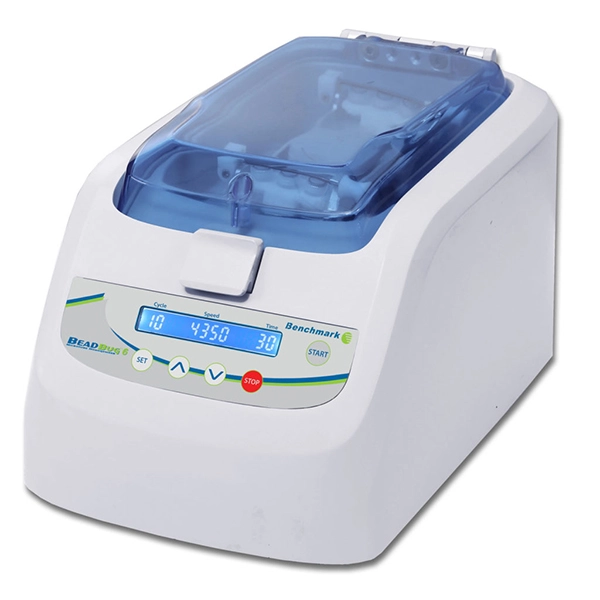
Category: Best On A Budget For smaller laboratories or individual workstations that do not require industrial-scale throughput, the Benchmark BeadBug 6 offers an excellent balance of performance and price. As a high-energy benchtop homogenizer, it bridges the gap between simple vortexers and full-scale bead mills. It accommodates up to six 2.0 mL tubes simultaneously, utilizing a 3D shaking motion similar to much more expensive units. Speed Range: 2,500 – 4,350 rpm Capacity: 6 x 2.0 mL tubes (or 2 x 5.0 mL with adapter) Dimensions: Compact footprint (approx. 22 x 35 cm) Weight: ~9 kg Display: Digital speed and time control Despite its small size and lower price point, the BeadBug 6 is capable of lysing cells, yeast, and soft animal tissues effectively within 45 seconds. It is an ideal solution for academic teaching labs, field laboratories, or startups with limited funding. While it lacks the cooling options and massive throughput of the Evolution or TissueLyser, it provides sufficient power for standard DNA/RNA extraction protocols in low-volume research settings. Its compact nature allows it to fit easily inside biosafety cabinets when processing infectious agents. Model Best For Key Features Typical Price Range Precellys Evolution Touch High-End / Versatility 3D motion, vacuum locking, up to 10,000 rpm $15,000 – $17,000 TissueLyser III Speed / Throughput 96-well capacity, new touchscreen interface, 30 Hz max $9,000 – $14,000 T 25 Easy Clean Digital Overall (Rotor-Stator) Easy clean tool, brushless motor, wide volume range $2,400 – $3,400 Bead Ruptor Elite Tough Samples High impact (8 m/s), wide accessory range $11,500 – $12,500 BeadBug 6 Budget / Personal Use Compact footprint, 6-tube capacity, digital control $2,500 – $3,000 The landscape of laboratory homogenizers in 2026 offers specialized solutions for every scale of research. For high-throughput molecular facilities, the recently updated TissueLyser III provides the necessary speed and automation compatibility. Conversely, laboratories dealing with diverse or challenging sample matrices may find the superior power and versatility of the Precellys Evolution Touch or Bead Ruptor Elite to be a better investment. Ultimately, the choice depends on sample volume, hardness, and the specific downstream applications required. By selecting the appropriate model from this list, laboratory professionals can ensure consistent, high-yield results for years to come. This article was created with the assistance of Generative AI and has undergone editorial review before publishing.
Quick Summary
Precellys Evolution Touch – Bertin Technologies
Key Specs
Performance & Applications
TissueLyser III – QIAGEN
Key Specs
Performance & Applications
T 25 Easy Clean Digital – IKA
Key Specs
Performance & Applications
Bead Ruptor Elite – OMNI International
Key Specs
Performance & Applications
BeadBug 6 – Benchmark Scientific
Key Specs
Performance & Applications
Comparison of Top Homogenizers
Conclusion: Selecting the Best Laboratory Homogenizer

Feb 10, 2026
Technical Insight
Eco-Friendly Refrigeration: Evaluating Natural Refrigerants and Low-GWP Cooling Systems
This guide explains the operational and environmental benefits of adopting natural refrigerants and low-GWP cooling systems in laboratory settings

Feb 10, 2026
Technical Insight
The Ultimate Guide to Sustainability in Laboratory Equipment and Operations
A comprehensive analysis of sustainable laboratory practices, focusing on energy-efficient equipment, waste management, and digital workflows
Jan 09, 2026
Product News
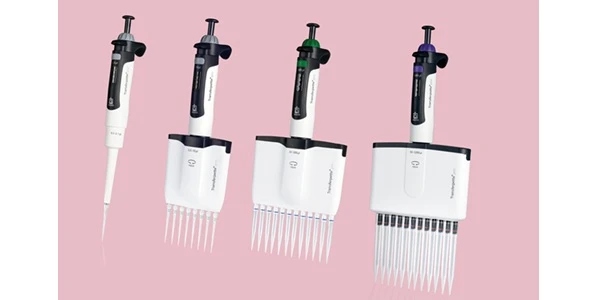
BRANDTECH Scientific Introduces the Transferpette® pro Micropipette: A New Twist on Comfort and Control
The latest addition to its trusted line of precision liquid handling instruments, engineered for comfort, control, and repeatable accuracy.
Jan 06, 2026
Featured, Technical Insight
New Research Frontiers Unlocked by Next-Generation Flow Cytometry
Next-generation flow cytometry systems using acoustic focusing are opening entirely new areas of research that were previously impractical or inaccessible with conventional flow cytometers.
Jan 05, 2026
Buying Guides
The Bottom Line: How Smart Microcentrifuge Tube Choices Impact Lab Efficiency and Cost
Innovative microcentrifuge tube solutions are more than just lab consumables—they’re strategic tools that can reduce costs, improve outcomes, and support long-term sustainability goals.
Jan 05, 2026
Buying Guides
Future-Proofing Your Lab with Innovative Microcentrifuge Tube Solutions
As laboratories evolve to meet the growing demands of modern science, even the most basic tools—like microcentrifuge tubes—are being reimagined.
Jan 05, 2026
Buying Guides
Microcentrifuge Tube Innovations: Driving Sustainable Change
Integrating next-generation consumables into standard workflows can lead to a more sustainable and responsible research environment.
Jan 05, 2026
Buying Guides
Single Use Plastics: How to Manage these Major Contributors to Lab Waste
Reducing lab waste isn’t just a sustainability issue—it’s a financial and operational one, too.
Jan 05, 2026
Buying Guides
Common Microcentrifuge Tube Challenges in Sensitive Molecular Workflows
Key factors that can impact the performance of microcentrifuge tubes for PCR, qPCR, and NGS and other sensitive applications
Jan 05, 2026
Buying Guides
How to Research the Right Microcentrifuge Tubes for Your Application
Selecting the right microcentrifuge tubes starts with understanding the specific demands of your application.